Haeinsa Buddhist Temple Stay

Haeinsa Temple-11

When I first knew I was moving back to Korea, I bought myself the latest South Korea guide book to plan all the different places to see and visit. One of the things that caught my eye was the Temple Stay program. South Korea has a special program that enables individuals and groups to stay in a wide variety of Buddhist temples for a specific time, usually a weekend.

Haeinsa Temple-18

The Temple Stay program offers up the opportunity for experience and relaxation programs. These programs typically involve at least one overnight at the temple, along with some organized temple activities. Based on my guide book’s recommendation, I selected the Haeinsa Temple Stay program.

Haeinsa Temple-2

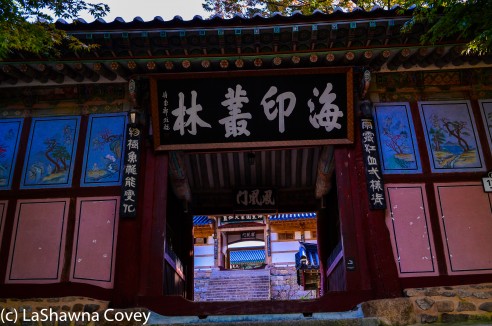
Haeinsa Temple is one of the “Three Jewel” temples of South Korea, and the temple was founded in C.E. 802 by two monks. It was designated a UNESCO World Heritage site, and is located in Gayasan National Park. The temple is home to the famous Tripitaka Koreana, which is the Buddhist equivalent of the Bible or the Koran. The Tripitaka Koreana is comprised of 81,340 wooden blocks, the oldest of which are over 770 years old, and is housed in four halls in the temple complex.
Haeinsa Temple-9

Haeinsa Temple-17

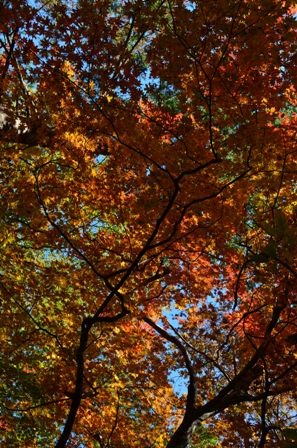
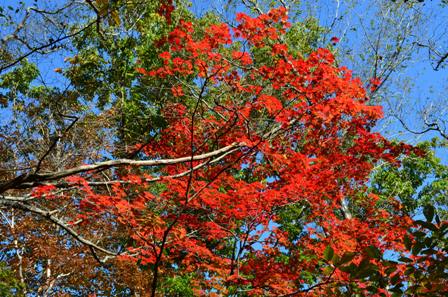
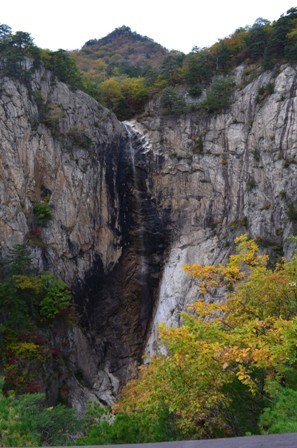
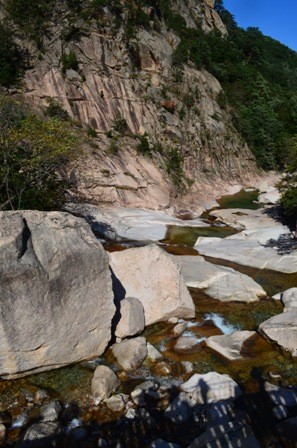
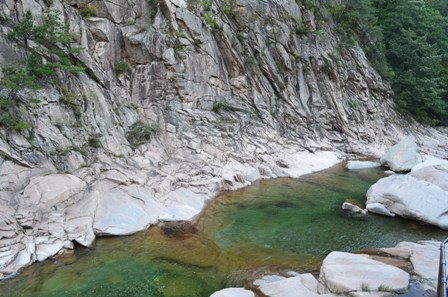
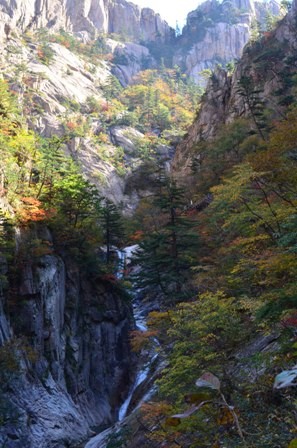
I elected to visit Haeinsa Temple in the fall of 2012, and it was my first overnight trip this tour in Korea, and certainly my first overnight to a Buddhist temple. I combined the trip with some hiking in the Gayasan National Park. I visited in early October, so the leaves were just starting to turn colors, but it was a couple weeks off from peak foliage. I arrived at Gayasan National Park around lunch time on Saturday and spent a few hours hiking toward the Sangwangbong Peak, until I had to return to Haeinsa Temple to check in for my temple stay program.

Haeinsa Temple-4

Haeinsa Temple-14

The Haeinsa Temple Stay program consists of two days and one night. I checked in to the temple at 1600, and was given a gray temple uniform (you can still wear your clothes underneath to stay warm, because it can get very cool at night). There was a fairly large group of us for the program and we first got some basic instructions on the timeline of activities and proper temple etiquette. Then it was dinner time, and since this was a Buddhist temple, dinner was purely vegetarian, and it was rather tasty. It was an all you can eat buffet, with the caveat that you had to eat everything on your plate and not waste any food.

Haeinsa Temple-1

Haeinsa Temple-15

After dinner, the evening program commenced. The first thing was the playing of the drums and gongs by the monks for 10 minutes. I had never heard anything quite like it before, and it was very resonant and peaceful. After the drum ceremony, we participated in the evening service in the beautiful main temple, and finished off with a tea service before going to bed at 2100.
Haeinsa Temple-10

Haeinsa Temple-16

Yes, bed time is needed to be super early, because we woke up super early at 0300. Dawn service started at 0330, which is very similar to evening service. Then we retired to a separate hall for 108 bows and meditation. The 108 bows are exactly what they sound like- 108 full body bows where you drop to your knees (thankfully on a thick cushion on the floor), bow your head to the ground, hold for a few seconds, and then stand up and do it again. I am reasonably good shape, but I won’t lie and say that I wasn’t feeling it by the end. I was sweating, and my thighs were sore and shaking from the exertion. So I enjoyed the peaceful meditation afterward to relax.
Haeinsa Temple-7

Haeinsa Temple-5

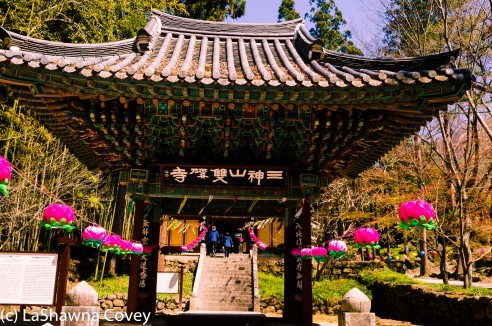
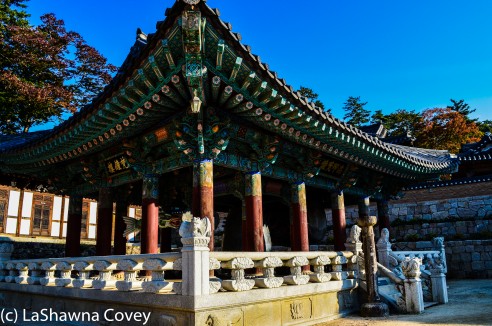
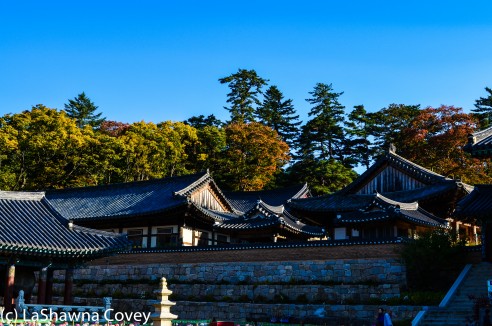
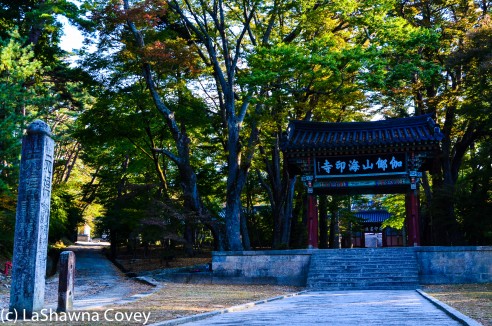
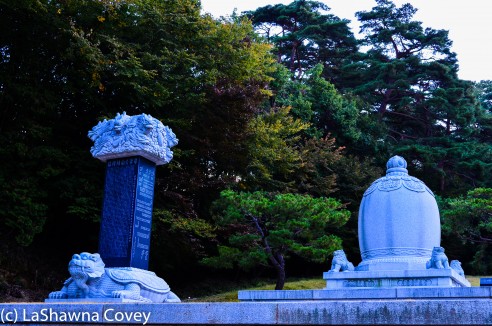
After all that, it was only 0600 and time for breakfast. After breakfast, we got an extensive tour of the temple grounds. The temple complex is one of the larger ones I have visited. There were multiple gates and stone stelae, that were engraved with the history of the temple on it. The buildings were very colorfully decorated like most Buddhist temples, but these colors were particularly bright and intricate. We also were able to see the Tripitaka Koreana, and it was quite amazing to see all the wooden blocks that comprise the collection.

Haeinsa Temple-12

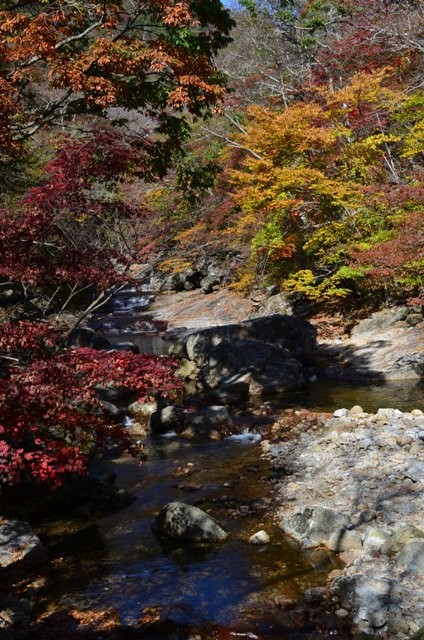
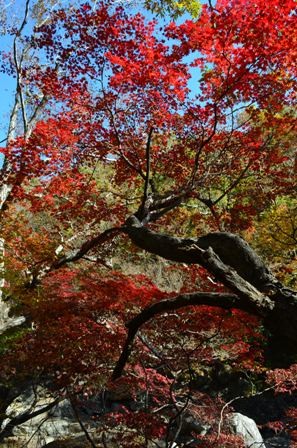
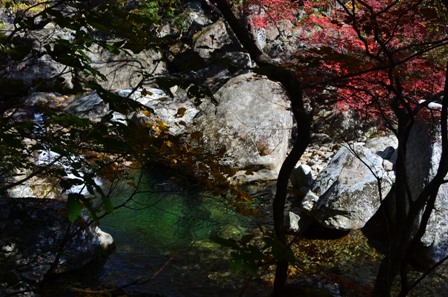
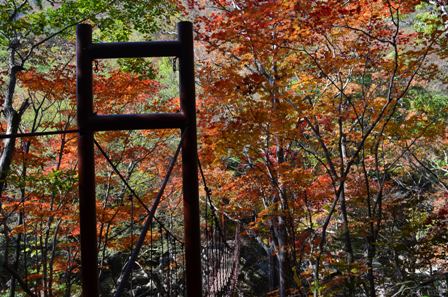
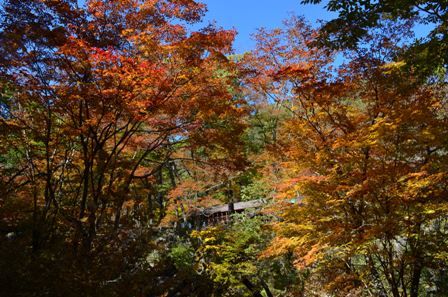
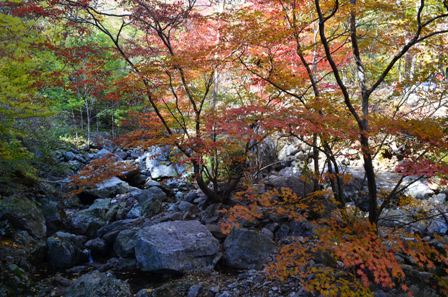
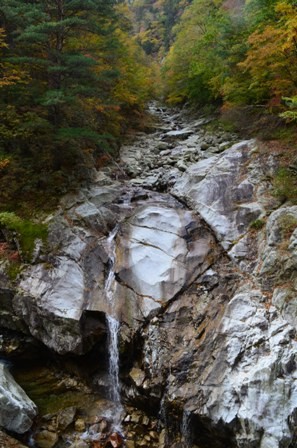
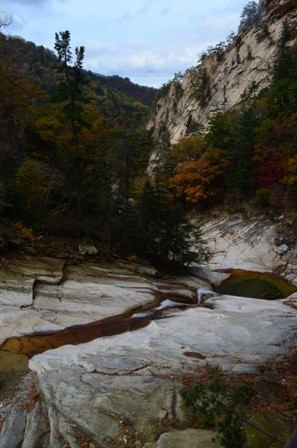
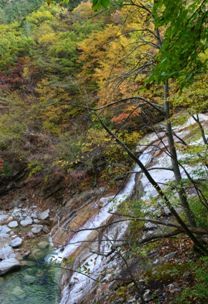
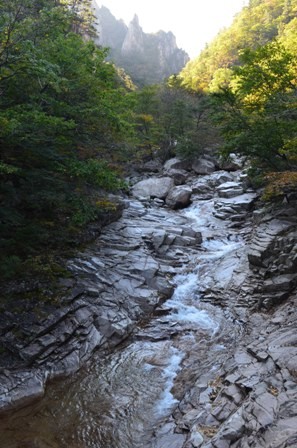
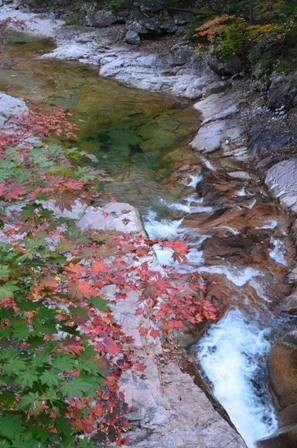
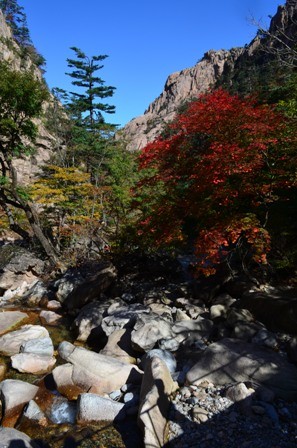
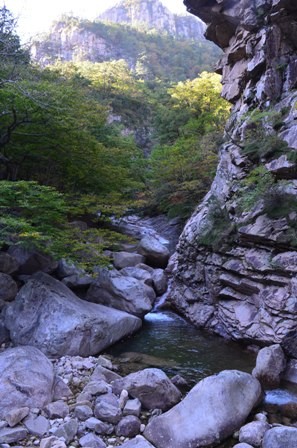
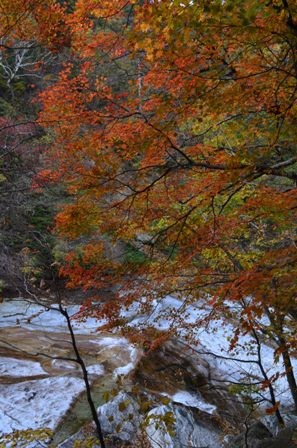
After the tour, it was late morning and the rest of the program consisted of simply cleaning up and then leaving around lunch time. After that I did some more hiking in Gaysan National Park. It was Sunday, so the trails were filled with Korean hikers. The day was sunny and bright and I was surrounded by beautiful trees and a river, and there were enough color to give a hint of autumn.

Haeinsa Temple-6

Traveling to Haeinsa Temple is pretty easy. Take a train (preferably a KTX since is quicker) to Dongdaegu Station. The train station is a stop on the Daegu Subway Line 1. Take the train to Seongdangmot subway stop to Seobu Intercity Bus Termina. Take Exit 3 and the bus station is right next to the exit. There are buses to Haeinsa that depart from Seobu approximately every 20 minutes, and the trip takes about an hour, and is the last stop.

Haeinsa Temple-13

If you like beautiful nature and beautiful Buddhist temples, I highly recommend Haeinsa Temple, even for a day visit and a short hike. If you are really interested in experiencing in a taste of Buddhist temple life, I recommend the Temple Stay program. The program makes it very easy for visitors to experience temple life. Simply visit their website, Templestay.com, find a temple that suits you, and sign up via their website. Different temple programs cost different prices, but the Haeinsa Temple experiential program costs 60,000 won for the 2 day, 1 night program, and that includes everything. I am glad I did it, because it was something new and different. It gave me a window into a different world and a different way of thinking and being.

Haeinsa Temple-3


Icheon Baeksa Sansuyu Festival

Icheon Baeksma Sansuyu Festival-7

Spring is my second favorite time of the year in Korea, after autumn. The wide variety of flowers are blooming all over the country in a wide variety of colors and shapes. Spring typically starts in April, but this year, spring started about three weeks early due to an unseasonably warm winter that lead to an unseasonably early and warm spring.
Icheon Baeksma Sansuyu Festival-2

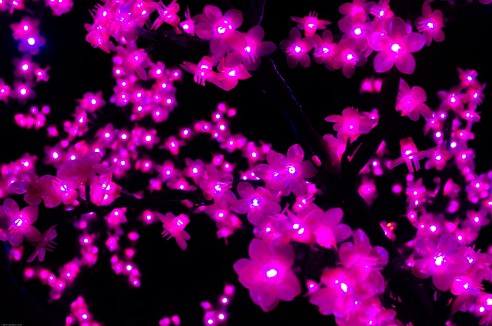
Among the first flowers that tend to bloom are the cherry blossoms and the sansuyu flowers. So in that spirit, I headed down south to the city of Icheon (an approximately one hour bus ride south of Seoul) for the Baeksa Sansuyu Festival. This festival is one of the first of the spring season.

Icheon Baeksma Sansuyu Festival-4

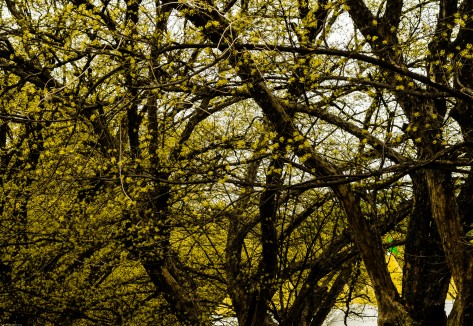
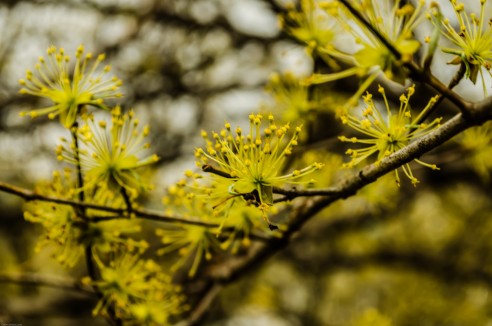
But since spring flower festivals are entirely weather and flower dependent, there is a potential for disappointment. For me, the two biggest disappointments are rain and missing the blooming season. Both of those were present for this festival. The sky was gray and gloomy with increasing sprinkles of rain while I was at the festival. Having never seen sansuyu flowers before, I couldn’t know for sure, but it really seemed that the festival was a week early. Sure the yellow flowers were blooming, but I don’t think they had hit full bloom when I visited.

Icheon Baeksma Sansuyu Festival-3

Icheon Baeksma Sansuyu Festival-5

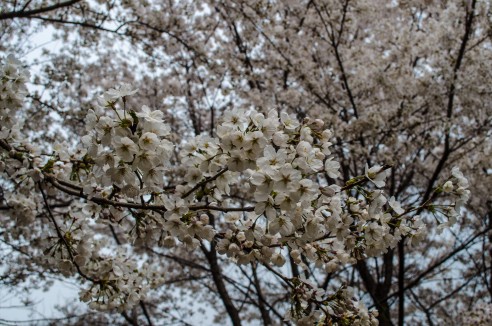
There were also a few cherry trees at the festival site for a nice color contrast.

Icheon Baeksma Sansuyu Festival-1

The festival was the standard setup for a Korean festival. There were cultural performances, a wide variety of food vendors, and a wide variety of local crafts for sale.

Icheon Baeksma Sansuyu Festival-6

After the festival, I walked around Icheon for a bit, and enjoyed the cherry blossoms at the park before heading home to Seoul.

Icheon Baeksma Sansuyu Festival-8

Hwagae Cherry Blossoms and Buril Falls

Hwage Cherry Blossoms and Buril Falls-15

My favorite part of Korean spring is the blooming of the cherry blossoms. I adore the gorgeous pink and white blooms that fill the cities and countryside for such a brief time. While the cherry blossoms are a delicate beauty, they are also a very ephemeral beauty.  Cherry blossom season only lasts about seven to ten days, so it’s nearly impossible to see all the places where cherry blossoms bloom in one spring season.

Hwage Cherry Blossoms and Buril Falls-1

Hwage Cherry Blossoms and Buril Falls-6

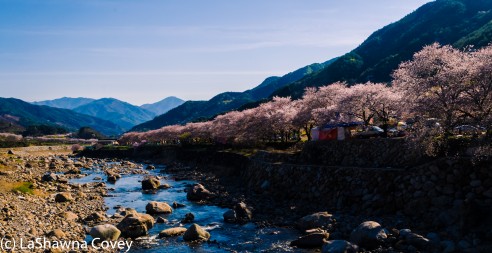
Last year, I confined most of my cherry blossom hunting to around Seoul, but this year I pushed farther afield.  I decided to make a trek down to Hwagae. I went the week after their official cherry blossom festival, hoping to avoid the hordes of crowds I read about. Of course the danger of going the week after the festival, is that I missed peak blossoms, but there were still enough to enjoy plenty of color. I also took the advantage to combine a few sightseeing places into one trip. I was able to see the Hwagae cherry blossoms, the Ssanggyesa Temple and Buril Falls in Jirisan National Park in one long day trip.

Hwage Cherry Blossoms and Buril Falls-2

Hwagae is fairly easy to reach by bus from the Seoul Nambu Bus Terminal. There are numerous buses per day, and it takes about three and a half hours (traffic depending) to reach Hwagae.  I wished I had taken the first bus out of Seoul, which would have given me an extra hour and a half in Hwagae, but I was able to see everything I wanted to see (albeit not at the most relaxed pace).

Hwage Cherry Blossoms and Buril Falls-3

Hwagae is a tremendous opportunity to see a bulk of the cherry blossoms. There is an approximately four kilometer stretch of road from the town of Hwagae to Ssanggyesa Temple, and most of the road is lined with gorgeous cherry blossom trees on both sides. It is a very easy walk on flat road by a river (just pay attention to the traffic, though it was often so backed up that I was moving faster than some of the cars), and it is a great opportunity to get your cherry blossom fix. The opportunity for beautiful nature viewing and nature photography are abundant.

Hwage Cherry Blossoms and Buril Falls-4

Hwage Cherry Blossoms and Buril Falls-5

The end of this road is Ssanggyesa Temple (follow the signs), which is a small Buddhist temple complex originating in the year 723, but was rebuilt in 1632. I didn’t spend an extraordinary time at the temple, because I was pressed for time, but it was pretty nonetheless.

Hwage Cherry Blossoms and Buril Falls-10

Hwage Cherry Blossoms and Buril Falls-14

The last sightseeing part of my day was Buril Falls, which is on the edge of Jirisan National Park. The hike from Ssanggyesa Temple to Buril Falls is only about 2.4 kilometers. The hike is considered an “easy” hike, and I suppose it is by Korean standards. Most of the hike to the falls is uphill, sometimes over the uneven terrain I am so used to, but the most strenuous part of the journey is the first 500  meters from Ssanggyesa Temple and the 100 meters up very steep stairs on the return trip from Buril Falls (your knees will probably feel both the uphill and the downhill of that climb). Then the uphill levels out a bit and becomes easier and it took an hour and twenty minutes to reach the falls, and an hour to return, less if you are a faster walker. The trail ends at Buril Falls, which is considered one of the 10 scenic beauties of Jirisan National Park.

Hwage Cherry Blossoms and Buril Falls-12

Hwage Cherry Blossoms and Buril Falls-11

Retracing my steps was fairly quick, and soon enough, I was back to the temple and cherry blossom road to hike back to Hwagae. It was only a one hour walk back to town, and the sun was approaching sunset, giving the cherry blossom trees a beautiful, soft, pink glow.

Hwage Cherry Blossoms and Buril Falls-9

Hwage Cherry Blossoms and Buril Falls-16

I was hoping to take the direct bus back to Seoul, but that wasn’t happening. There were large groups of people waiting at the bus stop and all the buses back to Seoul were sold out for the night. But all was not lost. I caught a local bus to the town of Gurye (about 20 kilometers away) and then took a taxi to the Gurye-gu KTX station to catch a train back to Seoul. Of course all seats on the train were sold out, as it often happens on the Sunday evening trains back to Seoul. Thankfully for me, you don’t need a reserved seat to ride the train. You just need to be willing to stand for the few hours to get back into Seoul.

Hwage Cherry Blossoms and Buril Falls-8


Hwage Cherry Blossoms and Buril Falls-7

I highly recommend Hwagae as a lovely day trip from Seoul. Even though the crowds will be thick that time of year, it is definitely worth your while to go during cherry blossom season. There are few places you can see so many cherry blossoms in one area, and there are so many other sites to visit at the same time.


The Last of the Winter Garden Night Illuminations- The Herb Island Lighting Festival

Herb Island Lighting Festival-8

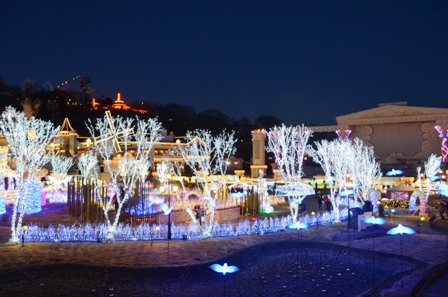
About a month ago towards the end of March 2014, I had my final opportunity to visit a winter garden night illumination. They are among my favorite winter activities in Korea. There is just something magical about being out in the cold, dark winter night surrounded by millions of bright lights. It really does feel like a fairy land in another world.

Herb Island Lighting Festival-1

Herb Island Lighting Festival-3

Herb Island Lighting Festival-2

This particular garden was north of Seoul, even north of Dongduchon, which is getting fairly close to the Demilitarized Zone (at least as the crow flies). I elected to go with a tour group to the Herb Island Lighting Festival. I had looked at the possibility of visiting the garden independently, but the last bus left Herb Island only shortly after dark, and would not give me the opportunity to really enjoy the winter lighting.
Herb Island Lighting Festival-6

Herb Island Lighting Festival-10

So off I went with the tour group. The bus ride itself was only a little over an hour. However the line to get into the parking lot was so long, it added an extra 45 minutes to getting to the garden. We arrived as the sun was setting, but still had to wait for complete darkness set in.

Herb Island Lighting Festival-11

Herb Island Lighting Festival-12

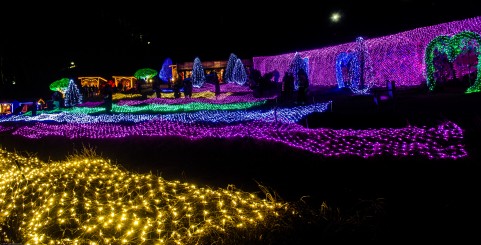
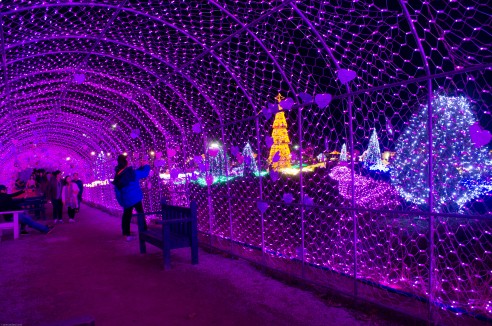
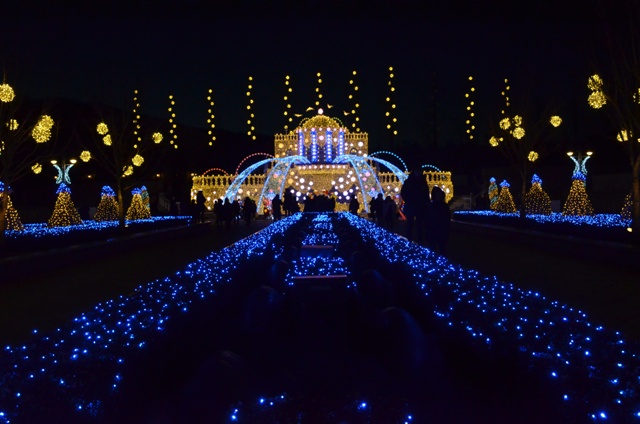
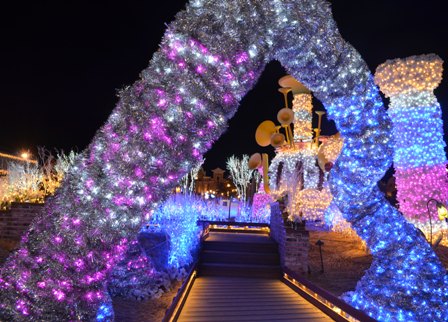
The garden was effectively divided into two sections. The farther one out was more of an open field with rows of lights, along with tunnels of lights. There was also plenty of Christmas decorations, which was an interesting sight in the middle of March. The crowds started growing after it was completely dark and it required some maneuvering to get pictures without too many people in them.

Herb Island Lighting Festival-17

Herb Island Lighting Festival-14

Since I was with a tour group, I had a limited amount of time to enjoy the garden. Granted two hours is a lot of time to take pictures, but it is not always enough time to just sit and take it all in.

Herb Island Lighting Festival-16

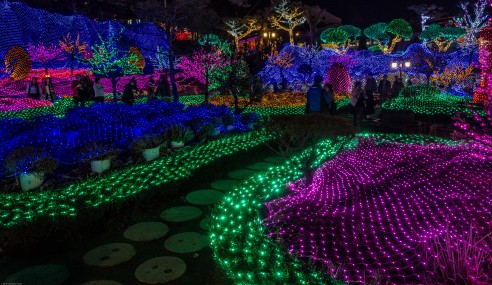
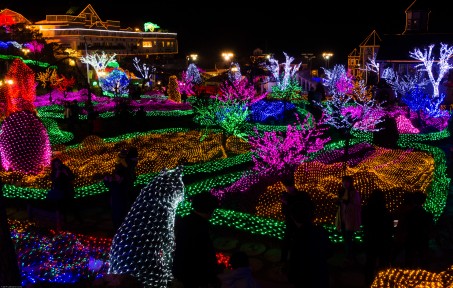
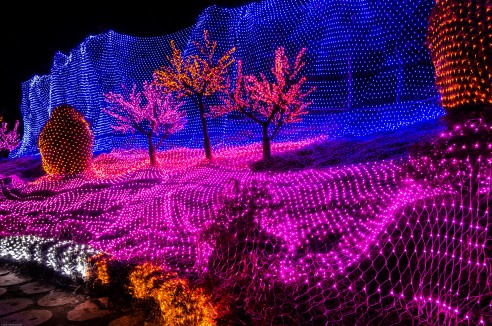
The other part of the garden was more of the sunken garden filled with even more lights. This garden was a bit more elaborate and there were numerous trees with colored cherry blossom lights.

Herb Island Lighting Festival-4

Herb Island Lighting Festival-5

Other parts of the garden were nets in a wide variety of colored lights covering the winter shrubs. I enjoyed the sunken garden part a bit more, because the decorations really did feel like a magical world, and reminded me the most of the Morning Calm Arboretum I visited the previous year.

Herb Island Lighting Festival-7

Herb Island Lighting Festival-9

It may not have been enough time to just sit back and spending hours pretending to be in the world of Avatar, but it was still plenty enjoyable to see the gorgeous, colored light gardens and send out winter in a proper fashion.

Herb Island Lighting Festival-13


A Day of Beauty at Gangneung

Gangneung Jeongdongjin Beach golden sunrise

One of my favorite things about travel is experiencing natural beauty in a new place, and enjoying art. My day trip to Gangneung provided the opportunity for both. A couple months ago, my mother came to visit South Korea for the first time, and I wanted to show her a wide variety of Korea. One of her requests was to visit a beach, which was an easy request to fulfill since the country of South Korea is surrounded by the ocean on three sides and there are ample, beautiful beaches all around the country. Since the cold weather was setting in (it was late November when we did this trip), it wasn’t the time of  year to go sunbathing or swimming in the ocean. But often times during cold weather, the sky is clear, and that really can produce some beautiful days with rich colors and bracing coolness.

Gangneung Jeongdongjin Beach rich golden sunrise

I elected to combine some different tourist options and make a day of it at Gangneung. Gangneung is located on the East Coast of South Korea. The beaches, particularly Jeongdongjin Beach, are a favorite for those of us who like to watch sunrises, and Gangneung hosts a very popular New Year’s Day Sunrise Festival. I went to a Sunrise Festival last year at Maryan-Ri, but I had no plans to be in Korea for NYE 2013/2014. But I figured it would still be a good place to ring in a new day by taking in the sunrise at Jeongdongjin Beach.

Gangneung Jeongdongjin Beach

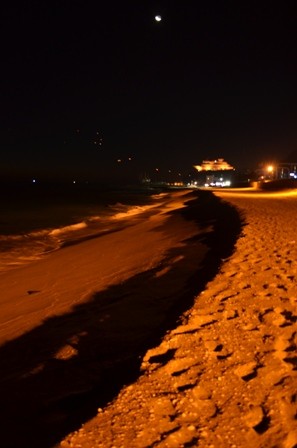
Thankfully Korean Rail makes it super easy to head out to Gangneung for a sunrise. There is a night train that departs from Cheongnyangni Station in Seoul around 2300 every night and arrives at Jeongdongjin Beach around 0330. What was even more interesting is that the train was completely sold out and a huge crowd poured out into the nearby town. And when I say it arrives at the beach, I mean that literally. Jeongdongjin Beach holds the Guinness World Record for being the train station located closest to the ocean anywhere in the world. When my mom and I stepped off the train in the cold, early, pre-dawn morning, we could hear the ocean waves lapping softly on the sand, and we could see the ocean around 50 meters from the train station. It is rather cool to step off in the early darkness and be so close to the sea.

Gangneung Jeongdongjin Beach with moon

We walked around a bit and eventually scored a seat on some of the large beach boulders to have an unobstructed view of  sunrise. It was cold, but we were decently bundled up to stay warm. We could see these lighted lanterns released from farther down the beach and watched them float up and away. Soon, the pre-dawn light started to emerge over the horizon and slowly brighten the sky.

Gangneung Jeongdongjin Beach pre-dawn light

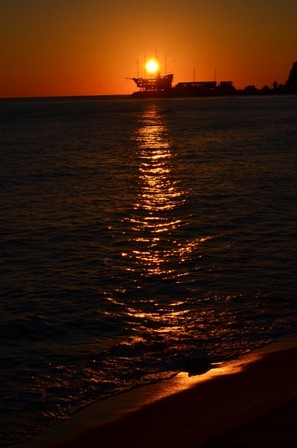
Pre-dawn was actually fairly long, but eventually the light brightened even more and the sun peeked up from the horizon and greeted us for a new day. The sunrise was absolutely gorgeous as the weather was clear and cloudless, with surprisingly minimal wind.

Gangneung Jeongdongjin Beach sunrise peek

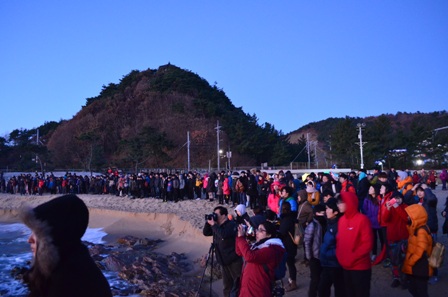
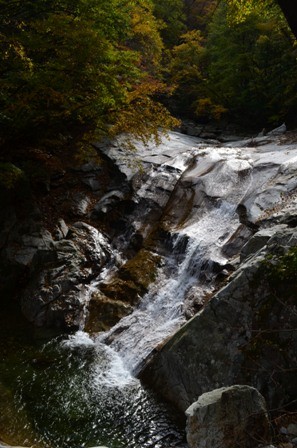
When the sun rose, I looked around and saw the huge crowd that had formed on the beach to watch the sunrise. I was very surprised at the amount of people on what was a normal November Saturday morning. It wasn’t New Years, or a special holiday. It was just a typical weekend, so I would guess that this is a common occurrence on weekends, particularly when the weather is good.
Gangneung Jeongdongjin Beach sunrise crowd

Gangneung Jeongdongjin Beach crowd after sunrise

After watching the sun fully rise, we walked further down the beach to Morae Shigae (Hourglass) Park. This park was first built in late 1999 to ring in the new millennium. The centerpiece of the park is this huge, circular, sand hourglass. There is enough sand in the hourglass to last an entire year, and on New Year’s Day, the hourglass is rotated to start the sand falling anew.

Gangneung Hourglass Park

After a delicious breakfast of street food (steamed mandu and ddeok bokgi), the next stop was Haslla Art World. We took a cab (approximately 10 minutes drive) to the museum and sculpture garden. I have been to a wide variety of galleries around the years, but this gallery had some of the most bizarre (I mean that in a good way) and interesting modern art. The gallery is set up in this modernist building that is also a hotel, and it overlooks the sea.

Gangneung Haslla Art World

Our last stop of the day was at Jumunjin Beach, which is the northernmost beach in Gangneung. This beach was actually a bit of a challenge to find. We elected to save time (but not money) by taking a cab to the beach. However, the cab dropped us off at Sodol Beach, which is around the corner from Jumunjin Beach. After some hunting around, we found the beach.

Gangneung Sodol Beach

There are other beaches in the area, like the closer and more popular Gyeongpo Beach, but the reason I selected Jumunjin Beach was that there was a zip line that stretched across a small stretch of beach and ocean. I love me some zip lining, and figured it would be a nice view and ride. And I’m sure it was, when it was open. I determined that while the towers are still there for zip lining, there is no actual zip lining anymore. I’m not sure if they were just closed for the season (even though the weather was absolutely gorgeous), they were closed due to construction on the beach, or they were out of business entirely.

Gangneung Jumunjin Beach

In any case, Mom and I just walked up and down the soft sand beach and noticed a very interesting sign concerning military operations on the beach.

Gangneung Jumunjin Beach military warning sign

We eventually found our way back to Gangneung city, though it certainly wasn’t quick or easy. I knew there was a bus stop relatively close to Jumunjin Beach, but since we took a taxi to the area, I wasn’t sure where it was located. I was hoping to see a taxi stand, but we ended up walking back toward Gangneung, until eventually we managed to score a cab, because Mom threw herself in front of a taxi to stop it (not quite, but we were getting tired and desperate enough to try it).

Even though we took the train to Gangneung, it was much more convenient to take a bus back. There were buses back to Seoul leaving around every 20 minutes, so soon enough we were plopped into a comfortable bus for a nice nap for the three and a half hour bus ride back to Seoul (Gangnam Express Bus Terminal).

There is a lot to see and do in Gangneung, and you can have a very full day trip doing a wide variety of activities. The biggest draw for the Gangneung area is beauty of the natural variety, particularly beaches and sunrises, but there is also beauty of the human variety (i.e. art).

Gangneung Jeongdongjin Beach warm sunrise

Everland Snow and Romantic Illumination Festival

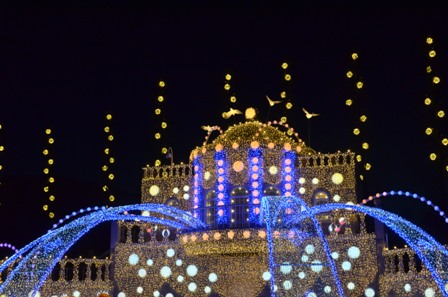
Everland Romantic Illumination castle fountain wide view

There are a couple things I love about winter. I love the cold weather, the clear days when I can feel the winter chill and see the cool tint of the full winter sun. Even though I don’t get the opportunity all that often, I love snow tubing. When I was a kid I used to ski on occasion, but I don’t do that now, and I never learned to snowboard. However, sledding/snow tubing is a lot of fun, and I like speeding down the mountain in a rubber tube. Korea does have its ski resorts, but I’ve never been THAT motivated to go deep into the mountains to get my sledding fix.
Everland Romantic Illumination castle close view

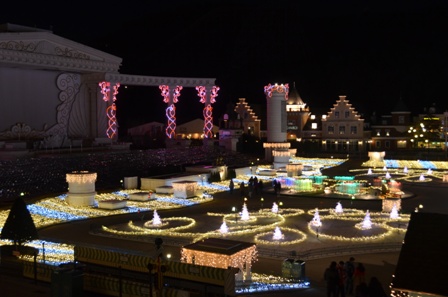
However at some of the Seoul amusement parks, they set up small sledding parks for fun. It’s nothing like black diamond sled runs or anything like that, but it allows you to get your winter play fix conveniently. I chose to go to Everland, which is the same amusement park I went to for my Halloween jollies back in the fall. Everland was a good choice, because they simultaneously had their Snow Festival and their Romantic Illumination Festival. And since night illuminations are another thing I love about winter, I couldn’t pass it up.

Everland Romantic Illumination garden panorama

I had the opportunity to go to Everland on a Monday, which proved to be a very fortuitous choice. I figured there wouldn’t be THAT many people there, because most people would be at work or school. I was definitely right, because compared to what I’ve seen on the weekend, the park was practically deserted. Most of the rides were open (though not their biggest thrill rides, because it was winter), but I was only there for two reasons: to sled as much as possible, and to enjoy night illuminations after darkness fell.

Everland Romantic Illumination garden wide view

There were three sledding runs available: the Snow Buster for little kids only, the Jungfrau a gentler sled run, and the Eiger, which is for older kids/adults. Yes, there were height requirements to go sledding here, and attendants actually had a measuring stick to ensure little kids were tall enough. The sled runs are very straightforward. You get towed up to the top of the hill in your tube, and then you slide down, turn in your tube, get in line to get another one, and do it again. The only difference between the Jungfrau and the Eiger sled runs, is that the Eiger is a bit steeper and longer, so you get more speed and the thrill is a bit greater.

Everland Jungfrau sled run

Everland Jungfrau sled runs

I did a few runs on the Jungfrau just to warm up. This sled run had more people, because it was easier and little kids could ride it. I have a feeling that the line to get a tube and up the hill on the weekend can get rather long, but since this was a Monday, it only took about 10-15 minutes to wait.

Everland Eiger rope tow

Everland Eiger sled run

Afterward, I moved up the hill to the Eiger sled run, where I could get much more speed. This was where the sparse attendance really paid off. Basically there was no line to get a tube. It took longer to be towed to the top, than to get an inner tube. I was able to be towed up to the top, slide down, and immediately get a new tube to go back up again. I took advantage of all this to just continually do sled runs until I got too hungry.

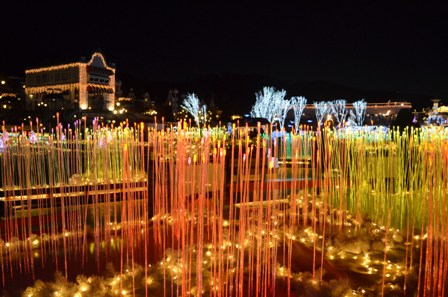
After dinner, the sun was setting, so it was just a matter of time before it got dark enough to really enjoy the night illuminations at their gardens. Since it is the middle of winter, there were no actual flowers in the garden, and all the delicate plants were wrapped in thick straw to protect them from the weather. This was a good opportunity to take some beautiful low light pictures. I particularly enjoyed all the different gardens around Seoul that offer night illuminations during the winter. It may be very cold at night, but it just adds to the beauty of the setting.

Everland Romantic Illumination colorful reed garden

Everland Romantic Illumination fairytale carriage

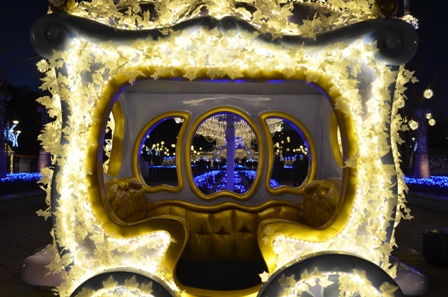
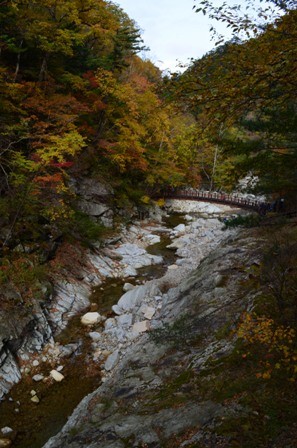
The illuminated gardens offered up a castle fountain, a fairy tale carriage, wide variety of trees, faux marble columns, and the like. Because it was a weekday, the park closed earlier than it does on weekends, but it was more than enough time to see everything and take it all in. And since it was a weekday, I didn’t have to fight hordes of people to take pictures.

Everland Romantic Illumination columns

Everland Romantic Illumination framed columns

I recently started working with the manual settings on my DSLR, because I’m taking a digital photography class to improve my skills. Up until now, I’ve only used the automatic settings on my camera, but this trip was a good opportunity to try the manual settings to experiment with ISO, shutter speed and f/stop.

Everland Romantic Illumination blue fountain

Everland Romantic Illumination blue hedges

I decided to take pictures on my night landscape setting and then experiment with manual settings to see the difference. Since this was a low light setting, it was critically important that manual settings allowed for the camera to capture enough light. This was my first go at it, and it was OKAY. I quickly discovered that using an ISO setting of 800 with my other manual settings wasn’t getting the job done, so I bumped it up to ISO 3200. I knew this wasn’t ideal, because the higher the ISO setting, the more grain in the picture. I ended up adjusting the f/stop down as low as my camera lens would allow (f3.8), which certainly did have a noticeable positive difference.

Everland Romantic Illumination silver tree

Everland Romantic Illumination music decorations

I didn’t realize my biggest mistake until later when I was able to examine the settings on my pictures taken with the night landscape setting and compare them to what I had for my manual setting pictures. I knew that my ISO was higher than desirable, but I had the f/stop correct. However, I was WAAAY off with the selected shutter speed. I had my camera set for 1/125, which is way too fast for a low light setting. My night landscape setting photos had a shutter speed of 1/8, which is much slower to allow more light in.

Everland Romantic Illumination garden

Everland Romantic Illumination colorful arch

So the day was a productive one. I got all my snow tubing jollies out of my system. I got to enjoy the delightful night illuminations that make me feel that I was walking in a winter fantasy land. And it was a good opportunity to learn more about what my camera is capable of, and what I need to do to take beautiful night photos.

Everland Romantic Illumination colorful reeds and columns

Jirisan National Park- Piagol Valley Autumn Hike

Piagol Valley colorful foliage river title picture

I did a lot of reading to plan my autumn hiking season in Korea, and one of the places I kept coming across was the Piagol Valley in Jirisan National Park. This quote was frequently sited on articles about this valley, “People who have not seen the red-tinted leaves in Piagol dare not say they know red-tinted leaves.”- Jo Shik, a Confucian scholar of the Joseon Dynasty. A popular autumn leaves festival is held in the Piagol Valley around peak foliage time (supposedly 24 October 2013).

Piagol Valley orange river reflection

Piagol Valley branches with red leaves

Piagol Valley bright red, orange and yellow leaves

So as you can imagine, I had grand visions of awe inspiring beauty for this hike. I imagined the entire trail tinted red, and looking through my pictures, I am reminded how beautiful this hike can be, and how many shades of red and orange percolate through the valley and glow in the bright sunlight. However, I also look back on this hike as exemplifying two other concepts: the gap between expectation and reality, and knowing your own limits.

Piagol Valley shaded valley view

Piagol Valley river pool with red foliage

Piagol Valley river waterfall with red and yellow leaves

Last Sunday when I hiked this, the day dawned very early for me, since my train left from Yongsan Station at 0520. It was a three hour train ride to Gurye-gu Station. I could have taken a bus from Seoul to Gurye, but aside from my preference for trains, I was actually able to start hiking sooner than if I had taken a bus. I knew there were local buses that went from Gurye to the Piagol Valley trailhead, but none of them originated from the train station to my knowledge. So to save time, I elected to take a taxi from the train station to the trailhead, which only cost me 30,000 won (negotiated fare, not meter fare), and it was a roughly 30-40 minute ride. It was still pretty early in the morning when I started hiking, so there weren’t TOO many hiking groups out on the trail.

Piagol Valley bridge with red and orange leaves

Piagol Valley orange and green trees

Piagol Valley red and green leaves

I had planned in advance to only hike to the Piagol Shelter and back, and not push all the way up to the Piagol Samgeori (forked road). While it was only two kilometers from the shelter to the pass (1.2 miles), I could tell from online maps it was pretty steep, as the estimated travel time was two hours one way. This was confirmed for me when I looked at the map at the trailhead, and it had that portion of the trail at a 32% gradient. I remembered, and my legs remembered, the Ulsan Bawi hike which had nearly the same level of steepness, how long it took me, and how much my body ached afterward. Combine that with the distance being twice the distance of Ulsan Bawi, and it reinforced my desire to just to go the Piagol Shelter. I knew my limits of my body, the limits of my hiking speed, and the limits of the return trip to Seoul (since I already had a train ticket booked), and elected to only do the eight kilometer round trip hike to the shelter and back. That hike was only projected to take four hours round trip and the gradient was described as only 6% by the map, so I thought it would be a pleasant and easy hike. However, in my opinion, that map spoke lies. Maybe the AVERAGE gradient of that hike was only 6%, but there were plenty of times throughout that hike that it was much, much steeper.

Piagol Valley orange and yellow leaves river

Piagol Valley shelter

Piagol Valley colorful leaf trees and river

Parts of this trail were very well-maintained that reminded me of American hiking trails. Other parts of this trail were supremely uneven with big rocks substituting for an actual path. If I didn’t actually know what some Korean hiking trails looked like, I might think I was lost in the middle of the woods. But I would never get actually lost, because I was never actually alone out there. This hiking trail is very popular, and I saw dozens of hiking groups. In fact most of them skillfully and quickly passed me as I trudged along the trail, carefully picking my way from one uneven rock to another to avoid falling or spraining my ankles. I forgot to bring my walking sticks (AGAIN!) and my body (particularly my thighs and my knees) definitely felt it by the end.

Piagol Valley swing bridge with colorful leaves

Piagol Valley river pool and red leaves

Piagol Valley red and orange overhead foliage

This brings up the gap between my expectation of this hike and the reality of this hike. I thought this hike would be easier than it was, and I admit to feeling a bit dispirited by the end, and supremely grateful when I completed the hike. I kept thinking that what do Koreans have against even, well-maintained trails. Maybe it’s part of the fun to not only enjoy a colorful view, but also to lightly hop from one rock to another.

Piagol Valley colorful rocky river

Piagol Valley red, orange and green leaves

Piagol Valley orange and yellow overhead foliage

In any case, while I don’t regret going on this hike, if I had known all of this in advance, I might not have done the hike. There are very beautiful views on this hike, but I didn’t see anything so unique that I haven’t seen on other Korean hiking trails. Though looking back at all these pictures, I do marvel at the colorful beauty I saw. So honestly, if I was more fleet of foot and didn’t stumble on uneven trails, I probably would have enjoyed it more. My opinion of this hike is colored by the fact that I can be a graceless klutz at times.

Piagol Valley small waterfall and red leaves

Piagol Valley red orange leaves

Getting to and from Gurye is pretty easy. Like I said before, you can take a train or a bus. Both of them travel from Seoul to Gurye on a regular basis. If you take a bus to Gurye, you can easily transfer to a local bus to Piagol (approximately one per hour) directly from the bus station. Or you can easily take a taxi to the trailhead. Getting back from Gurye was a bit more painful, because all the direct trains were full and I ended up having to make some transfers, and what is a three hour direct KTX train between the two cities, became a six hour journey over slower trains. So if you take the train back, make sure you book your train ticket well in advance, particularly on popular weekends, like the height of autumn and spring.

Seoraksan National Park- Sibiseonnyetang Hike (Valley of the 12 Angels’ Bath)

Sibiseonnyetang Boksungatang waterfall

A couple weekends ago, I trekked back to Seoraksan National Park for a third hike. I originally planned on doing this hike during my long weekend in Seoraksan National Park. However, after a couple somewhat strenuous hikes, my legs were just so tired. When I factored in that my third planned hike was the longest, and also supposed to be somewhat strenuous, I decided that it was probably best to just head home and then come back on another weekend.

Sibiseonnyetang shaded waterfall

So the next weekend, at 0630 in the morning, I was on a bus from Seoul out to Seoraksan National Park. This hike was in Inner Seorak, which is on western side of the park (unlike my previous weekend at Outer Seorak on the eastern side of the park). Inner Seorak is much more isolated than Outer Seorak and less developed. It’s also a bit harder to get to, but it’s not THAT difficult with a little bit of planning.

Sibiseonnyetang red tree pathway

Sibiseonnyetang autumn river pathway

Inner Seorak and this trailhead are most accessible by bus (assuming you take public transportation and don’t have your own car). Take a bus from Dong Seoul bus station (located at Ganbyeon subway station, line 2, exit 4) to Inje or Wonton-ri station. It’s about a two-two and a half hour trip. I kept reading that their were local buses to take you to the trailheads, and maybe there were. However, I didn’t have any bus numbers or the bus times. Since my hike was very long, and I was burning daylight, I took the easier, but more expensive route. I took a cab from and to the trailheads. The taxi fare was about 26,000 won each way (which ironically was twice the 13,000 won bus tickets to and from Seoul) for about a 15 minute ride.

Sibiseonnyetang rushing river orange tree

Sibiseonnyetang river

This particular hike was the Namkyo-ri course. The Korean National Parks website describes the course as “extending from Namgyo-ri through Sibi Seonnyeotang Basin to Daeseungnyeong Pass. It is recommended that you should take thorough precautions as the valley is long and dangerous. Seonnyeotang Basin has legend that fairies came down to take a bath. It is one of the most beautiful places in Seoraksan Mountain. Waterfalls form ponds (baths) on the rock. The name indicates 12 such places, but there are only eight ponds. The one on the highest spot named Boksungatang Basin is by far the best in the 84m-long valley.”

Sibiseonnyetang river red tree overshot

This hike was a bit different than other hikes I’ve done in Korea. First off, it was the longest hike I’ve done in Korea. The trail was over 11 kilometers long, which is actually not that long of a hike in terms of actual distance (only a little over seven miles), but it is reasonably long for a Korean day hike. The predicted time for this hike was six and a half hours, and that is actually the amount of time it took me to complete this hike. This hike also differed, because it was a one way trip. All of the other hikes I’ve done were either loop hikes or a there and back again with a turnaround point. Sure, you can do that with this hike, but it is also possible to hike from one major trailhead to the other. That makes it more visually interesting, because I didn’t see the same things.

Sibiseonnyetang waterfall with autumn trees

I started this hike pretty early at 0900, and there weren’t many people on the trail at the time. I started this trail at the Namkyo-ri Ranger Station and headed east. I got ahead of a hiking group and set out alone on the trail. The first few kilometers of this hike passed by pretty quickly, because the trail was fairly flat and even. I was even shocked that I was passing some people on the trail. Maybe I was just a bit fitter that day. Maybe the other hikers were just a bit slower, but I kept a pretty good pace, though of course I had to stop every so often to marvel at the spectacular autumn beauty around me. Peak autumn foliage for Seoraksan National Park was predicted to be 18 October, and I did this hike on 20 October. Having never seen what peak foliage looks like in Seoraksan National Park, I couldn’t say for sure that the park was actually at peak foliage. However, I saw plenty of colorful leaves all throughout the trail.

Sibiseonnyetang shaded pathway

Sibiseonnyetang bridge and colored trees

Most of the hiking groups I encountered at the first part of the trail seemed to be headed toward Boksungatang (the title picture on this post), which is a beautiful waterfall/rock formation. With the exception of the final 100 meters, which is pretty steep, and I needed to pull myself up the trail by the metal railing, the trail to Boksungatang is pretty easy. I knew this trail was rated as being difficult, and wondered what was considered strenuous (I would soon figure that out). Since this is the most scenic sight of this part of the trail, it was a popular turnaround point or lunch spot for hikers.

Sibiseonnyetang small waterfall

After taking in the view (along with the crowds which had gathered by this point), I pressed on and continued hiking. This is when you start seeing why the trail is rated as strenuous. The next couple kilometers weren’t TOO bad, because there were plenty of boardwalks and staircases and plenty of places along the river to have lunch.

Sibiseonnyetang falling rocks colorful trees

Sibiseonnyetang valley wideshot

The most strenuous part of this hike is the middle five and a half kilometers. About three and a half kilometers of this trail are what I would consider the least scenic part of this trail. At this point, you move away from the river and steadily up the mountain to the Daeseungnyeong Pass, until you can start moving down the mountain to Daesung Falls and the Jangsudae Ranger Station. This part of the hike was the most taxing on my knees and my thighs and I was silently cursing myself for forgetting my walking sticks. It didn’t get that much easier when I started heading down the mountain, because the trail was equally steep going down as it wqw be going up (it’s just a question which part of your leg will hurt for the ascent or descent).

Sibiseonnyetang overhead river shot

The final scenic viewpoints on this trail is the Daesung Falls and a panoramic view of the mountains and trees around you, which are .9 kilometers from the ending trailhead.

Sibiseonnyetang Daesung Falls

Sibiseonnyetang surrounding mountains

The waterfall is in the top three for the largest in Korea, and is about 89 meters tall. The trail at this point is almost entirely man-made staircases and boardwalks. By this point in my hike, my legs were tired, and I was glad I was descending rather than ascending, because the trail is pretty steep, even if the trail isn’t that long. I emerged at the Jangsudae Ranger Station and was very grateful to see a taxi ready to take me back to the Inje bus station for my trip home.

Sibiseonnyetang orange tree pathway

Another interesting thing about this hike is that, for at least parts of the hike, I found something I hadn’t found on the other Korean hikes I’ve done: peace, quiet and solitude. I was very surprised at first, and figured maybe it was just because it was a bit early in the morning, or maybe because it wasn’t a more popular hike in Seoraksan National Park. However, I did encounter plenty of hiking groups soon enough. For as near as I can tell, most of the Koreans I’ve encountered hike in large groups. You often see hordes of buses by the trailheads carrying dozens of groups each weekend. I saw some hiking groups up to Boksungatang, but then I didn’t see some for a while. And THEN, I kept running into group after group as they were heading in the opposite direction from me. Most of the groups I saw started at the Jangsudae trailhead and were heading west. The trail gets pretty narrow in parts, and I elected to stand aside to let the steady stream of people pass (my legs thanked me for the regular, enforced breaks). However, by the time I reached the Daeseungnyeong Pass and headed down the mountain, I was pretty much alone again. I can count on one hand how many people I saw between the pass and the Daesung Falls. It was so quiet, and that is just something I don’t frequently encounter in a country as heavily populated as Korea.

Sibiseonnyetang Eudam waterfall side view

It was also interesting to encounter the friendliness of many of the Korean people on this hike. I’ve seen it in the past, where strangers are often very friendly to me, because I am a Western woman traveling alone. It was particularly strong on this hike, as so many people were surprised (maybe a bit impressed) that I was hiking alone out in the middle of nowhere. Since Korea is a very safe country, I never worried about running into a maniacal serial killer, which is a thought that often crosses my mind when I hike alone in America.

Sibiseonnyetang bridge and orange tree

Sibiseonnyetang bright trees and waterfall

I highly recommend this hike, but definitely come prepared. If you have walking sticks, bring them and your thighs and knees will probably thank you. Definitely bring a lunch or snacks, because this full hike will take you at least six hours, depending on your walking speed. You can’t bring enough water. I only brought one 500ml bottle of water, when I should have brought two (I had to ration water halfway through the hike). There aren’t any safe water sources on the trail that I am aware of, or any food stands. It is a fairly isolated hike, but if you like peace and beautiful nature, you should like this hike.

Halloween Horror Nights in Korea…

Halloween Korea Everland holiday greeting photo op

…Or at least I tried my best.

For the past 15 years, I’ve spent the vast majority of my time living overseas. In fact, I’ve only spent a cumulative total of maybe three years at the most living in the states. For the most part, I don’t really miss the states, in the sense that I can find many similar things overseas, or new things that I like.  There are very few things that aren’t available or replicated overseas, at least in the developed nations I’ve lived in (Korea and Germany). Plus the advent of the Internet ensures that I can order anything I want from American stores, and can access American entertainment fairly easily.

However, the whole Halloween seasonal experience is one thing that is uniquely American and not easily replicated in other countries. It’s not that you won’t find Halloween stuff in other nations. It’s just not to the level and depth that you find in America. Germany did have Halloween parties, and in particular, there were weekend festival celebrations at the Frankenstein Castle in Darmstadt. Bars and clubs did have costume nights. Trick or treating was somewhat common for German children. But it’s all the other Halloween activities that weren’t very common.

Halloween Korea Everland lighted pumpkins and scarecrows

Halloween as it is typically practiced nowadays by most Halloween lovers originated in America. I mean, it’s a entire industry for the season (about early to mid September to Halloween). Halloween decorations sometimes show up in stores in the summertime.  Seasonal candy and baked goods are everywhere. Pumpkin spice lattes flood American Starbucks. Pumpkin pancakes abound in restaurants. Basically all forms of pumpkin food are available. You can find multiple haunted houses, corn mazes, pumpkin patches, costumes, parties. Amusement parks have Halloween horror nights. Bars and clubs have parties with seasonal drinks. It’s everywhere, and I love it. I could fill my weekends with different Halloween/autumn activities for the entire season if I wanted when I lived in America. The last time I spent October in the states was 2009-2010. I went to haunted houses, Halloween Horror Nights, corn mazes, pumpkin patches as often as I could.

Halloween Korea Everland pile of pumpkins

I’ve spent the past two autumns (2012 and 2013) in Korea. Now autumn in Korea is my favorite time of the year here (as I’ve mentioned in other blog posts), because the weather is very pleasant and nature is especially beautiful with all the colors. But autumn activities are different than Halloween activities. Halloween is not that big of a deal in Korea, outside of the American community here. You can find some costumes sold in Itaewon, the more foreign-oriented district in Seoul. And there are a few Halloween parties in bars. But you just don’t find the number of Halloween activities in Korea. I haven’t seen a pumpkin patch or a corn maze, because that is not the agriculture of this country. I can’t even find pumpkin spice lattes in Korean Starbucks (much to my surprise and chagrin). And there really aren’t the haunted houses in Korea.

Halloween Korea Everland lighted pumpkins

Everland amusement park in Korea is the one exception. Everland is Korea’s largest amusement park, and it is located in Suwon, which is a city about an hour’s bus ride south of Seoul. Everland is a fun amusement park, and it’s sort of like Disneyland in the sense that there are different themed areas of the park with rides and stuff, and many different seasonally themed festivals throughout the year. Throughout September and October, Everland has Halloween Horror Nights.

Halloween Korea Everland posts

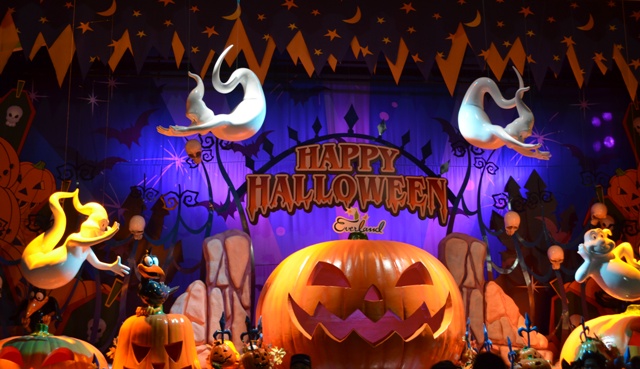
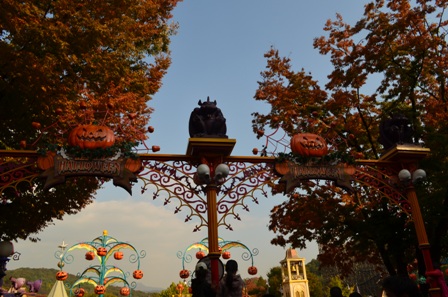
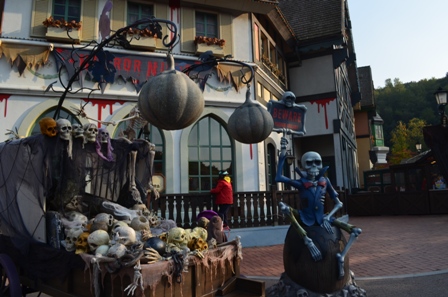
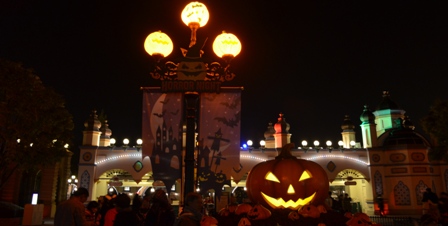
The event consists of Halloween decorations all over the park. When I was there, it was particularly beautiful, because the trees were in full autumn color and it completely added to the ambiance of the season.

Halloween Korea Everland welcome pumpkins

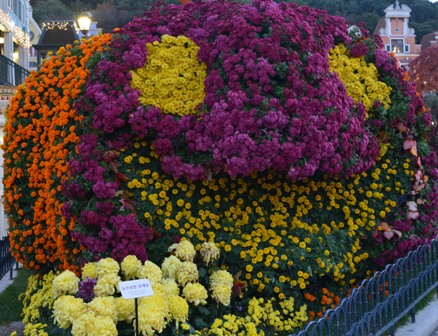
The Four Seasons Garden has Halloween flower decorations and displays and photo ops.

Halloween Korea Everland flower pumpkin

During the day, there is also a Happy Halloween Party parade for the children.

Halloween Korea Everland Halloween Party Parade

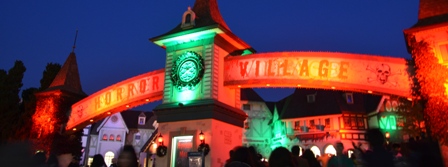
Most of the Halloween Horror Nights activities are centered around Horror Village.

Halloween Korea Everland Horror Village sign

Halloween Korea Everland photo ops

Halloween Korea Everland graveyard decorations

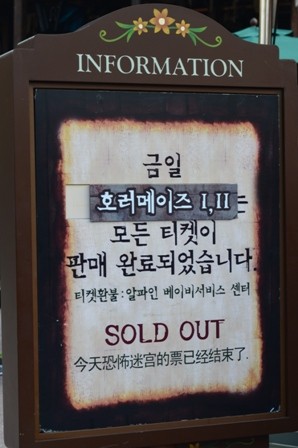
The two big activities there are the two Horror Mazes and the Horror Club Fest, which is held on Friday and Saturday evenings. The club fest is basically a Halloween style rave, with DJs, dancing, Halloween themed drinks and snacks, and a zombie face painting booth. The Horror Mazes (I and II) are add on events, haunted houses, in that you have to buy a small additional fee to enter.

Halloween Korea Everland horror maze line

I wish I could say what the Horror Mazes consisted of, and how they compare to the full throttle horrors of American haunted houses. My feeling is that they would be a bit tamer than American gore and blood filled haunted houses, but now I’ll never know.

Halloween Korea Everland horror maze sold out sign

See that sign? I read Korean in the sense that I can translate the letters into words, but I can’t read Korean in the sense that I know what all the words mean (though I do know some words). But I know enough to know that this sign was telling me that tickets for the Horror Mazes I and II were sold out. Yes, sold out, and this was by 4 pm in the afternoon.

What you don’t see is me absolutely deflating as my Halloween activity dreams evaporated. The one place in Korea (that I know of) that has haunted houses was sold out. The one Halloween activity that I wanted to do was now not available to me. Of course I have no one to blame but myself. I could have chosen to go to Everland any other weekend in those two months, but I waited until the last Saturday before Halloween, because I wanted to experience it closest to Halloween. I could have gone to Everland earlier in the day and gotten my ticket, rather than waiting to go mid afternoon to maximize the evening time. So lesson learned, but it doesn’t really matter, because I won’t be in Korea for next Halloween.

Halloween Korea Everland night pumpkin display

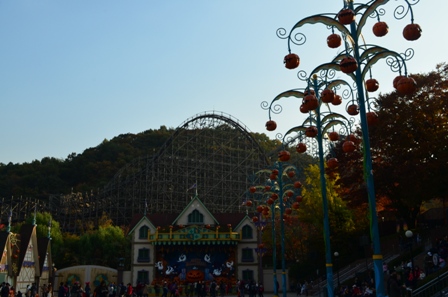
But hey, even though I didn’t get to experience a Korean Halloween haunted house, Everland was still fun. The decorations were nice, the foliage was beautiful. I intend on going back to Everland, though definitely during the work week, because the weekend crowds are just staggering, and I’m not a big crowd person.

Halloween Korea Everland roller coaster

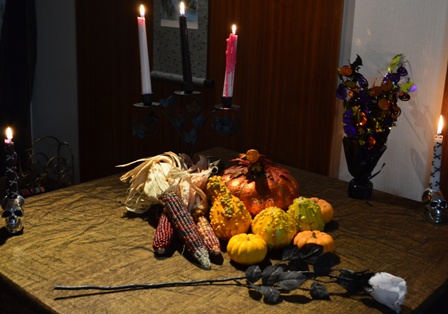
I did decorate my apartment as best as possible, since there aren’t many Halloween decorations on sale here in Korea (thankfully you can buy almost anything online these days). I’m still looking at all the different decoration ideas on sites like Etsy and Pinterest for next year, since I want to progress to more gothic, elegant decorations.

Halloween Korea apartment Wicca altar

But hey, I still love my Halloween superstore decorations.

Halloween Korea apartment table decorations

Halloween Korea apartment paper lanterns

Halloween Korea apartment coffee table decorations

Halloween Korea apartment window decorations

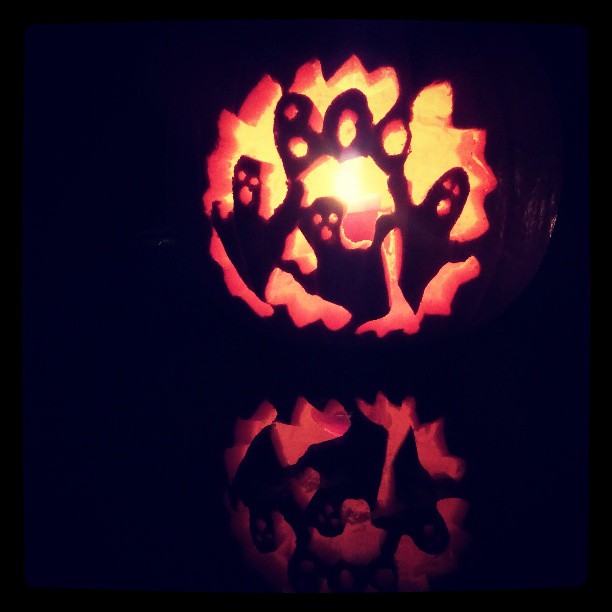
I did get my pumpkin carving on, though thankfully I had the help of a pattern to assist me. Next year, I want to try something more creative. And I definitely need to adjust my carving plans, to prolong the pumpkin so it doesn’t start rotting after a couple days.

Halloween Korea carved pumpkin

So now Halloween in Korea is over with. Autumn is still going strong, and will go for another month . I’m hoping that next year I’ll get to spend at least part of the Halloween season in the states, since it is my favorite holiday.

Seoraksan National Park Day 2- A Hike in the Cheonbuldong Valley

Seoraksan day 2 title picture

My second day at the Seoraksan Nation Park dawned early, sunny and cold. Walking into the park, I admired the sun rising over the mountains. The rising sun painted the the rocks in a reddish-gold light and it reminded me a bit of Zion National Park.

This particular morning, I woke up a bit tired and sore, but pressed on nonetheless with my planned hiking itinerary. I was determined to see as much autumn foliage as possible, and everything I read about hiking in the Cheongbuldong Valley promised a steady stream of autumn colors.

Seoraksan day 2 yellow leaves on trail

Seoraksan day 2 valley with prominent leaves

The first part of the hiking trail was fairly easy. After the extremely steep hike of Ulsan Bawi, a trail with an initial 6% gradient felt like a piece of cake and a stroll in the park. The path was relatively even, and it was just enjoyable to walk along the trail and enjoy the view of the woods around me and not have to stare at the ground so I didn’t trip and fall.

The first major viewpoint on the trail, and a popular turnaround point, was the Bisondae Cliffs (Fairy Rock).  The bridge traversed this very beautiful valley and natural pools of water formed in the rocks via erosion.  I just had to stop, stare and take in the beauty around me.

Seoraksan day 2 Bisondae sunny valley

Seoraksan day 2 Bisondae pools

The trail continued for another few more kilometers up to the Yangpok Shelter. Truthfully, the trail continued much farther and deeper into Seoraksan National Park, with the next major viewpoint Daecheong Peak, several kilometers away. However, I made the decision to turn back at the shelter after a nice break. The gradient more than doubled to around 14%, but the spectacular natural view more than made up for any muscle soreness in my legs.  When I hike in Korea, I have to balance maintaining my footing on the trail, and maximizing the reason I go hiking- enjoying the colorful wonder of beautiful nature of me. Thankfully, there were plenty of man made stairs and boardwalks, so it wasn’t all just me stumbling over large, uneven rocks.

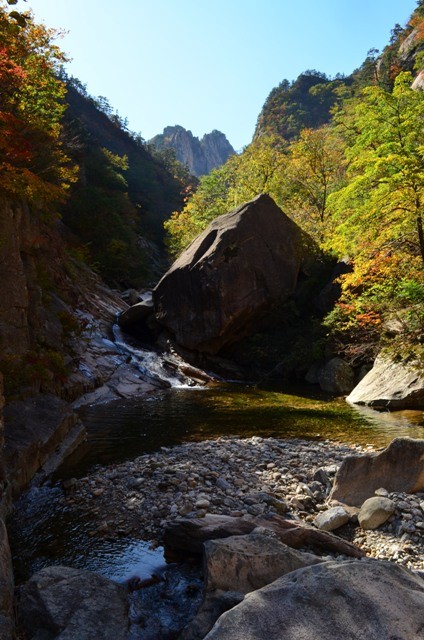
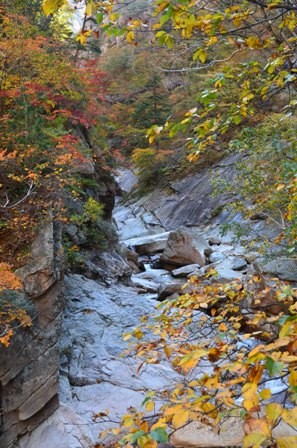
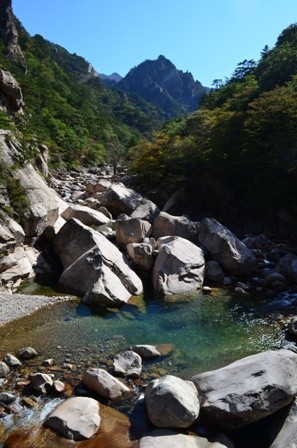
Seoraksan day 2 canyon river

Seoraksan day 2 rocky shale river

Seoraksan day 2 soaring colorful valley

Sometimes the view was so soaring, that I kept having to remind myself that this was all real. This wasn’t some movie. This wasn’t some memory, but real life, happening all around me.

Seoraksan day 2 valley river

Seoraksan day 2 running river

This particular hike is one of the most popular hikes in Seoraksan National Park, and it is easy to see why. The trail isn’t THAT difficult (by Korean hiking standards that is). You can hike as far out as you want and turn around when you want.

Seoraksan day 2 overhead river pools

Seoraksan day 2 river with red and green leaves

Because the elevation seemed to be greater, and the weather a bit cooler in this part of the park, I found plenty of autumn colors on today’s search.

Seoraksan day 2 colorful overhead shot

Seoraksan day 2 red and yellow leaves valley

Seoraksan day 2 red leaves valley

Even though this trail was much easier than the Ulsan Bawi trail, I definitely felt it, particularly on the hike back. That was probably because I was still feeling it from the day prior. There were scores of people on this trail, because it was a Saturday and the busloads of Korean hikers descended on the park. Even though I’m reasonably fit, I was passed by nearly every one in sight, particularly while trying to negotiate the rocky descents. So many Korean hikers were light of foot and they walked confidently, hopped, or even a few cases, ran down the uneven rocky hills, while I gingerly picked my way down, afraid if I didn’t, my spindly ankles would give out and I’d fall down, down, down the rocks. I am absolutely not as sure-footed as most of the other hikers. And thanks to my sore muscles, I was passed by nearly every one on the trail, with the exception of the elderly and infirm. And when I say elderly and infirm, I mean so old and sick, they probably shouldn’t have been on the trail to begin with.

Seoraksan day 2 rocky valley with trees

Seoraksan day 2 steep valley

I did enjoy the hike, and it felt so sweet when I finished and I could just relax, eat lunch and then go back to my hotel for a nice, warm nap. In those two days, I saw all the main sights in Outer Seorak. That is the eastern part of the park, the one closest to the town of Sokcho. It is the most popular with the craggiest hills. A person can easily do this part of the park on the normal, two day weekend. Of course I highly recommend taking a bus out to the park on a Friday night to start hiking early Saturday morning. Even with my relatively slow hiking pace, I was still done by early afternoon. I could have been on a bus back to Seoul that early evening if I so desired.

Seoraksan day 2 rocky valley

Seoraksan day 2 pool with red leaves

Again, if you like beautiful nature, particularly in the fall, and you like hiking, I HIGHLY recommend Seoraksan National Park. Just don’t mind the crowds. And it’s probably best to bring some walking sticks to maintain your balance while hiking on the uneven pathways.