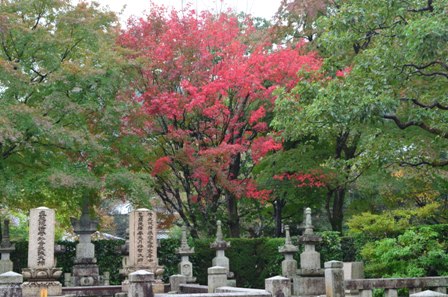
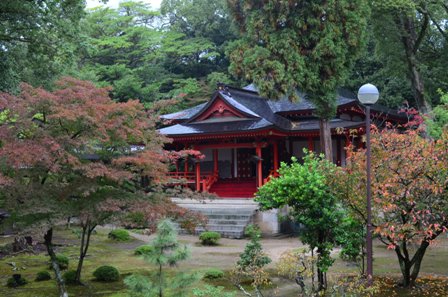
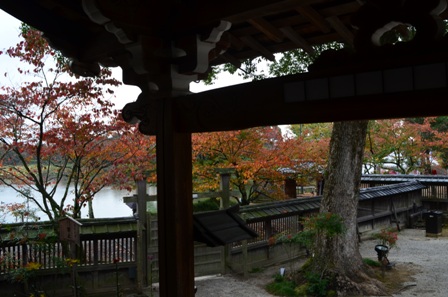
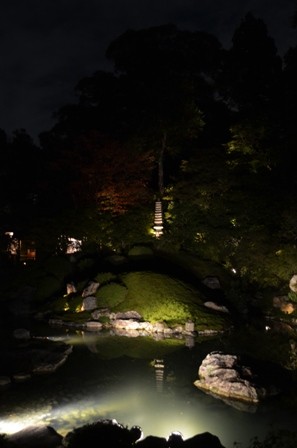
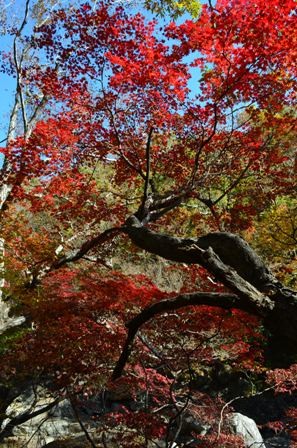
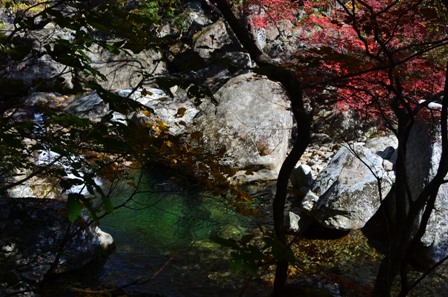
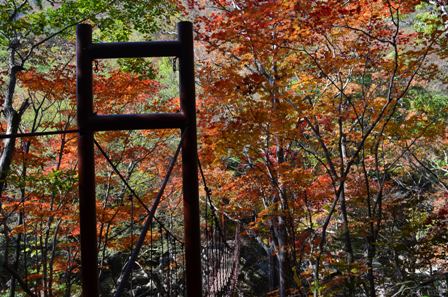
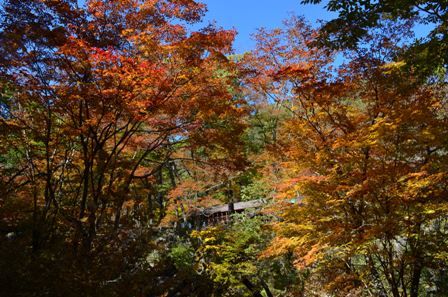
Spectacular Autumn Colors in Takao, Kyoto

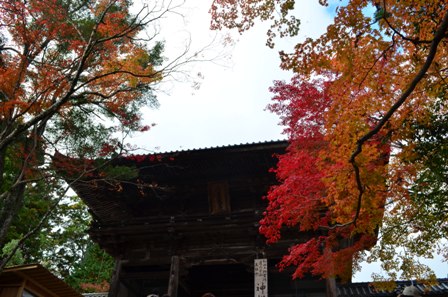
Kyoto Takao Temple title pictureTakao was my final stop on my autumn color extravaganza in Kyoto. I originally intended to visit the Jingoji Temple in the Takao area the night prior since it was open for night illuminations. However, I wussed out and decided to go shopping instead. It turns out it was a really good decision to go during the day, because Takao had the best autumn colors on this trip to Kyoto.

Kyoto Takao Temple red trees

Kyoto Takao Temple entranceTakao is sparsely populated in a mountainous area about an hour’s bus ride from Kyoto. The Takao area houses three temples: Kozanji, Jingoji and Saimyoji. Jingoji Temple is the most popular temple in the area, and was the only one I visited.

Kyoto Takao secondary temple

Kyoto Takao out temple and colorful treesTakao is pretty easy to reach from Kyoto. You can take one of two buses from Kyoto to Takao. The JR bus leaves from Kyoto Station (JR#3 stop). It costs roughly 500 yen one way. The other bus is Kyoto City Bus 8 that leaves from Shijo Karasuma.

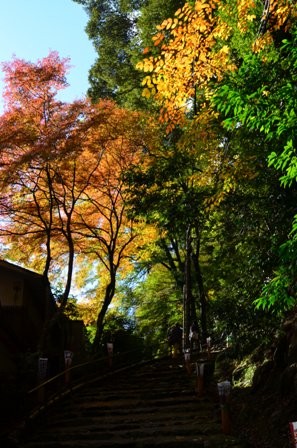
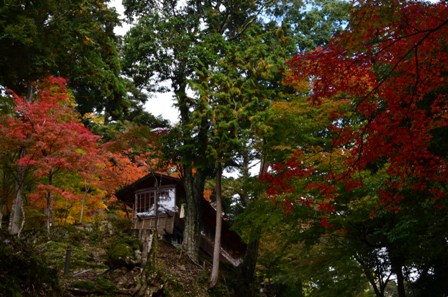
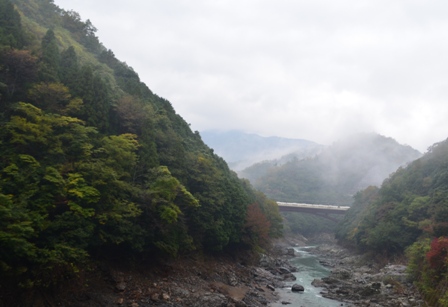
Kyoto Takao sunlight treesIt’s a roughly 20-30 minute walk from the Takao bus stop to Jingoji Temple. The trail goes sharply downhill and crosses a river. Follow the stairs up the hill and to the temple.

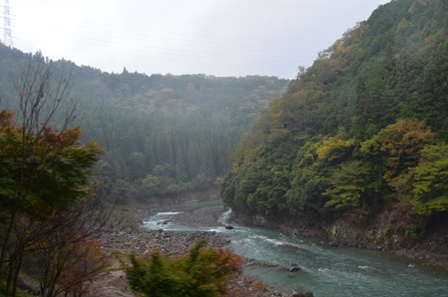
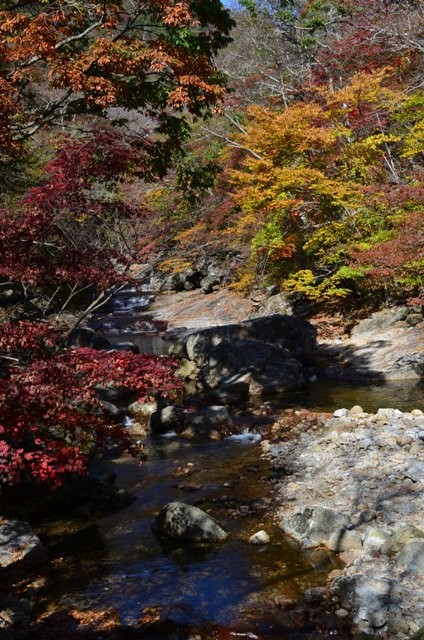
Kyoto Takao valley river

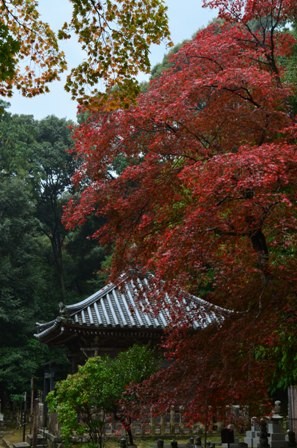
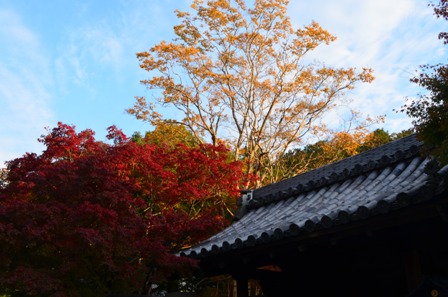
Kyoto Takao colorful roof

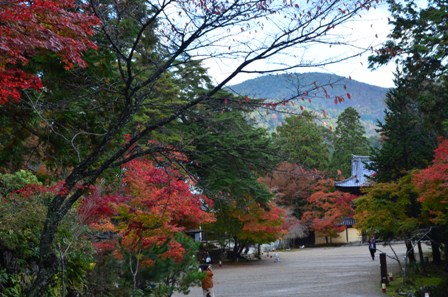
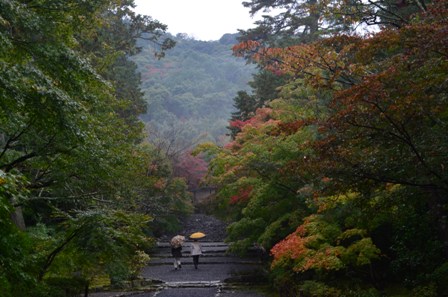
Kyoto Takao colorful pathThe temple grounds are very wide open, and when I was there on a Monday morning, sparsely populated (I imagine it’s much more crowded on a weekend day).

Kyoto Takao Temple entrance interior

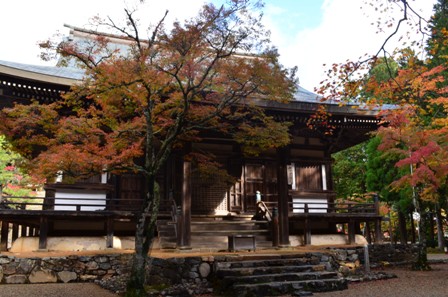
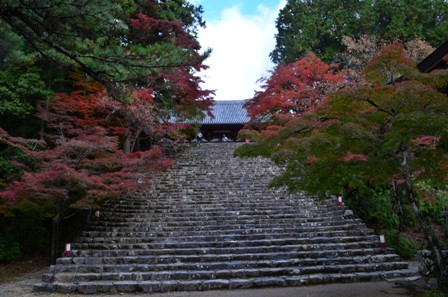
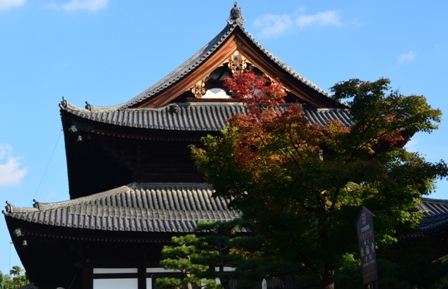
Kyoto Takao colorful temple groundsThe centerpiece of Jingoji Temple complex is a large Buddhist Temple. From the top of the stairs, the view down is quite colorful and spectacular (the title picture of this blog).

Kyoto Takao temple stairs

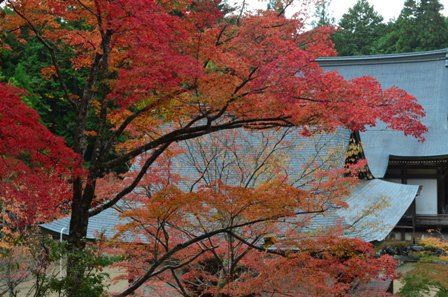
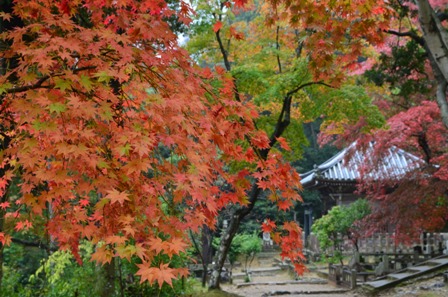
Kyoto Takao colorful tree roofTakao is known for its blazing autumn colors, and it definitely didn’t disappoint. The area hits peak foliage a bit earlier than Kyoto proper, so I got a much bigger hint of what Kyoto looks like when its autumn is at its peak.

Kyoto Takao colorful trees

Kyoto Takao colorful trees on groundTakao was probably my favorite stop on this trip to Kyoto. This provided everything I was looking for and more when it came to autumn foliage. Jingoji Temple is very peaceful and isolated, and that is by design. I thought it was very quiet, peaceful and well built to inspire contemplation, both inward and of the beautiful world around you.

Kyoto Takao colorful building

Kyoto Takao Temple red treesThere are two things that make me really feel like there is a creative force in this world (like a God or Goddess): beautiful art and beautiful  nature. Both of them make me contemplate in awe at how something so beautiful could be created, like the wonderment of the most elaborate Catholic cathedrals in the world, art museums, and nature. The Buddhist temple hall on the grounds was a beautiful combination of the two, with the artwork within the temple and the colorful nature spread outside before you.

Kyoto Takao colorful out building

Kyoto Takao red and orange treesIf you visit Kyoto, particularly in the autumn season, I highly recommend a visit to the Takao region to see the temples. At a minimum, visit Jingoji Temple. You won’t regret it.

Kyoto Takao colorful picnic site

Autumn Colors at Arashiyama Temples- Kyoto

Kyoto Arashiyama Arashion Temple title pictureFor my third day in Kyoto, I made my way out to the Kyoto suburb of Arashiyama. It is a short 20 minute train trip from Kyoto Station on the Sagano Line (train stop: Saga Arashiyama). This suburb was once an place of retreat for the Emperors of the Heian Period (794-1192 CE). Nowadays, in addition to being a quiet, bedroom suburb of Kyoto, it is also home to several historical temples, and is particularly known for its beautiful autumn colors.

Kyoto Arashiyama river bridge

This morning was the first day of poor weather with dark clouds and occasional rain. When I arrived at Arashiyama, I decided take the first train out on the Sagano Romantic Train. It’s a leisurely 25 minute, approximately 7 mile ride to the terminal station of Kameoka. The train chugs along slowly as you can take in the beautiful river valley and the colorful trees around you. You can disembark at Kameoka, or you can take the train back to Arashiyama (approximately 1200 yen round trip) for a nice one hour excursion. If you are also inclined, you can take a two hour boat ride along the river to Arashiyama.

Kyoto Arashiyam valley river

Kyoto Arashiyama valleyAfter returning to Arashiyama, I set off on an approximately three hour walk through the town, stopping off at three of the most prominent temples. My first stop was Nison-in Temple.

Kyoto Arashiyama Nishion Temple main grounds

Nison-in Temple was first built in 834-847 CE, and currently enshrines the two images of Shaka and Amida and are considered national treasures.

Kyoto Arashiyama Nishion Temple worship templeThe autumn colors were quite striking in Arashiyama, and the town hits peak autumn foliage a few days before Kyoto proper.

Kyoto Arashiyama Nishion Temple red treesThe combination of the relative early hour and the rain ensured that I most of the temple complex to myself.

Kyoto Arashiyama Nishion Temple colorful foliageAlso on site was a small Buddhist cemetery.

Kyoto Arashiyama Nishion Temple gravestones

Kyoto Arashiyama Nishion Temple funeraryMy second temple stop was at Adashino Nembutsuji Temple. It is located in the northwest corner of Arashiyama, and to get to the temple, you walk by a very pleasant street of covered shops.

Kyoto Arashiyama Arashion Temple entranceThis particular temple is most known for the thousands of funerary stones on the grounds, from the entrance …

Kyoto Arashiyama Arashion Temple gravestones & red tree…to the central courtyard. I thought the combination of ancient gravestones and colorful trees was particularly striking.

Kyoto Arashiyama Arashion Temple open gravestone field

Kyoto Arashiyama Arashion Temple gravestones and colorful trees

Kyoto Arashiyama Arashion Temple gravestone and a red treeMy final temple stop was at Daikakuji Temple in the northeast corner of Arashiyama.

Kyoto Arashiyama Daikuji Temple main groundsThis temple was a lot bigger than the other ones. This one also had more interior buildings. Your visit through the temple complex is a long, circuitous route on boardwalks. And since this is a Buddhist temple, you have to remove your shoes for your tour. Thankfully since it was raining outside, the entire walk was covered.

Kyoto Arashiyama Daikuji Temple entrance

Kyoto Arashiyama Daikuji Temple red outbuildingThe temple also borders a large pond, Osawa-no-ike Pond covered in waterlilies.

Kyoto Arashiyama Daikuji Temple pondArashiyama is a very easy trip from Kyoto. It’s not even quite a day trip, since you can easily see the town in about four hours. It’s just a short train ride from Kyoto proper and provides a lot of bang for your buck when it comes to both historical sites and beautiful scenery.

Autumn at Night- Kyoto Temple Night Illuminations

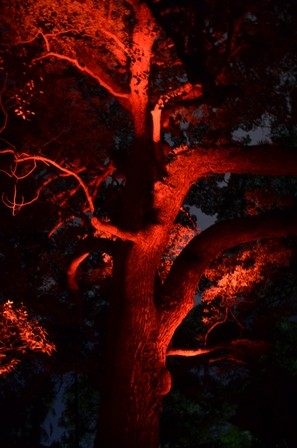
Kyoto Night Shorenin Temple title pictureDuring the height of the autumn season, Kyoto opens up some of its temples and gardens to night illuminations. They also happen in the spring, but I didn’t know about them when I was there the last time. But this time, I did my research before my trip to maximize my autumn foliage viewing, and learned about all the different temples open at night. Sadly for me, some of the largest temple complexes didn’t open until after I left Kyoto. But there were more than one temple I was able to enjoy.

Kyoto Night Shorein Temple lake reflection

Kyoto Night Shorein Temple lakeMy first night in Kyoto I visited two temples: the Shorenin Temple and the Kodaiji Temple. They are located in eastern Kyoto and roughly a 10/15 minute walk from each other. It’s always interesting to visit Japanese temples, because you are required to take your shoes off. But thankfully all the temples provide you with a convenient plastic bag to carry your shoes with you. These temples also have illuminated gardens of trees.

Kyoto Night Shorenin Temple lighted yard

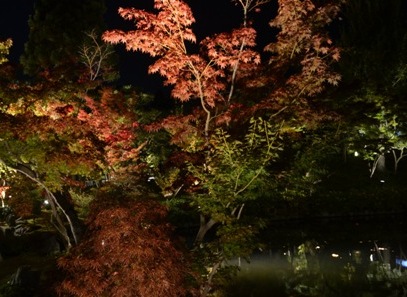
Kyoto Night Shorenin Temple red treeKyoto hadn’t reached peak foliage during my visit, so there was still plenty of green leaves on the trees, but you could see oranges and reds as well.

Kyoto Night Shorenin Temple colored foliageShorenin Temple also has an illuminated bamboo forest.

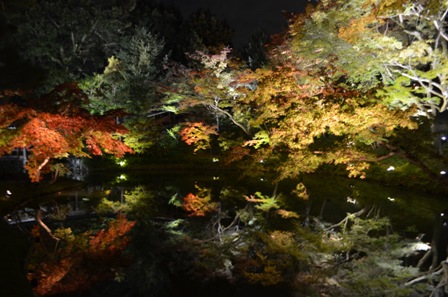
Kyoto Night Shorenin Temple bamboo forestI visited Kodaiji Temple during my last trip and it was interesting to have a new perspective on it, with it being at night and in the autumn.  I was quite entranced with the images of reflections of the trees on still ponds.

Kyoto Night Kodaiji Temple pool reflection

Kyoto Night Kodaiji Temple orange reflection poolMy favorite part of Kodaiji Temple was the illuminated sand garden.

Kyoto Night Kodaiji Temple illuminated sandsThe second night I went to Eikando Temple. The temple is also located in eastern Kyoto and it’s about a 10 minute walk from Nanzenji Temple, so you can easily fit both temples into the same visit. I wasn’t able to visit Nanzenji at night, because the temple gardens weren’t open for night business until later in November. That is another reason why to schedule any Kyoto autumn visits for late November.

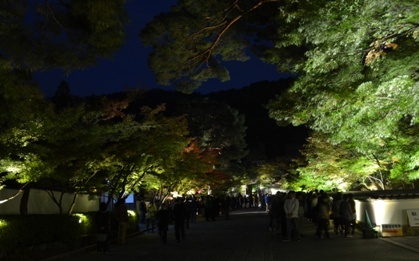
Kyoto Night Eikando foliage with moonThis is the entrance way to the temple. I went there right when it opened at 1730.

Kyoto Night Eikando temple entranceI went early figuring I would catch the temple, and then go enjoy dinner. It turns out that I wasn’t the only one who had that thought. There was a 20 minute wait to get into the temple. The line ran smoothly, though it meant there were hordes of people on site enjoying the illuminations. When I left the temple, there was no line or anything. So if you go to temple night visits, go later in the evening. Most of the temple night illuminations stay open between 2030-2130, so there is plenty of time each night to visit the temples.

Kyoto Night Eikando Temple pool reflectionsThat is another thing about a Kyoto autumn visit. You won’t be the only one with the same brilliant idea, so just be prepared to enjoy your visit along with thousands of others. But you get good at elbowing people out of the way so you can take your picture.

Kyoto Night Eikando reflection poolEikando is particularly good for enjoying night reflections of different colored trees on bodies of water.

Kyoto Night Eikando Temple main lakeLike every other temple in Kyoto, it hadn’t hit peak foliage. But there were definitely brilliant patches of red leaves.

Kyoto Night Eikando red trees

Kyoto Night Eikando red foliageEikando is supposed to be especially beautiful during autumn peak foliage, during both day and night. Definitely don’t miss it.

Kyoto Night Eikando Temple bridge

Searching for Autumn Colors- Kyoto edition

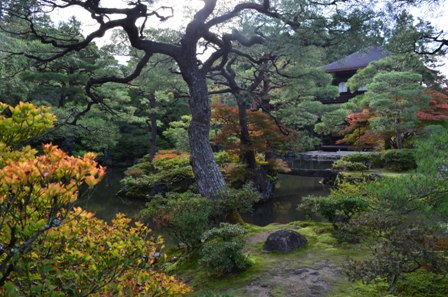
Kyoto Searching Ginkakuji Temple title picture

I visited Kyoto for the first time in May 2013 and really enjoyed it. The city is filled with beautiful temples, historical sites and beautiful gardens. When my planned trip to China fell through for my long weekend in November, I decided to go back to Kyoto instead. I knew that Kyoto is downright gorgeous in the autumn season when all the deciduous trees turn to blazing colors of red, orange and yellow. However, what is interesting about Kyoto is that the fall colors come in later than what I am used to in the United States, Europe and even Korea. In those places, the fall colors already hit peak foliage and are in the downward slide to winter bare branches. However Japan in general, and Kyoto in particular enter fall later, so peak foliage doesn’t hit until around late November/early December.

So I knew that Kyoto autumn colors wouldn’t be in full bloom when I was there, but I was hopeful nonetheless that there would be enough color to get my autumn foliage fix. The search for autumn colors started immediately after I landed in Kyoto.

TOFUKUJI TEMPLE

Kyoto Searching Tofukuji Temple

My first stop was the Tofukuji Temple in Kyoto. Tofukuji Temple is a 10 minute walk (clearly marked with signs) from Tofukuji Station on the JR Nara line and the JR Keihan line.  The foliage was starting to turn at Tofukuji, but it hadn’t turned just yet. It was like a tease for autumn lovers. You know what it could look like (particularly if you have seen pictures of Tofukuji in the full thrust of autumn).

Kyoto Searching Tofukuji Temple foliage

But as a first stop, it was enough to whet your appetite for more. You just had to know where to look to see incipient autumn foliage around you.

Kyoto Searching Tofukuji autumn bridge

MARAYUMA PARK

Later in the day, I made a stop at Maruyama Park shortly before sunset. The park is right in the heart of eastern Kyoto and a short walk from Gion and a wide variety of temples, like Shorenin, Eikando, Kodaiji and Kiyomizu Temple. While the park itself wasn’t overwhelmed with autumn color, this particular spot was perfect for a photo op or just sit and contemplate the fall natural beauty.

Kyoto Searching Marayuma Park lake

Kyoto Searching Marayuma Park foliage

SANZENIN TEMPLE

The next day I got an early start for a long day of autumn color and temple hunting. My first stop was the rural town of Ohara. Ohara is easily reached in a couple of ways. The longer way is Kyoto Bus number 17 from Kyoto Station to Ohara (580 yen). Alternatively, and frankly the quicker way, is to take the Karasuma subway line to the terminal station of Kokusaikaikan Station (a roughly 20 minute ride from Kyoto Station, 280 yen). Then transfer to Kyoto Bus 19 (bus station around back; follow the signs). The ride is roughly 20 minutes and costs 380 yen). Once you arrive at the Ohara Bus station, follow the signs (truthfully most of them are in Japanese, but you should see a few English signs) or the crowds for a 10 minute walk up the hill to Sanzenin Temple, the main attraction in Ohara.

Kyoto Searching Sanzenji Temple out temple

Kyoto Searching Sanzenji garden

Sanzenin Temple is a temple of the Tendai sect of Japanese Buddhism and was founded in the early ninth century. The temple grounds are pretty sprawling with many gardens, out buildings and walking paths. It is a very pleasant outing and you can stroll around the temple grounds and take in the budding autumn colors around you.

Kyoto Searching Sanzenji main temple

Sanzenin is not the only temple in Ohara, but it is the most prominent and the largest temple. However, there are a couple other temples just a few minutes walk down from Sanzenin.

Kyoto Searching Sanzenji neighboring temple

Kyoto Searching Sanzenji foliage bridge

I will say that if you choose to go to Ohara, go early in the morning. I was there shortly after the temple opened at 9am, so the crowds were pretty sparse. However, when I was ready to leave in late morning, I saw the hordes of tour buses and crowds of people milling about. That advice is pretty much true for all popular sites though, particularly at beautiful times of the year, such as cherry blossom season in the spring and the autumn season.

GINKAKUJI TEMPLE

The next stop on my full day itinerary was Ginkakuji, the Temple of the Silver Pavilion. Of course I made a bit of a blunder on my return trip. I knew that Kyoto Bus 17 stopped at Ginkakuji on the way from Kyoto Station heading toward Ohara, so I assumed that it would stop at Ginkakuji on the way back. But sorry, tricks are for kids. I realized way too late that I was nowhere near Ginkakuji. As a sidenote, the best bus stop on the return bus ride back to Kyoto is Demachiyanagi Station. According to the map, it looks to be about a 15 minute + walk east to Ginkakuji. But if you are coming from around Kyoto Station, the best buses are 5, 17, 32, 100, 102, 203 or 204. But eventually I did make it Ginkakuji (the title picture for this blog post).

Ginkakuji Temple is located in eastern Kyoto, and was established in 1482 by Shogun Ashikaga Yoshimasa. His original intent was to coat the structure in silver in imitation of Kinkakuji (Temple of the Golden Pavilion), built by his grandfather. But he died before that could happen, so all that remains is the beautiful, simple wood structure.

Kyoto Searching Ginkakuji Temple autumn foliage

The landscapes of Ginkakuji are very beautiful and very sculpted. The garden pathway is very peaceful (ignore the crowds) and particularly lovely this time of the year.

Kyoto Searching Ginkakuji garden foliage

One of the gardens has landscaped rippled sand, with the centerpiece a small sandhill sculpted into the shape of Mount Fuji.

Kyoto Searching Ginkakuji Temple rock garden

NANZENJI TEMPLE

I capped off the day with a visit to Nanzenji Temple as sunset approached. There is about a one mile walk from Ginkakuji, connected by a pretty pathway called the Philosopher’s Pathway, which is lined with cherry trees. 

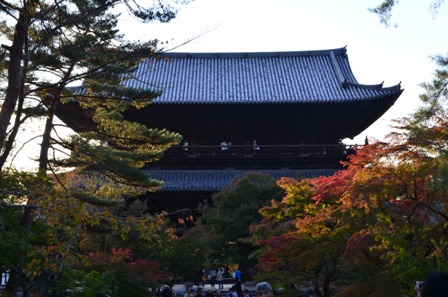
Kyoto Searching Nanzenji Temple main

Nanzenji Temple is a Rinzai Zen temple founded in 1293. The temple complex is set amid a beautiful grove of trees.

Kyoto Searching Nanzenji colorful autumn foliage

During the fall season, Nanzenji Temple is one of the Kyoto temples open for night illuminations during the height of the fall season. Sadly for me, the temple wasn’t open at night until mid November after I left Kyoto, so I could only enjoy it during the day.

Kyoto Searching Nanzenji Temple main grounds

Kyoto Searching Nanzenji foliage

That pretty much capped off the first two days of searching for autumn colors. I had two more days of Kyoto fall foliage (addressed in the coming blog posts). There is plenty to see and do in Kyoto. This was my second long weekend in Kyoto, and I didn’t see the same places twice. So if you love autumn beauty, I highly recommend Kyoto. Though if you want to see it at peak fall foliage, definitely plan your trip for late November/early December.

Jirisan National Park- Piagol Valley Autumn Hike

Piagol Valley colorful foliage river title picture

I did a lot of reading to plan my autumn hiking season in Korea, and one of the places I kept coming across was the Piagol Valley in Jirisan National Park. This quote was frequently sited on articles about this valley, “People who have not seen the red-tinted leaves in Piagol dare not say they know red-tinted leaves.”- Jo Shik, a Confucian scholar of the Joseon Dynasty. A popular autumn leaves festival is held in the Piagol Valley around peak foliage time (supposedly 24 October 2013).

Piagol Valley orange river reflection

Piagol Valley branches with red leaves

Piagol Valley bright red, orange and yellow leaves

So as you can imagine, I had grand visions of awe inspiring beauty for this hike. I imagined the entire trail tinted red, and looking through my pictures, I am reminded how beautiful this hike can be, and how many shades of red and orange percolate through the valley and glow in the bright sunlight. However, I also look back on this hike as exemplifying two other concepts: the gap between expectation and reality, and knowing your own limits.

Piagol Valley shaded valley view

Piagol Valley river pool with red foliage

Piagol Valley river waterfall with red and yellow leaves

Last Sunday when I hiked this, the day dawned very early for me, since my train left from Yongsan Station at 0520. It was a three hour train ride to Gurye-gu Station. I could have taken a bus from Seoul to Gurye, but aside from my preference for trains, I was actually able to start hiking sooner than if I had taken a bus. I knew there were local buses that went from Gurye to the Piagol Valley trailhead, but none of them originated from the train station to my knowledge. So to save time, I elected to take a taxi from the train station to the trailhead, which only cost me 30,000 won (negotiated fare, not meter fare), and it was a roughly 30-40 minute ride. It was still pretty early in the morning when I started hiking, so there weren’t TOO many hiking groups out on the trail.

Piagol Valley bridge with red and orange leaves

Piagol Valley orange and green trees

Piagol Valley red and green leaves

I had planned in advance to only hike to the Piagol Shelter and back, and not push all the way up to the Piagol Samgeori (forked road). While it was only two kilometers from the shelter to the pass (1.2 miles), I could tell from online maps it was pretty steep, as the estimated travel time was two hours one way. This was confirmed for me when I looked at the map at the trailhead, and it had that portion of the trail at a 32% gradient. I remembered, and my legs remembered, the Ulsan Bawi hike which had nearly the same level of steepness, how long it took me, and how much my body ached afterward. Combine that with the distance being twice the distance of Ulsan Bawi, and it reinforced my desire to just to go the Piagol Shelter. I knew my limits of my body, the limits of my hiking speed, and the limits of the return trip to Seoul (since I already had a train ticket booked), and elected to only do the eight kilometer round trip hike to the shelter and back. That hike was only projected to take four hours round trip and the gradient was described as only 6% by the map, so I thought it would be a pleasant and easy hike. However, in my opinion, that map spoke lies. Maybe the AVERAGE gradient of that hike was only 6%, but there were plenty of times throughout that hike that it was much, much steeper.

Piagol Valley orange and yellow leaves river

Piagol Valley shelter

Piagol Valley colorful leaf trees and river

Parts of this trail were very well-maintained that reminded me of American hiking trails. Other parts of this trail were supremely uneven with big rocks substituting for an actual path. If I didn’t actually know what some Korean hiking trails looked like, I might think I was lost in the middle of the woods. But I would never get actually lost, because I was never actually alone out there. This hiking trail is very popular, and I saw dozens of hiking groups. In fact most of them skillfully and quickly passed me as I trudged along the trail, carefully picking my way from one uneven rock to another to avoid falling or spraining my ankles. I forgot to bring my walking sticks (AGAIN!) and my body (particularly my thighs and my knees) definitely felt it by the end.

Piagol Valley swing bridge with colorful leaves

Piagol Valley river pool and red leaves

Piagol Valley red and orange overhead foliage

This brings up the gap between my expectation of this hike and the reality of this hike. I thought this hike would be easier than it was, and I admit to feeling a bit dispirited by the end, and supremely grateful when I completed the hike. I kept thinking that what do Koreans have against even, well-maintained trails. Maybe it’s part of the fun to not only enjoy a colorful view, but also to lightly hop from one rock to another.

Piagol Valley colorful rocky river

Piagol Valley red, orange and green leaves

Piagol Valley orange and yellow overhead foliage

In any case, while I don’t regret going on this hike, if I had known all of this in advance, I might not have done the hike. There are very beautiful views on this hike, but I didn’t see anything so unique that I haven’t seen on other Korean hiking trails. Though looking back at all these pictures, I do marvel at the colorful beauty I saw. So honestly, if I was more fleet of foot and didn’t stumble on uneven trails, I probably would have enjoyed it more. My opinion of this hike is colored by the fact that I can be a graceless klutz at times.

Piagol Valley small waterfall and red leaves

Piagol Valley red orange leaves

Getting to and from Gurye is pretty easy. Like I said before, you can take a train or a bus. Both of them travel from Seoul to Gurye on a regular basis. If you take a bus to Gurye, you can easily transfer to a local bus to Piagol (approximately one per hour) directly from the bus station. Or you can easily take a taxi to the trailhead. Getting back from Gurye was a bit more painful, because all the direct trains were full and I ended up having to make some transfers, and what is a three hour direct KTX train between the two cities, became a six hour journey over slower trains. So if you take the train back, make sure you book your train ticket well in advance, particularly on popular weekends, like the height of autumn and spring.

Seoraksan National Park- Sibiseonnyetang Hike (Valley of the 12 Angels’ Bath)

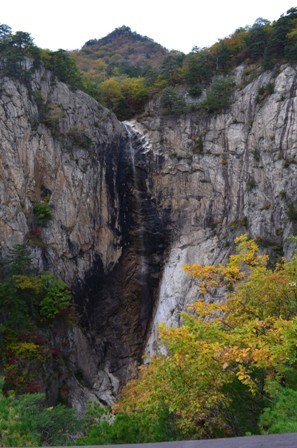
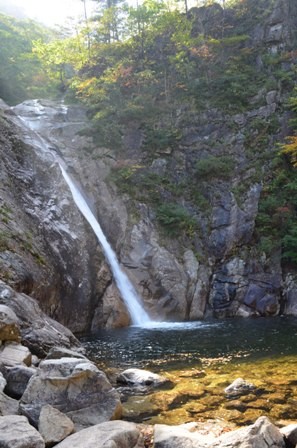
Sibiseonnyetang Boksungatang waterfall

A couple weekends ago, I trekked back to Seoraksan National Park for a third hike. I originally planned on doing this hike during my long weekend in Seoraksan National Park. However, after a couple somewhat strenuous hikes, my legs were just so tired. When I factored in that my third planned hike was the longest, and also supposed to be somewhat strenuous, I decided that it was probably best to just head home and then come back on another weekend.

Sibiseonnyetang shaded waterfall

So the next weekend, at 0630 in the morning, I was on a bus from Seoul out to Seoraksan National Park. This hike was in Inner Seorak, which is on western side of the park (unlike my previous weekend at Outer Seorak on the eastern side of the park). Inner Seorak is much more isolated than Outer Seorak and less developed. It’s also a bit harder to get to, but it’s not THAT difficult with a little bit of planning.

Sibiseonnyetang red tree pathway

Sibiseonnyetang autumn river pathway

Inner Seorak and this trailhead are most accessible by bus (assuming you take public transportation and don’t have your own car). Take a bus from Dong Seoul bus station (located at Ganbyeon subway station, line 2, exit 4) to Inje or Wonton-ri station. It’s about a two-two and a half hour trip. I kept reading that their were local buses to take you to the trailheads, and maybe there were. However, I didn’t have any bus numbers or the bus times. Since my hike was very long, and I was burning daylight, I took the easier, but more expensive route. I took a cab from and to the trailheads. The taxi fare was about 26,000 won each way (which ironically was twice the 13,000 won bus tickets to and from Seoul) for about a 15 minute ride.

Sibiseonnyetang rushing river orange tree

Sibiseonnyetang river

This particular hike was the Namkyo-ri course. The Korean National Parks website describes the course as “extending from Namgyo-ri through Sibi Seonnyeotang Basin to Daeseungnyeong Pass. It is recommended that you should take thorough precautions as the valley is long and dangerous. Seonnyeotang Basin has legend that fairies came down to take a bath. It is one of the most beautiful places in Seoraksan Mountain. Waterfalls form ponds (baths) on the rock. The name indicates 12 such places, but there are only eight ponds. The one on the highest spot named Boksungatang Basin is by far the best in the 84m-long valley.”

Sibiseonnyetang river red tree overshot

This hike was a bit different than other hikes I’ve done in Korea. First off, it was the longest hike I’ve done in Korea. The trail was over 11 kilometers long, which is actually not that long of a hike in terms of actual distance (only a little over seven miles), but it is reasonably long for a Korean day hike. The predicted time for this hike was six and a half hours, and that is actually the amount of time it took me to complete this hike. This hike also differed, because it was a one way trip. All of the other hikes I’ve done were either loop hikes or a there and back again with a turnaround point. Sure, you can do that with this hike, but it is also possible to hike from one major trailhead to the other. That makes it more visually interesting, because I didn’t see the same things.

Sibiseonnyetang waterfall with autumn trees

I started this hike pretty early at 0900, and there weren’t many people on the trail at the time. I started this trail at the Namkyo-ri Ranger Station and headed east. I got ahead of a hiking group and set out alone on the trail. The first few kilometers of this hike passed by pretty quickly, because the trail was fairly flat and even. I was even shocked that I was passing some people on the trail. Maybe I was just a bit fitter that day. Maybe the other hikers were just a bit slower, but I kept a pretty good pace, though of course I had to stop every so often to marvel at the spectacular autumn beauty around me. Peak autumn foliage for Seoraksan National Park was predicted to be 18 October, and I did this hike on 20 October. Having never seen what peak foliage looks like in Seoraksan National Park, I couldn’t say for sure that the park was actually at peak foliage. However, I saw plenty of colorful leaves all throughout the trail.

Sibiseonnyetang shaded pathway

Sibiseonnyetang bridge and colored trees

Most of the hiking groups I encountered at the first part of the trail seemed to be headed toward Boksungatang (the title picture on this post), which is a beautiful waterfall/rock formation. With the exception of the final 100 meters, which is pretty steep, and I needed to pull myself up the trail by the metal railing, the trail to Boksungatang is pretty easy. I knew this trail was rated as being difficult, and wondered what was considered strenuous (I would soon figure that out). Since this is the most scenic sight of this part of the trail, it was a popular turnaround point or lunch spot for hikers.

Sibiseonnyetang small waterfall

After taking in the view (along with the crowds which had gathered by this point), I pressed on and continued hiking. This is when you start seeing why the trail is rated as strenuous. The next couple kilometers weren’t TOO bad, because there were plenty of boardwalks and staircases and plenty of places along the river to have lunch.

Sibiseonnyetang falling rocks colorful trees

Sibiseonnyetang valley wideshot

The most strenuous part of this hike is the middle five and a half kilometers. About three and a half kilometers of this trail are what I would consider the least scenic part of this trail. At this point, you move away from the river and steadily up the mountain to the Daeseungnyeong Pass, until you can start moving down the mountain to Daesung Falls and the Jangsudae Ranger Station. This part of the hike was the most taxing on my knees and my thighs and I was silently cursing myself for forgetting my walking sticks. It didn’t get that much easier when I started heading down the mountain, because the trail was equally steep going down as it wqw be going up (it’s just a question which part of your leg will hurt for the ascent or descent).

Sibiseonnyetang overhead river shot

The final scenic viewpoints on this trail is the Daesung Falls and a panoramic view of the mountains and trees around you, which are .9 kilometers from the ending trailhead.

Sibiseonnyetang Daesung Falls

Sibiseonnyetang surrounding mountains

The waterfall is in the top three for the largest in Korea, and is about 89 meters tall. The trail at this point is almost entirely man-made staircases and boardwalks. By this point in my hike, my legs were tired, and I was glad I was descending rather than ascending, because the trail is pretty steep, even if the trail isn’t that long. I emerged at the Jangsudae Ranger Station and was very grateful to see a taxi ready to take me back to the Inje bus station for my trip home.

Sibiseonnyetang orange tree pathway

Another interesting thing about this hike is that, for at least parts of the hike, I found something I hadn’t found on the other Korean hikes I’ve done: peace, quiet and solitude. I was very surprised at first, and figured maybe it was just because it was a bit early in the morning, or maybe because it wasn’t a more popular hike in Seoraksan National Park. However, I did encounter plenty of hiking groups soon enough. For as near as I can tell, most of the Koreans I’ve encountered hike in large groups. You often see hordes of buses by the trailheads carrying dozens of groups each weekend. I saw some hiking groups up to Boksungatang, but then I didn’t see some for a while. And THEN, I kept running into group after group as they were heading in the opposite direction from me. Most of the groups I saw started at the Jangsudae trailhead and were heading west. The trail gets pretty narrow in parts, and I elected to stand aside to let the steady stream of people pass (my legs thanked me for the regular, enforced breaks). However, by the time I reached the Daeseungnyeong Pass and headed down the mountain, I was pretty much alone again. I can count on one hand how many people I saw between the pass and the Daesung Falls. It was so quiet, and that is just something I don’t frequently encounter in a country as heavily populated as Korea.

Sibiseonnyetang Eudam waterfall side view

It was also interesting to encounter the friendliness of many of the Korean people on this hike. I’ve seen it in the past, where strangers are often very friendly to me, because I am a Western woman traveling alone. It was particularly strong on this hike, as so many people were surprised (maybe a bit impressed) that I was hiking alone out in the middle of nowhere. Since Korea is a very safe country, I never worried about running into a maniacal serial killer, which is a thought that often crosses my mind when I hike alone in America.

Sibiseonnyetang bridge and orange tree

Sibiseonnyetang bright trees and waterfall

I highly recommend this hike, but definitely come prepared. If you have walking sticks, bring them and your thighs and knees will probably thank you. Definitely bring a lunch or snacks, because this full hike will take you at least six hours, depending on your walking speed. You can’t bring enough water. I only brought one 500ml bottle of water, when I should have brought two (I had to ration water halfway through the hike). There aren’t any safe water sources on the trail that I am aware of, or any food stands. It is a fairly isolated hike, but if you like peace and beautiful nature, you should like this hike.

Halloween Horror Nights in Korea…

Halloween Korea Everland holiday greeting photo op

…Or at least I tried my best.

For the past 15 years, I’ve spent the vast majority of my time living overseas. In fact, I’ve only spent a cumulative total of maybe three years at the most living in the states. For the most part, I don’t really miss the states, in the sense that I can find many similar things overseas, or new things that I like.  There are very few things that aren’t available or replicated overseas, at least in the developed nations I’ve lived in (Korea and Germany). Plus the advent of the Internet ensures that I can order anything I want from American stores, and can access American entertainment fairly easily.

However, the whole Halloween seasonal experience is one thing that is uniquely American and not easily replicated in other countries. It’s not that you won’t find Halloween stuff in other nations. It’s just not to the level and depth that you find in America. Germany did have Halloween parties, and in particular, there were weekend festival celebrations at the Frankenstein Castle in Darmstadt. Bars and clubs did have costume nights. Trick or treating was somewhat common for German children. But it’s all the other Halloween activities that weren’t very common.

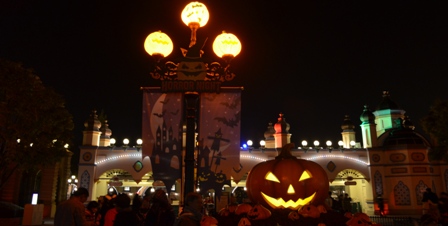
Halloween Korea Everland lighted pumpkins and scarecrows

Halloween as it is typically practiced nowadays by most Halloween lovers originated in America. I mean, it’s a entire industry for the season (about early to mid September to Halloween). Halloween decorations sometimes show up in stores in the summertime.  Seasonal candy and baked goods are everywhere. Pumpkin spice lattes flood American Starbucks. Pumpkin pancakes abound in restaurants. Basically all forms of pumpkin food are available. You can find multiple haunted houses, corn mazes, pumpkin patches, costumes, parties. Amusement parks have Halloween horror nights. Bars and clubs have parties with seasonal drinks. It’s everywhere, and I love it. I could fill my weekends with different Halloween/autumn activities for the entire season if I wanted when I lived in America. The last time I spent October in the states was 2009-2010. I went to haunted houses, Halloween Horror Nights, corn mazes, pumpkin patches as often as I could.

Halloween Korea Everland pile of pumpkins

I’ve spent the past two autumns (2012 and 2013) in Korea. Now autumn in Korea is my favorite time of the year here (as I’ve mentioned in other blog posts), because the weather is very pleasant and nature is especially beautiful with all the colors. But autumn activities are different than Halloween activities. Halloween is not that big of a deal in Korea, outside of the American community here. You can find some costumes sold in Itaewon, the more foreign-oriented district in Seoul. And there are a few Halloween parties in bars. But you just don’t find the number of Halloween activities in Korea. I haven’t seen a pumpkin patch or a corn maze, because that is not the agriculture of this country. I can’t even find pumpkin spice lattes in Korean Starbucks (much to my surprise and chagrin). And there really aren’t the haunted houses in Korea.

Halloween Korea Everland lighted pumpkins

Everland amusement park in Korea is the one exception. Everland is Korea’s largest amusement park, and it is located in Suwon, which is a city about an hour’s bus ride south of Seoul. Everland is a fun amusement park, and it’s sort of like Disneyland in the sense that there are different themed areas of the park with rides and stuff, and many different seasonally themed festivals throughout the year. Throughout September and October, Everland has Halloween Horror Nights.

Halloween Korea Everland posts

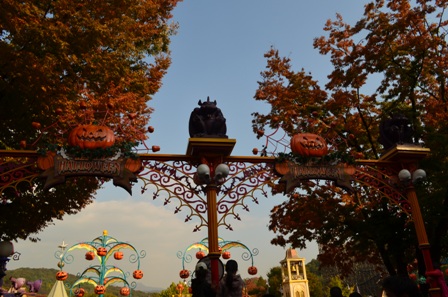
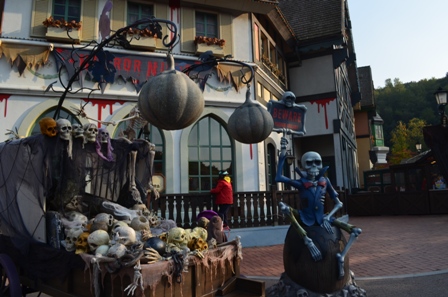
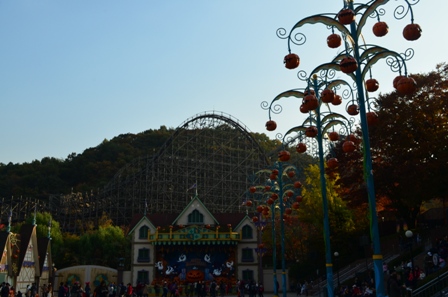
The event consists of Halloween decorations all over the park. When I was there, it was particularly beautiful, because the trees were in full autumn color and it completely added to the ambiance of the season.

Halloween Korea Everland welcome pumpkins

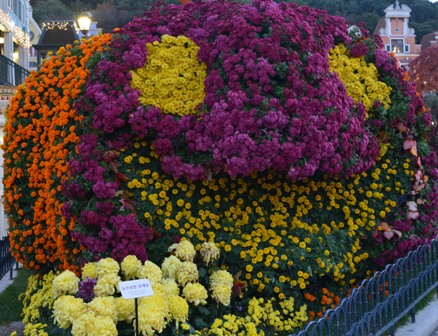
The Four Seasons Garden has Halloween flower decorations and displays and photo ops.

Halloween Korea Everland flower pumpkin

During the day, there is also a Happy Halloween Party parade for the children.

Halloween Korea Everland Halloween Party Parade

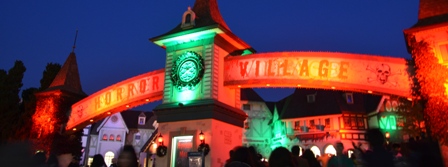
Most of the Halloween Horror Nights activities are centered around Horror Village.

Halloween Korea Everland Horror Village sign

Halloween Korea Everland photo ops

Halloween Korea Everland graveyard decorations

The two big activities there are the two Horror Mazes and the Horror Club Fest, which is held on Friday and Saturday evenings. The club fest is basically a Halloween style rave, with DJs, dancing, Halloween themed drinks and snacks, and a zombie face painting booth. The Horror Mazes (I and II) are add on events, haunted houses, in that you have to buy a small additional fee to enter.

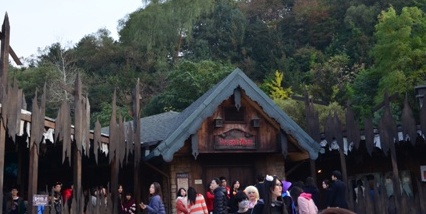
Halloween Korea Everland horror maze line

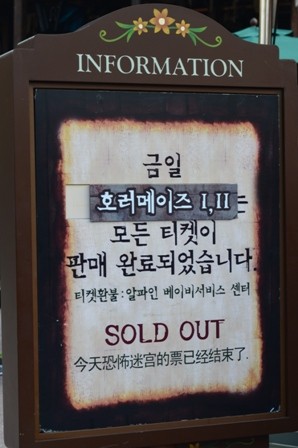
I wish I could say what the Horror Mazes consisted of, and how they compare to the full throttle horrors of American haunted houses. My feeling is that they would be a bit tamer than American gore and blood filled haunted houses, but now I’ll never know.

Halloween Korea Everland horror maze sold out sign

See that sign? I read Korean in the sense that I can translate the letters into words, but I can’t read Korean in the sense that I know what all the words mean (though I do know some words). But I know enough to know that this sign was telling me that tickets for the Horror Mazes I and II were sold out. Yes, sold out, and this was by 4 pm in the afternoon.

What you don’t see is me absolutely deflating as my Halloween activity dreams evaporated. The one place in Korea (that I know of) that has haunted houses was sold out. The one Halloween activity that I wanted to do was now not available to me. Of course I have no one to blame but myself. I could have chosen to go to Everland any other weekend in those two months, but I waited until the last Saturday before Halloween, because I wanted to experience it closest to Halloween. I could have gone to Everland earlier in the day and gotten my ticket, rather than waiting to go mid afternoon to maximize the evening time. So lesson learned, but it doesn’t really matter, because I won’t be in Korea for next Halloween.

Halloween Korea Everland night pumpkin display

But hey, even though I didn’t get to experience a Korean Halloween haunted house, Everland was still fun. The decorations were nice, the foliage was beautiful. I intend on going back to Everland, though definitely during the work week, because the weekend crowds are just staggering, and I’m not a big crowd person.

Halloween Korea Everland roller coaster

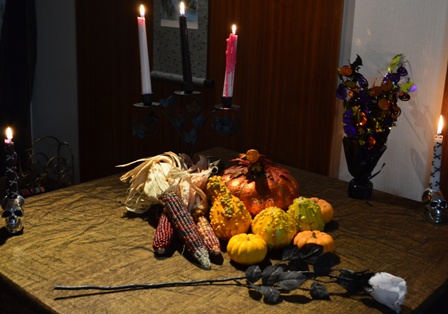
I did decorate my apartment as best as possible, since there aren’t many Halloween decorations on sale here in Korea (thankfully you can buy almost anything online these days). I’m still looking at all the different decoration ideas on sites like Etsy and Pinterest for next year, since I want to progress to more gothic, elegant decorations.

Halloween Korea apartment Wicca altar

But hey, I still love my Halloween superstore decorations.

Halloween Korea apartment table decorations

Halloween Korea apartment paper lanterns

Halloween Korea apartment coffee table decorations

Halloween Korea apartment window decorations

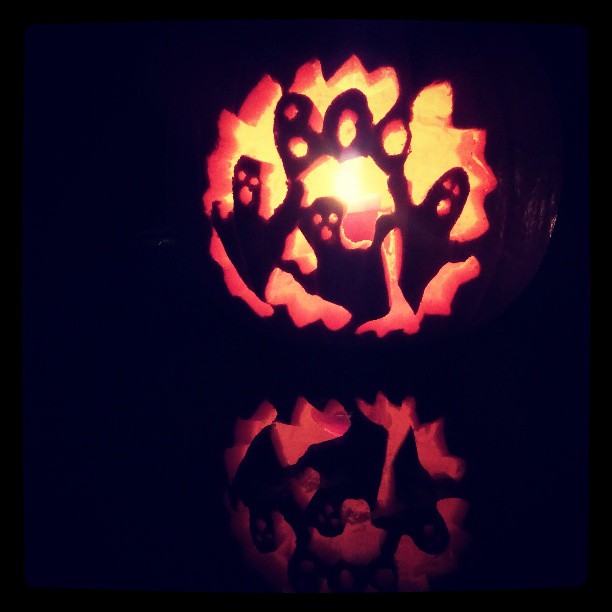
I did get my pumpkin carving on, though thankfully I had the help of a pattern to assist me. Next year, I want to try something more creative. And I definitely need to adjust my carving plans, to prolong the pumpkin so it doesn’t start rotting after a couple days.

Halloween Korea carved pumpkin

So now Halloween in Korea is over with. Autumn is still going strong, and will go for another month . I’m hoping that next year I’ll get to spend at least part of the Halloween season in the states, since it is my favorite holiday.

Seoraksan National Park Day 2- A Hike in the Cheonbuldong Valley

Seoraksan day 2 title picture

My second day at the Seoraksan Nation Park dawned early, sunny and cold. Walking into the park, I admired the sun rising over the mountains. The rising sun painted the the rocks in a reddish-gold light and it reminded me a bit of Zion National Park.

This particular morning, I woke up a bit tired and sore, but pressed on nonetheless with my planned hiking itinerary. I was determined to see as much autumn foliage as possible, and everything I read about hiking in the Cheongbuldong Valley promised a steady stream of autumn colors.

Seoraksan day 2 yellow leaves on trail

Seoraksan day 2 valley with prominent leaves

The first part of the hiking trail was fairly easy. After the extremely steep hike of Ulsan Bawi, a trail with an initial 6% gradient felt like a piece of cake and a stroll in the park. The path was relatively even, and it was just enjoyable to walk along the trail and enjoy the view of the woods around me and not have to stare at the ground so I didn’t trip and fall.

The first major viewpoint on the trail, and a popular turnaround point, was the Bisondae Cliffs (Fairy Rock).  The bridge traversed this very beautiful valley and natural pools of water formed in the rocks via erosion.  I just had to stop, stare and take in the beauty around me.

Seoraksan day 2 Bisondae sunny valley

Seoraksan day 2 Bisondae pools

The trail continued for another few more kilometers up to the Yangpok Shelter. Truthfully, the trail continued much farther and deeper into Seoraksan National Park, with the next major viewpoint Daecheong Peak, several kilometers away. However, I made the decision to turn back at the shelter after a nice break. The gradient more than doubled to around 14%, but the spectacular natural view more than made up for any muscle soreness in my legs.  When I hike in Korea, I have to balance maintaining my footing on the trail, and maximizing the reason I go hiking- enjoying the colorful wonder of beautiful nature of me. Thankfully, there were plenty of man made stairs and boardwalks, so it wasn’t all just me stumbling over large, uneven rocks.

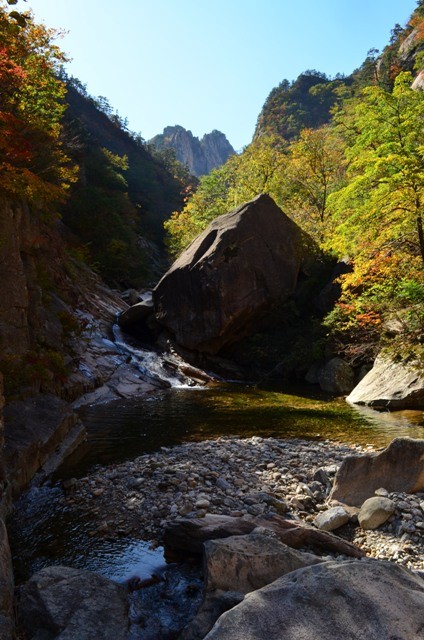
Seoraksan day 2 canyon river

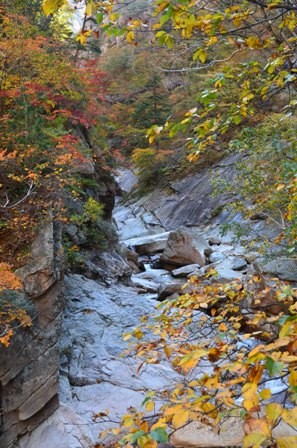
Seoraksan day 2 rocky shale river

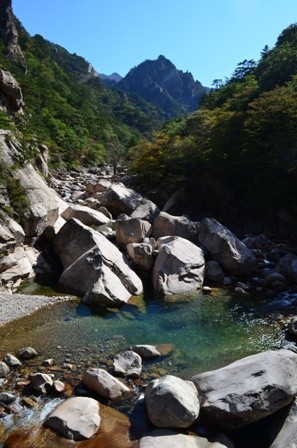
Seoraksan day 2 soaring colorful valley

Sometimes the view was so soaring, that I kept having to remind myself that this was all real. This wasn’t some movie. This wasn’t some memory, but real life, happening all around me.

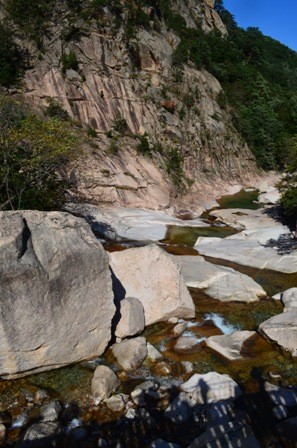
Seoraksan day 2 valley river

Seoraksan day 2 running river

This particular hike is one of the most popular hikes in Seoraksan National Park, and it is easy to see why. The trail isn’t THAT difficult (by Korean hiking standards that is). You can hike as far out as you want and turn around when you want.

Seoraksan day 2 overhead river pools

Seoraksan day 2 river with red and green leaves

Because the elevation seemed to be greater, and the weather a bit cooler in this part of the park, I found plenty of autumn colors on today’s search.

Seoraksan day 2 colorful overhead shot

Seoraksan day 2 red and yellow leaves valley

Seoraksan day 2 red leaves valley

Even though this trail was much easier than the Ulsan Bawi trail, I definitely felt it, particularly on the hike back. That was probably because I was still feeling it from the day prior. There were scores of people on this trail, because it was a Saturday and the busloads of Korean hikers descended on the park. Even though I’m reasonably fit, I was passed by nearly every one in sight, particularly while trying to negotiate the rocky descents. So many Korean hikers were light of foot and they walked confidently, hopped, or even a few cases, ran down the uneven rocky hills, while I gingerly picked my way down, afraid if I didn’t, my spindly ankles would give out and I’d fall down, down, down the rocks. I am absolutely not as sure-footed as most of the other hikers. And thanks to my sore muscles, I was passed by nearly every one on the trail, with the exception of the elderly and infirm. And when I say elderly and infirm, I mean so old and sick, they probably shouldn’t have been on the trail to begin with.

Seoraksan day 2 rocky valley with trees

Seoraksan day 2 steep valley

I did enjoy the hike, and it felt so sweet when I finished and I could just relax, eat lunch and then go back to my hotel for a nice, warm nap. In those two days, I saw all the main sights in Outer Seorak. That is the eastern part of the park, the one closest to the town of Sokcho. It is the most popular with the craggiest hills. A person can easily do this part of the park on the normal, two day weekend. Of course I highly recommend taking a bus out to the park on a Friday night to start hiking early Saturday morning. Even with my relatively slow hiking pace, I was still done by early afternoon. I could have been on a bus back to Seoul that early evening if I so desired.

Seoraksan day 2 rocky valley

Seoraksan day 2 pool with red leaves

Again, if you like beautiful nature, particularly in the fall, and you like hiking, I HIGHLY recommend Seoraksan National Park. Just don’t mind the crowds. And it’s probably best to bring some walking sticks to maintain your balance while hiking on the uneven pathways.

Seoraksan National Park Day 1- Searching for Autumn Colors

Seoraksan day 1 beautiful view from Ulsan Bawi

Last weekend I kicked off my autumn hiking season with a long weekend at Seoraksan National Park. My favorite time of the year has arrived in Korea and I intended to enjoy the beautiful nature to the fullest. I have a whole season full of hiking planned at national parks throughout Korea. I have been to Seoraksan National Park the last time I lived in Korea, but that was actually only one day of hiking, so I wanted to enjoy it more and hike many different trails in the park.  Seoraksan National Park is one of the most popular national parks in Korea, for good reason. The hiking is amazing and the scenery is so beautiful. It’s nice any time of the year, but its true charm comes out when the fall colors ablaze everywhere. It’s also when the crowds come out, but that is just something you just deal with to enjoy yourself.

It’s very easy to reach Seoraksan National Park. The nearest large city is Sokcho and there are numerous busses departing from  the Dong Seoul bus station and Seoul Express Bus Terminal (about every 30 minutes during the day). The trip only takes about three hours, so I took an evening bus to Seoraksan Thursday night, so I could start hiking early Friday morning before the crowds hit. To make it easy for hiking, I chose to stay at a motel (The Seorak Morning Inn) in the village of Seorak-dong, which is about a 1.5 km easy, pleasant walk or short bus ride to the park entrance.

I picked Seoraksan as my first hiking weekend, both because I had a long weekend to do all the hikes I wanted in the time available, and it was also supposed to be the first national park to hit peak color for autumn foliage in the middle of October. I had visions of seeing the entire hills covered in red, orange and yellow. What I found was a bit different. Due to the warm weather this, the advent of fall seems to be delayed in Korea. It was the middle of October, and while there were leaves changing, it was not as much as I expected. But I valiantly set out in search of autumn colors.

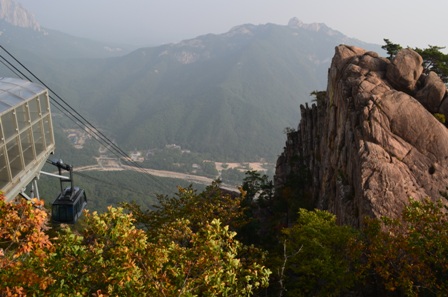
My first day in the park was a Friday, so while there were people there, it certainly wasn’t as crowded as it is on weekends.  Of course it also helped that was I an early bird and arrived at the park shortly after it opened. The first thing I did when I got to the park (before the lines got too long) was take the cable car up to Gwongeumseong (Gwongeum Fortress) which is the ruin site of an old castle. The cable car ride is only about six minutes up, and it takes you to a hill with a beautiful view over the valley below and the mountains surrounding the hill.

Seoraksan day 1 cable car to Gwongeumseong

The weather was a bit hazy at first, since it was early morning. But I could see patches of orange and yellow among the abundance of green trees.

Seoraksan day 1 Gwongeumseong view

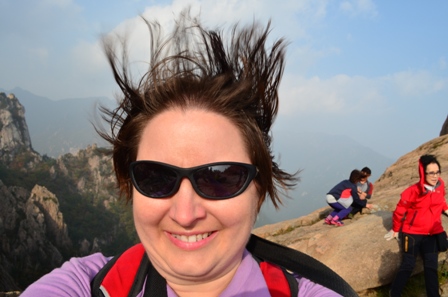
It was SUPER windy at the top of the hill. See the picture below for just a hint at how windy it was. At times the gusts were so strong, I felt like I was going to be blown off the mountain if I lost my footing.

Seoraksan day 1 super windy me on top of Gwongeumseong

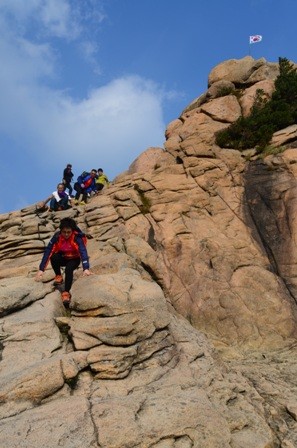
My ultimate goal was the top of Gwongeumseong, which was marked by the Korean national flag blowing in the wind. Getting up was interesting, because the path was a bit narrow in parts, and I had to pull myself along with a rope during parts of the ascent. And it was even windier on top of the mountain.  Like always, I personally found it easier to ascend and climb up rather than descend and climb down. Coming off the mountain was an interesting journey. When you see nimble, able Korean hikers descending on their butt, you KNOW it is a bit treacherous for someone like me who is clumsy and decidedly not sure-footed. But I made it in one piece, ready for more hiking.

Seoraksan day 1 Gwongeumseong treacherous path

The second hike of the day was an easy hike to Biryong Falls. It was only 2.4 kilometers with no major uphills. Instead it was easy and pleasant to hike along the trail, enjoying the view around me. The hike starts a few hundred meters from the entrance to the cable car, and you can see the cable car ascend as you begin the hike.
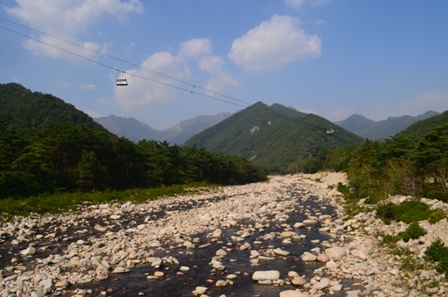
Seoraksan day 1 cable view on trail to Biryong Falls

I was very charmed by the numerous, beautiful waterfalls and the colorful foliage during the course of the hike.
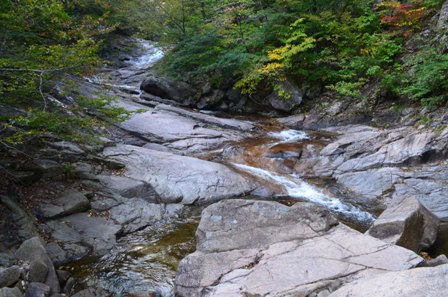
Seoraksan day 1 river view on Biryong Falls trail

I even saw more hints of autumn color on the trail. It was beginning to feel a lot more like autumn.

Seoraksan day 1 Biryong Falls autumn view

Seoraksan day 1 trail view on way to Biryong Falls

Even though the final destination was a waterfall, that doesn’t mean there was a shortage of waterfalls along the way, such as Youkdam Falls pictured below.
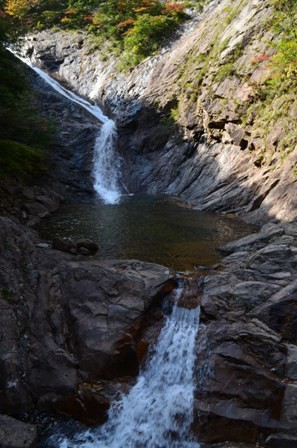
Seoraksan day 1 double falls view on way to Biryong Falls

Seoraksan day 1 overhead view of river

The sun kept peeking in and out from behind clouds and the trees during the walk. That highlighted the leaf colors, but it also produced interesting and beautiful effects on the rippling water.
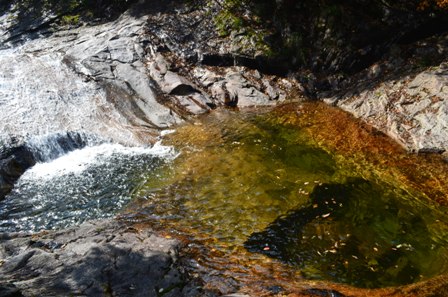
Seoraksan day 1 shimmering waterfall pool of light

At the end of the hike is the 40m high Biryong Falls, which means “Flying Dragon”, because of the shape the water evokes. It’s a very pleasant place to sit by the water and silently take in the water and scenery or enjoy a picnic lunch with a group of other hikers, or at least partake in some of the food the very nice older women offered me.

Seoraksan day 1 Biryong Falls

But as beautiful and peaceful Biryong Falls is, I didn’t relax, because I had one more hike planned for the day. And this hike is considered one of the most difficult hikes in Seoraksan National Park. It is also one of the popular ones, because of the beautiful, panoramic view from the top of the 876m high Ulsan Bawi. Because the first two hikes were pretty easy, I wasn’t really tired, which is good, because the Ulsan Bawi is an ass smoker, or more specifically, a thigh smoker. It starts out easy enough with beautiful scenery.

Seoraksan day 1 trail to Ulsan Bawi

But soon enough the hike reveals its true difficulty. The hike gets steeper as it proceeds to the midway point of Gyeojo Hermitage. It’s a nice place to rest, enjoy the scenery and gather your strength for the final ascent to Ulsan Bawi. From the hermitage to the top, it is only 1 kilometer, but it took me about an hour to ascend because of the difficulty and the steepness of the trail. I didn’t realize this until later when I saw a map of the trail, but the final 1 km of the trail is a 30.8% gradient, so at times it felt you needed to climb it and not just hike it. I’m in reasonably good shape, but I had to take numerous short breaks to catch my breath and allow my poor thighs to rest. But even though I was focused on getting to the top, I still was able to enjoy the colorful foliage. The higher I went, the more red leaves I could see.
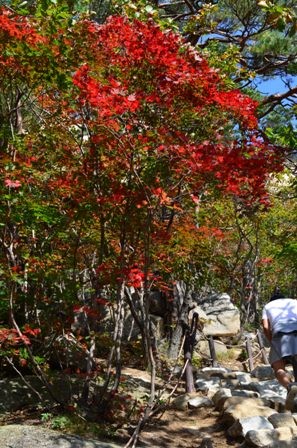
Seoraksan day 1 autumn colors on Ulsan Bawi trail

I did this hike during my last visit to Seoraksan, and it was interesting to contrast the hikes. Both times the hikes were strenuous, but the trail was much more uneven several years ago. I had to spend a good chunk of my hike with my eyes glued to the ground so I didn’t trip and fall. But in the intervening years, the trail has been improved so it’s not QUITE so uneven. Wooden blocks have been placed among the stones, so it is easier to find steps.  The crowds were also much less this time around. During my last visit, it was on a Saturday afternoon, and there was literally a line waiting to reach the summit, since the summit is not that big and only so many people can fit up top. This time, there was no line, no wait. Maybe it was because it was Friday. Maybe it was because the leaves hadn’t fully changed colors. But either way, it made for a more pleasant journey. Plus a good chunk of the trail was steps, so it a BIT easier. However, when you are faced with a very long stairway UP, you just hope that your legs hold out.

Seoraksan day 1 steep trail to Ulsan Bawi

But then, I hit the top. I got to the summit of Ulsan Bawi. I could see for miles around, all the way to the town of Sokcho and the East Sea. Sure it is windy as all get out, but it’s worth it, because I MADE IT. No, it’s not like summiting Everest or anything difficult like that. But my thighs were certainly shaking enough on the way down.

Seoraksan day 1 Ulsan Bawi view summit

All told, I probably hiked over 10 km my first day at Seoraksan National Park. That doesn’t sound like a lot, and it’s really not since it’s only a little over six miles. But Korean hiking is no joke for the most part, particularly for someone short and clumsy like me. By the time I walked back to my hotel, I was ready for a hot bath and long snooze to get ready for day two of my Seoraksan hiking journey.

Jinju Namgang Lantern Festival 2013 at night

Jinju Lantern Festival night 12

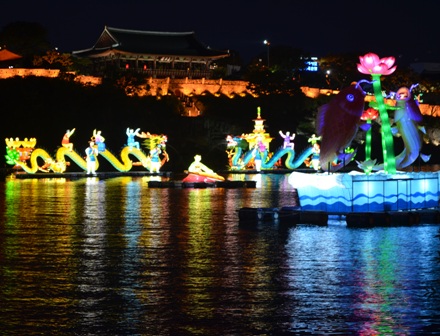
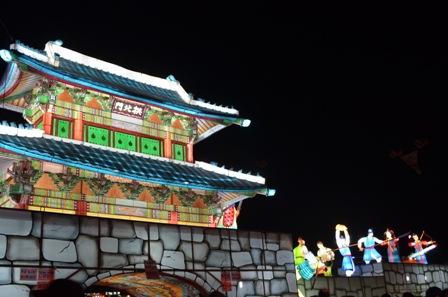
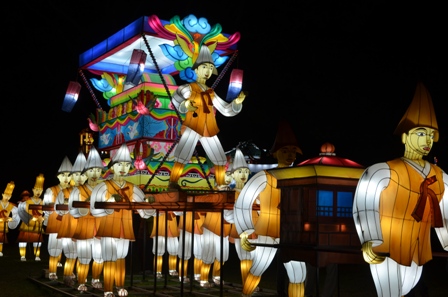
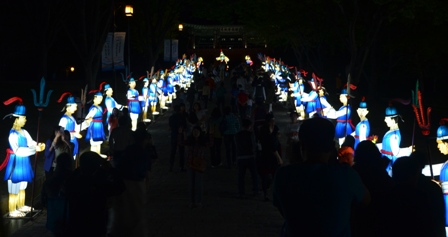
The Jinju Lantern Festival is pretty during the day, but it really comes alive and is very beautiful at night when all the lanterns are lit up all along the river.

Jinju Lantern Festival night 1

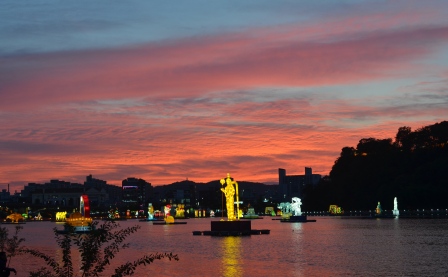
I relaxed along the river and watched the sunset. As the sun dropped below the horizon out of view, the salmon pink colors just washed across the sky and the river, casting a pink glow over everything. Once the sky turned dark, the lanterns and the Jinju Fortress lit up all along the river.
Jinju Lantern Festival night 11

Jinju Lantern Festival night 7

Jinju Lantern Festival night 6

Jinju Lantern Festival night 4

All that peace and quiet from earlier in the day went out the window after the sun went down. The lantern festival comes alive with beauty at night, so of course that is when the people swarm the festival.

Jinju Lantern Festival night 3

Jinju Lantern Festival night 2

Since I elected to take the train back to Seoul, the last train that connected me to Seoul that night left the station at 20:26. So that left me with about two and a half hours to enjoy the night festival. Of course factor in the time to try and get a taxi to the station, and that left me with an hour and forty-five minutes. I found myself running up against the clock enjoying the lanterns, ignoring the crowds as best as I could, taking all the pictures I could and taking in the view as much as possible.

Jinju Lantern Festival night 9

Jinju Lantern Festival night 8

Jinju Lantern Festival night 5

I finally was able to get across the river where I planned to catch my cab back to the train station. What was a quick walk across the river during the day when there was no line, became an extremely long line to get across the river at night. Of course the line was at the bridge that crossed right in the middle of the lanterns for the most beautiful view. I just had to walk a bit down the river to another bridge to get across the river in time to finish up my planned itinerary and have time to get a cab in time to not miss my train.

All the lanterns in the Jinju Fortress really came alive at night. I only saw part of the fortress at night, since I was on a tight time schedule.

Jinju Lantern Festival night 10

Jinju Lantern Festival night 15

Jinju Lantern Festival night 14

I ran out of time at the end of the evening. I probably should have taken a late bus back to Seoul so I didn’t feel rushed at the end. Of course, that would have gotten me back into Seoul well into the middle of night after the subways were shut down. So hey, I saw everything I wanted to in the evening. I just didn’t relax and take it all in. But frankly, with the sheer crush of people milling all about, I think I would have started wigging out among all those strangers if I had stayed longer.

Jinju Lantern Festival night 13

Jinju Lantern Festival night 16

If you like lanterns, I highly recommend the Jinju Namgang Lantern Festival. The festival is held the first two weeks in October.