

Hawaii is known for many things, and beautiful beaches are at the top of the list. There are too many beaches to count, and so many of them aren’t just the garden variety golden sand beaches, but rather green beaches, black beaches and others as well.
Mom and I aren’t dedicated beach goers in the sense that we will go to a beach and stay there all day. We simply like to do too much on vacation and don’t stay in any one place too long. As I always joke, you know you had a good vacation when you need another vacation to recover when it is all over.
Even though we had visited most of the best beaches on the Big Island and Kauai on our first trip, there were still some beaches to see on our second trip. The Big Island offers many different types of beaches, just because that island is younger than the other Hawaiian islands, so it is still transforming (and the ever erupting Kilauea ensures that the island is frequently changing landscapes).
I had visited Green Sand Beach on our first trip to the Big Island, but my mother elected not to go at the time, and regretted it later. Since I enjoyed the trip the last time, I had no problem doing it again.
This beach takes more effort to get to than most beaches, because there is no road near it, so you have to hike over two and a half miles from the parking lot to get there. To get to the parking lot, you take the turnoff for South Point Road between mile markers 69 and 70 on Hwy 11. You then drive down several miles, and follow the signs to Green Sands Beach. You can’t really miss the makeshift parking lot, and there should be plenty of cars already parked.

From the parking lot, you have a decision to make. You can walk all the way to the beach if you desire. The walk isn’t difficult, but it can feel longer than it is at times, and it is exposed to sun and wind. If you choose to walk, most of the path is fairly easy to traverse, though there are sections where you have to negotiate rocks. There isn’t one path per say, but rather you just pick the best of the available paths, which is usually the one that is flattest. Basically you just walk east and head toward Green Sands Beach. Eventually you will see the cliffs surrounding the beach, so you know you are almost there.
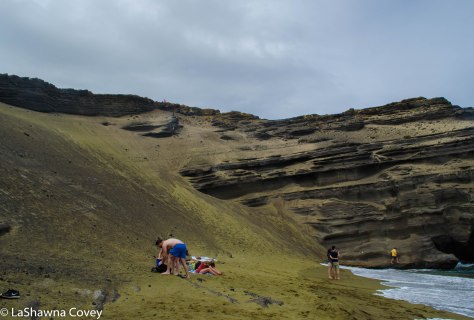
Like I said, it isn’t HARD, but the walk can feel long and if the sun is beating down on you or the wind is strong, you will feel it. So make sure you take a lot of water and sun protection with you if you decide to walk the way.
However, you don’t have to walk out there if you don’t want. There is a cottage industry of locals and their 4WD vehicles who will gladly take you out to the beach and back, for a fee of course (roughly $10 per person for a round trip). Mom and I decided to walk out there, to get the full experience and some exercise, but we decided to take a truck back to save time and energy.
Once we got to the cliffs overlooking the beach, we just spent some time marveling at the beauty. The cliffs are rather magnificent in and of themselves, and the green sand of the beach just makes it all the better. The green sand comes from olivine, and its really only found in Hawaii on this beach. It’s not a bright green, but the sand definitely has a greenish tint.

It’s fairly easy to make your way down to the actual beach, because of the steps and ladders. It is possible to swim in the ocean, though you need to be careful not to swim too far out, because there can be strong currents in the area.
If you like beautiful nature and unique beaches, you’ll probably like Green Sands Beach. It’s not a stop you can just spend a little time at, just because of the time it takes to get there (even if you take a truck). So if you plan to go, definitely allot enough time to get there, enjoy the beach for as long as you want, and get back. But it really is worth your time.

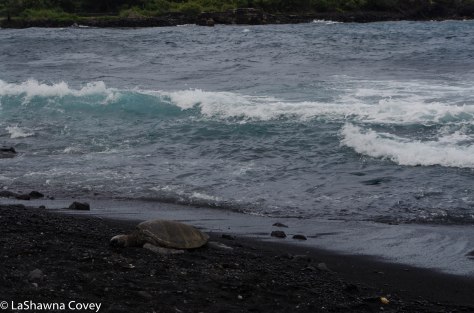
About a 30 minute drive from the turnout to Green Sands Beach is the turnout for Punalu’u Beach, or Black Sand Beach. This beach is much easier to reach, because the parking lot is only a short walk from the beach itself. It’s located between mile markers 56 and 57 on Hwy 11 off Alanui Road. The road to the beach is well marked and easy to follow.

Punalu’u Beach is a nice contrast with Green Sands Beach, both in the ease of access and the color of the sand. At the time we visited, the weather was a bit overcast and it was windy, so the waves were a bit too strong for me to want to swim. But it was pleasant to walk along the beach, admire the view and even take in the sight of a turtle.

The beaches of Kauai are very beautiful, but almost uniformly a golden sand. However, there is one beach that takes more of an effort to reach. At least a beach that is not off the Na Pali Coast, because those beaches are much, much harder to reach.
Mom and I debated visiting Waimea Canyon on this trip, even though we visited it at length during our first trip. However, we got a late start on our designated travel day, and we could see the dark clouds rolling in, so we figured it would not be worth our time to make the long drive up, only to have the surrounding views obscured.
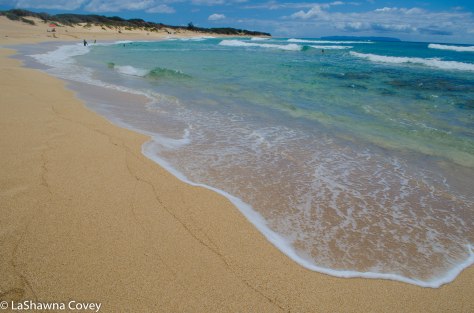
Instead, we decided to visit Polihale State Park, which we had not visited before. Polihale State Park is on the west side of the island, and it is about as far west as the road goes before it peters out, just before it reaches the Na Pali Coast. It’s not exactly EASY to get to Polihale, but it is worth your time if you have the time. Getting to the turnoff is easy, because you follow Hwy 50 all the way down the road, until you see the turnoff for the park. However, this is when the trip becomes more of an adventure. The access road to the beach is approximately five miles over an unimproved dirt road. I honestly don’t know why money isn’t spent to improve the road, but for whatever reason, the road is decidedly unimproved, though I read there is periodic maintenance to make it somewhat driveable.

Generally speaking it is recommended that you take a 4WD vehicle to the park, though it isn’t absolutely required. You can take a 2WD vehicle like we did (though I wouldn’t recommend one if it is wet outside, because I can just see how the road would turn into mud when the rain falls). The road is deeply rutted in places, so you have to drive carefully, but eventually you will get there. Even though the road goes further up for camping access, it is easier to park at the spaces for the Queen’s Pond. There isn’t a parking lot per say, but rather you just pull your car off the road into the sand. Just make sure that the sand isn’t too loose, so you won’t get stuck trying to leave.

From where you park, you just follow the road until you hit the beach. Once you arrive, it is pretty much up to you. Polihale State Park makes up several miles of golden sand, and if you come during the week, you are liable to have the park to yourself. We visited on the weekend, and there were plenty of locals camped out, but it was definitely not crowded.
If you want to swim on the beach, the safest place is within the reef of Queen’s Pond. Outside of it, the waves and current are a bit stronger. There really isn’t much else to do on the beach, but relax, swim if you want, and walk up and down taking in the views. We saw the dark clouds were getting closer and the rain was threatening to come down, so we left before the road was too difficult to traverse.
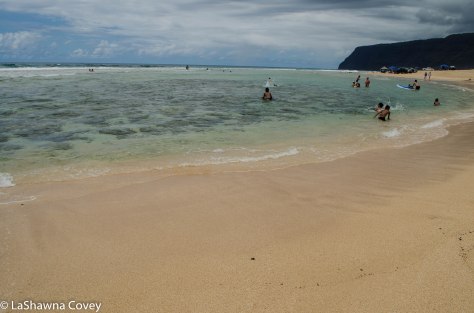
If you choose to go to Polihale State Park, just know that it is out of the way for most other sites (though you could combine it with a day trip to Waimea Canyon), and the road is somewhat difficult to traverse. But you aren’t likely to find many more isolated places on Kauai (though some of the most isolated Na Pali Coast beaches would give it a run for its money).











 We selected a tour with
  The tour lasts several hours, because it first involves a stop at an abandoned sheep shearing station to eat a nice, picnic dinner. The sheep shearing station reminded me of one of those abandoned, haunted farms that come alive during the Halloween season. All the place needed was a corn maze and a psycho with chainsaw to complete the eerie, creepy atmosphere.
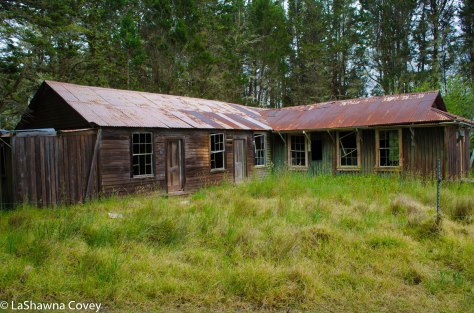 After dinner, our van headed up the mountain road, with only a brief stop at the visitor center at 9,000 feet. The ride up is slow, but steady. The road is paved up to the visitor center, but the road from the center to the summit (about five miles) is not paved for the most part, (except for the final stretch just before you reach the summit).
 We got up there about 30 minutes before sunset, so we had some time to walk around and look at the panoramic view. Of course, due to the fact that the summit is around 13,803 feet, you can’t really move too fast without feeling the effects of the altitude. The sun was still bright on the horizon, but the shadows were lengthening.
  Because of the high altitude, the clear air, and the lack of light pollution, Mauna Kea is home to many powerful telescopes to look at the sky. The summit is surrounded by them, and you can see them everywhere. It was also a remarkable change from being down at the beach. It was warm (somewhere in the 80s) at sea level, but it is very cold (near freezing) at the summit. Make sure you dress warmly, because you are going to need it (my tour offered up winter parkas and warm gloves for the duration of the tour).
 After the sun slipped below the horizon, darkness fell pretty quickly. We didn’t have too much time to stay after the sun set, because all visitors must descend from the summit no later than 30 minutes after sunset, so vehicle lights don’t interfere with the work of the telescopes.
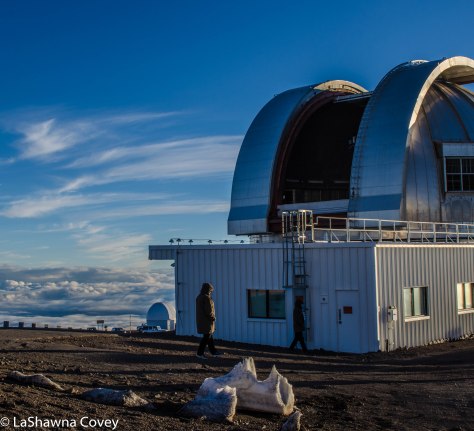 By the time we descended to the visitor center, it was completely dark. At first, we were a bit skeptical that we would be able to see any stars, because of the cloud cover. However, after a while, the clouds lifted enough for us to see the stars. Our guide set up his telescope, and we took turns looking at all the different heavenly bodies he pointed out to us.
 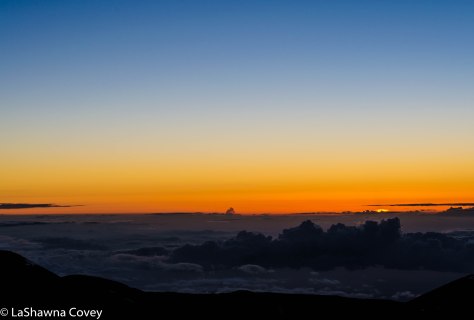 A tour will last around eight hours from afternoon pickup, to a dropoff late at night. However, we felt the cost (around $200 per person) and the time were worth it, since we were finally able to see the colorful majesty that is a Mauna Kea sunset.
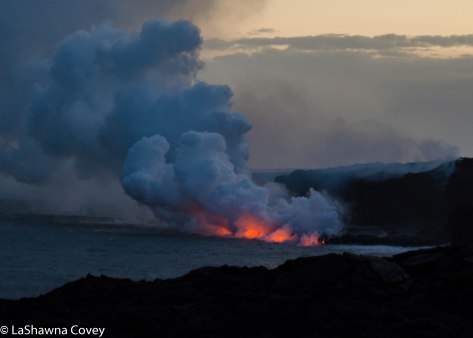 Several years ago, my mother and I were able to visit the Big Island of Hawaii and while we loved it, we didn’t get to see everything we wanted to see on my Big Island bucket list. One of those was lava viewing at Volcanoes National Park. The time we visited just didn’t have much in the way of flowing lava, so while the park was amazing to see, we missed out on some critical things we really wanted to see.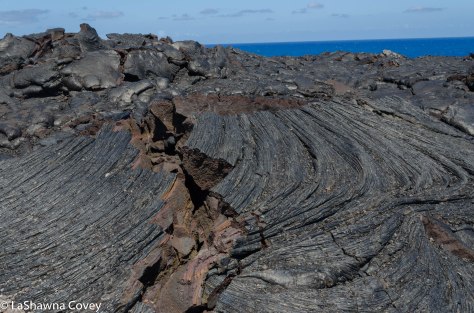
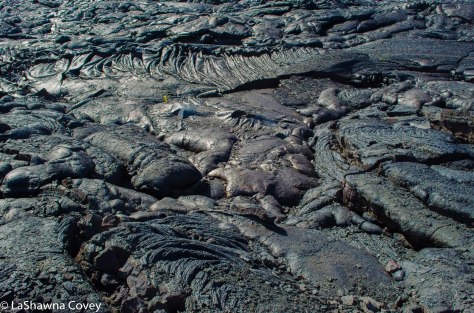
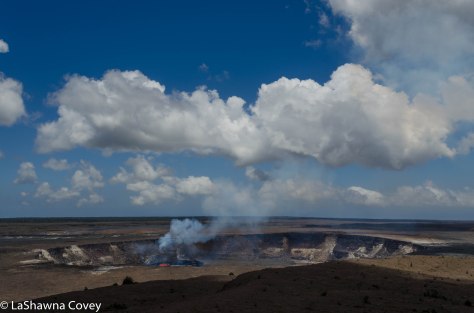
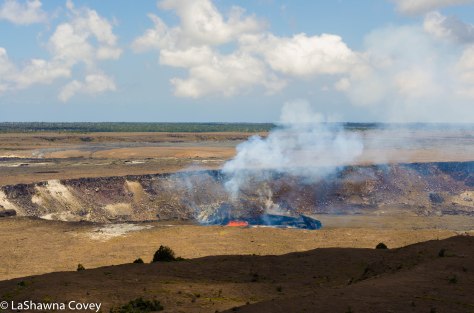 The lava view from Halema’uma’u crater was much better this time around, since the lava flow was much more active. It was even possible to see some lava during the day. The viewpoint at Jagger Museum is about a mile from the crater itself, and is positioned well to see inside the crater.
 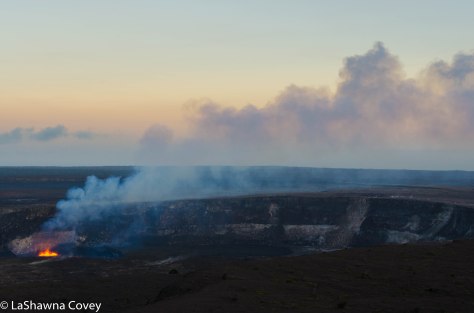 At night, the lava glow was even brighter than during the day. We got to the museum well enough before sunset, so we would have a good viewing spot before the hordes of crowds arrived. As the sun was setting, the moon was rising over the crater, with the cool white glow of the moon contrasting well with the warm red-orange glow of the lava.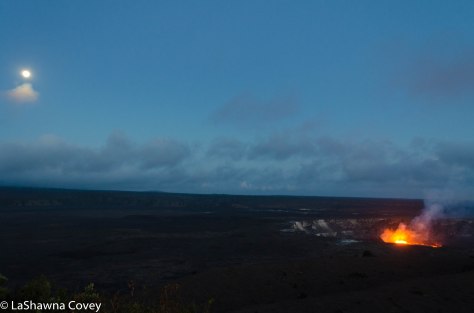

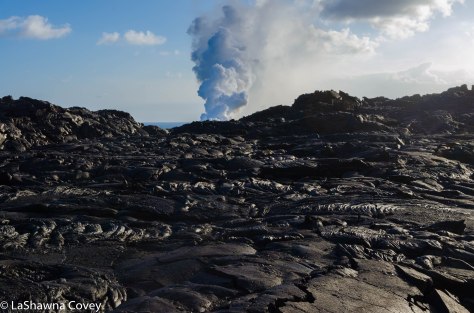
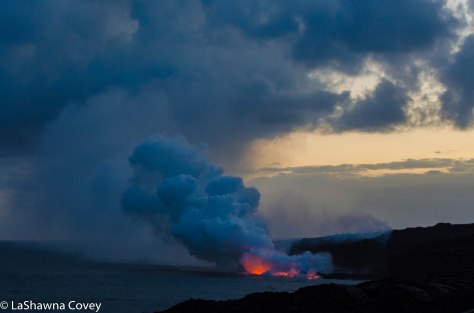
 Either way is going to involve a multi mile trek to the lava viewing areas. When we visited Volcanoes National Park, we started walking from the visitor center at Chain of Craters Road (the farthest you can take your car before the road is blocked off to normal vehicular traffic). This stopping point is a great point to get a view of the steam rising off the lava flow as it meets the ocean way off in the distance, and get a good look at the effect of the multiple lava flows over the years on the surrounding area.




 My So Called Creative Life