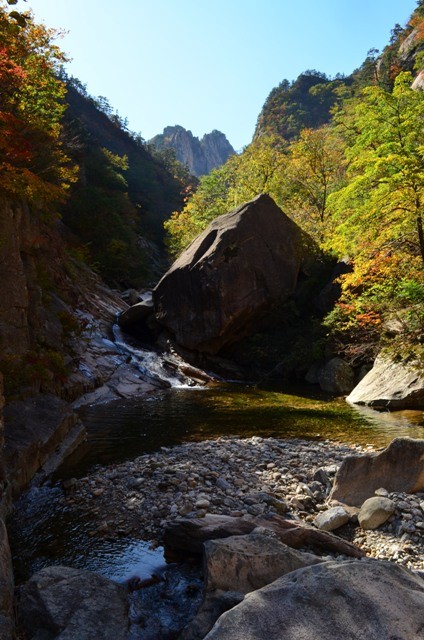
Seoraksan National Park Day 2- A Hike in the Cheonbuldong Valley

Seoraksan day 2 title picture

My second day at the Seoraksan Nation Park dawned early, sunny and cold. Walking into the park, I admired the sun rising over the mountains. The rising sun painted the the rocks in a reddish-gold light and it reminded me a bit of Zion National Park.

This particular morning, I woke up a bit tired and sore, but pressed on nonetheless with my planned hiking itinerary. I was determined to see as much autumn foliage as possible, and everything I read about hiking in the Cheongbuldong Valley promised a steady stream of autumn colors.

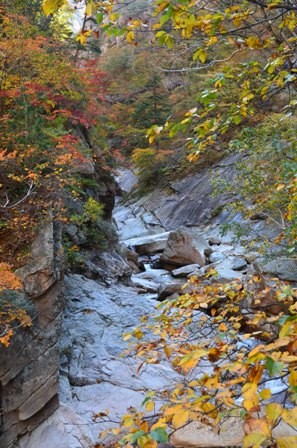
Seoraksan day 2 yellow leaves on trail

Seoraksan day 2 valley with prominent leaves

The first part of the hiking trail was fairly easy. After the extremely steep hike of Ulsan Bawi, a trail with an initial 6% gradient felt like a piece of cake and a stroll in the park. The path was relatively even, and it was just enjoyable to walk along the trail and enjoy the view of the woods around me and not have to stare at the ground so I didn’t trip and fall.

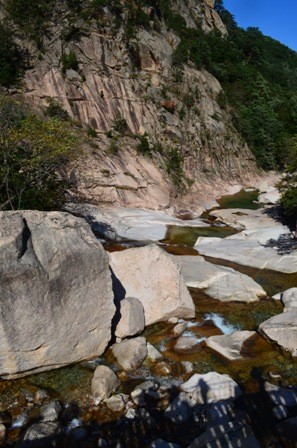
The first major viewpoint on the trail, and a popular turnaround point, was the Bisondae Cliffs (Fairy Rock).  The bridge traversed this very beautiful valley and natural pools of water formed in the rocks via erosion.  I just had to stop, stare and take in the beauty around me.
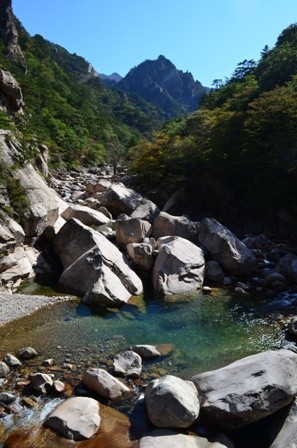
Seoraksan day 2 Bisondae sunny valley

Seoraksan day 2 Bisondae pools

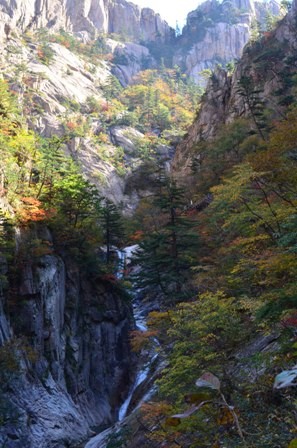
The trail continued for another few more kilometers up to the Yangpok Shelter. Truthfully, the trail continued much farther and deeper into Seoraksan National Park, with the next major viewpoint Daecheong Peak, several kilometers away. However, I made the decision to turn back at the shelter after a nice break. The gradient more than doubled to around 14%, but the spectacular natural view more than made up for any muscle soreness in my legs.  When I hike in Korea, I have to balance maintaining my footing on the trail, and maximizing the reason I go hiking- enjoying the colorful wonder of beautiful nature of me. Thankfully, there were plenty of man made stairs and boardwalks, so it wasn’t all just me stumbling over large, uneven rocks.
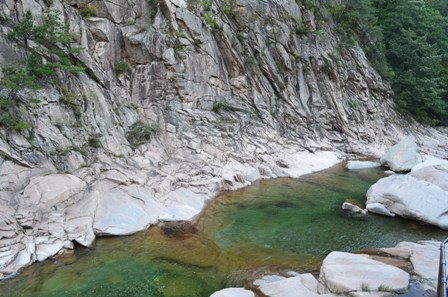
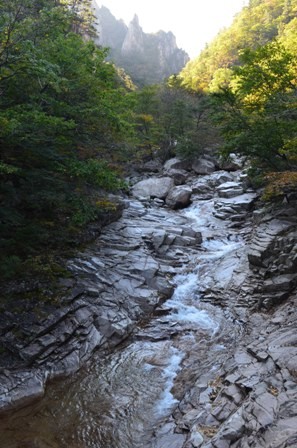
Seoraksan day 2 canyon river

Seoraksan day 2 rocky shale river

Seoraksan day 2 soaring colorful valley

Sometimes the view was so soaring, that I kept having to remind myself that this was all real. This wasn’t some movie. This wasn’t some memory, but real life, happening all around me.

Seoraksan day 2 valley river

Seoraksan day 2 running river

This particular hike is one of the most popular hikes in Seoraksan National Park, and it is easy to see why. The trail isn’t THAT difficult (by Korean hiking standards that is). You can hike as far out as you want and turn around when you want.

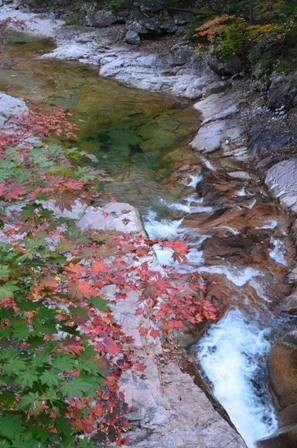
Seoraksan day 2 overhead river pools

Seoraksan day 2 river with red and green leaves

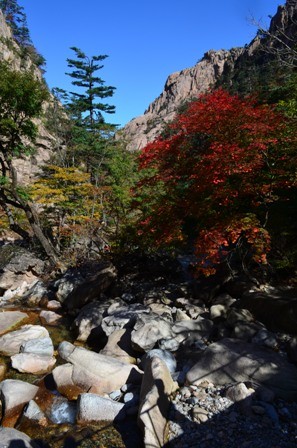
Because the elevation seemed to be greater, and the weather a bit cooler in this part of the park, I found plenty of autumn colors on today’s search.

Seoraksan day 2 colorful overhead shot

Seoraksan day 2 red and yellow leaves valley

Seoraksan day 2 red leaves valley

Even though this trail was much easier than the Ulsan Bawi trail, I definitely felt it, particularly on the hike back. That was probably because I was still feeling it from the day prior. There were scores of people on this trail, because it was a Saturday and the busloads of Korean hikers descended on the park. Even though I’m reasonably fit, I was passed by nearly every one in sight, particularly while trying to negotiate the rocky descents. So many Korean hikers were light of foot and they walked confidently, hopped, or even a few cases, ran down the uneven rocky hills, while I gingerly picked my way down, afraid if I didn’t, my spindly ankles would give out and I’d fall down, down, down the rocks. I am absolutely not as sure-footed as most of the other hikers. And thanks to my sore muscles, I was passed by nearly every one on the trail, with the exception of the elderly and infirm. And when I say elderly and infirm, I mean so old and sick, they probably shouldn’t have been on the trail to begin with.

Seoraksan day 2 rocky valley with trees

Seoraksan day 2 steep valley

I did enjoy the hike, and it felt so sweet when I finished and I could just relax, eat lunch and then go back to my hotel for a nice, warm nap. In those two days, I saw all the main sights in Outer Seorak. That is the eastern part of the park, the one closest to the town of Sokcho. It is the most popular with the craggiest hills. A person can easily do this part of the park on the normal, two day weekend. Of course I highly recommend taking a bus out to the park on a Friday night to start hiking early Saturday morning. Even with my relatively slow hiking pace, I was still done by early afternoon. I could have been on a bus back to Seoul that early evening if I so desired.
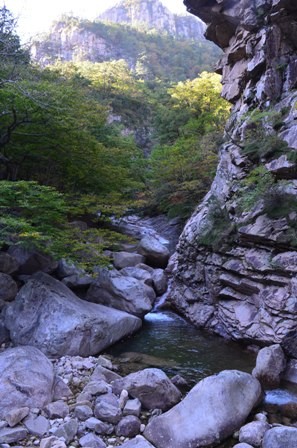
Seoraksan day 2 rocky valley

Seoraksan day 2 pool with red leaves

Again, if you like beautiful nature, particularly in the fall, and you like hiking, I HIGHLY recommend Seoraksan National Park. Just don’t mind the crowds. And it’s probably best to bring some walking sticks to maintain your balance while hiking on the uneven pathways.

Seoraksan National Park Day 1- Searching for Autumn Colors

Seoraksan day 1 beautiful view from Ulsan Bawi

Last weekend I kicked off my autumn hiking season with a long weekend at Seoraksan National Park. My favorite time of the year has arrived in Korea and I intended to enjoy the beautiful nature to the fullest. I have a whole season full of hiking planned at national parks throughout Korea. I have been to Seoraksan National Park the last time I lived in Korea, but that was actually only one day of hiking, so I wanted to enjoy it more and hike many different trails in the park.  Seoraksan National Park is one of the most popular national parks in Korea, for good reason. The hiking is amazing and the scenery is so beautiful. It’s nice any time of the year, but its true charm comes out when the fall colors ablaze everywhere. It’s also when the crowds come out, but that is just something you just deal with to enjoy yourself.

It’s very easy to reach Seoraksan National Park. The nearest large city is Sokcho and there are numerous busses departing from  the Dong Seoul bus station and Seoul Express Bus Terminal (about every 30 minutes during the day). The trip only takes about three hours, so I took an evening bus to Seoraksan Thursday night, so I could start hiking early Friday morning before the crowds hit. To make it easy for hiking, I chose to stay at a motel (The Seorak Morning Inn) in the village of Seorak-dong, which is about a 1.5 km easy, pleasant walk or short bus ride to the park entrance.

I picked Seoraksan as my first hiking weekend, both because I had a long weekend to do all the hikes I wanted in the time available, and it was also supposed to be the first national park to hit peak color for autumn foliage in the middle of October. I had visions of seeing the entire hills covered in red, orange and yellow. What I found was a bit different. Due to the warm weather this, the advent of fall seems to be delayed in Korea. It was the middle of October, and while there were leaves changing, it was not as much as I expected. But I valiantly set out in search of autumn colors.

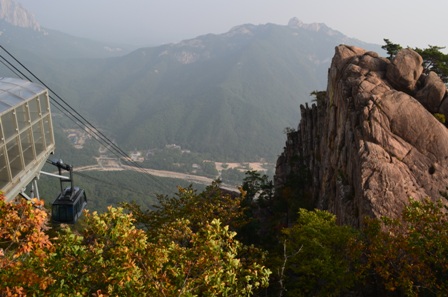
My first day in the park was a Friday, so while there were people there, it certainly wasn’t as crowded as it is on weekends.  Of course it also helped that was I an early bird and arrived at the park shortly after it opened. The first thing I did when I got to the park (before the lines got too long) was take the cable car up to Gwongeumseong (Gwongeum Fortress) which is the ruin site of an old castle. The cable car ride is only about six minutes up, and it takes you to a hill with a beautiful view over the valley below and the mountains surrounding the hill.

Seoraksan day 1 cable car to Gwongeumseong

The weather was a bit hazy at first, since it was early morning. But I could see patches of orange and yellow among the abundance of green trees.

Seoraksan day 1 Gwongeumseong view

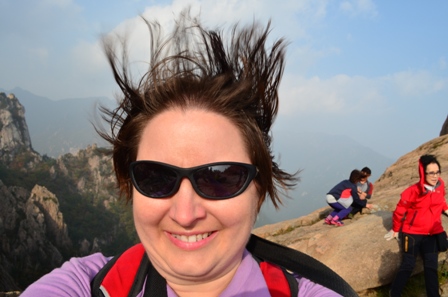
It was SUPER windy at the top of the hill. See the picture below for just a hint at how windy it was. At times the gusts were so strong, I felt like I was going to be blown off the mountain if I lost my footing.

Seoraksan day 1 super windy me on top of Gwongeumseong

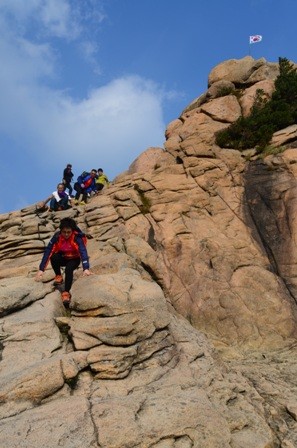
My ultimate goal was the top of Gwongeumseong, which was marked by the Korean national flag blowing in the wind. Getting up was interesting, because the path was a bit narrow in parts, and I had to pull myself along with a rope during parts of the ascent. And it was even windier on top of the mountain.  Like always, I personally found it easier to ascend and climb up rather than descend and climb down. Coming off the mountain was an interesting journey. When you see nimble, able Korean hikers descending on their butt, you KNOW it is a bit treacherous for someone like me who is clumsy and decidedly not sure-footed. But I made it in one piece, ready for more hiking.

Seoraksan day 1 Gwongeumseong treacherous path

The second hike of the day was an easy hike to Biryong Falls. It was only 2.4 kilometers with no major uphills. Instead it was easy and pleasant to hike along the trail, enjoying the view around me. The hike starts a few hundred meters from the entrance to the cable car, and you can see the cable car ascend as you begin the hike.

Seoraksan day 1 cable view on trail to Biryong Falls

I was very charmed by the numerous, beautiful waterfalls and the colorful foliage during the course of the hike.

Seoraksan day 1 river view on Biryong Falls trail

I even saw more hints of autumn color on the trail. It was beginning to feel a lot more like autumn.

Seoraksan day 1 Biryong Falls autumn view

Seoraksan day 1 trail view on way to Biryong Falls

Even though the final destination was a waterfall, that doesn’t mean there was a shortage of waterfalls along the way, such as Youkdam Falls pictured below.

Seoraksan day 1 double falls view on way to Biryong Falls

Seoraksan day 1 overhead view of river

The sun kept peeking in and out from behind clouds and the trees during the walk. That highlighted the leaf colors, but it also produced interesting and beautiful effects on the rippling water.

Seoraksan day 1 shimmering waterfall pool of light

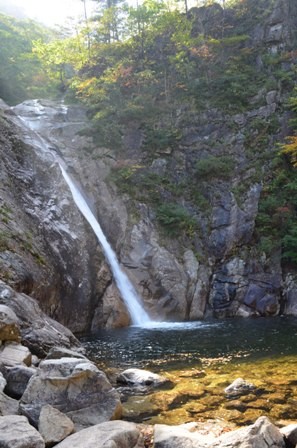
At the end of the hike is the 40m high Biryong Falls, which means “Flying Dragon”, because of the shape the water evokes. It’s a very pleasant place to sit by the water and silently take in the water and scenery or enjoy a picnic lunch with a group of other hikers, or at least partake in some of the food the very nice older women offered me.

Seoraksan day 1 Biryong Falls

But as beautiful and peaceful Biryong Falls is, I didn’t relax, because I had one more hike planned for the day. And this hike is considered one of the most difficult hikes in Seoraksan National Park. It is also one of the popular ones, because of the beautiful, panoramic view from the top of the 876m high Ulsan Bawi. Because the first two hikes were pretty easy, I wasn’t really tired, which is good, because the Ulsan Bawi is an ass smoker, or more specifically, a thigh smoker. It starts out easy enough with beautiful scenery.

Seoraksan day 1 trail to Ulsan Bawi

But soon enough the hike reveals its true difficulty. The hike gets steeper as it proceeds to the midway point of Gyeojo Hermitage. It’s a nice place to rest, enjoy the scenery and gather your strength for the final ascent to Ulsan Bawi. From the hermitage to the top, it is only 1 kilometer, but it took me about an hour to ascend because of the difficulty and the steepness of the trail. I didn’t realize this until later when I saw a map of the trail, but the final 1 km of the trail is a 30.8% gradient, so at times it felt you needed to climb it and not just hike it. I’m in reasonably good shape, but I had to take numerous short breaks to catch my breath and allow my poor thighs to rest. But even though I was focused on getting to the top, I still was able to enjoy the colorful foliage. The higher I went, the more red leaves I could see.

Seoraksan day 1 autumn colors on Ulsan Bawi trail

I did this hike during my last visit to Seoraksan, and it was interesting to contrast the hikes. Both times the hikes were strenuous, but the trail was much more uneven several years ago. I had to spend a good chunk of my hike with my eyes glued to the ground so I didn’t trip and fall. But in the intervening years, the trail has been improved so it’s not QUITE so uneven. Wooden blocks have been placed among the stones, so it is easier to find steps.  The crowds were also much less this time around. During my last visit, it was on a Saturday afternoon, and there was literally a line waiting to reach the summit, since the summit is not that big and only so many people can fit up top. This time, there was no line, no wait. Maybe it was because it was Friday. Maybe it was because the leaves hadn’t fully changed colors. But either way, it made for a more pleasant journey. Plus a good chunk of the trail was steps, so it a BIT easier. However, when you are faced with a very long stairway UP, you just hope that your legs hold out.

Seoraksan day 1 steep trail to Ulsan Bawi

But then, I hit the top. I got to the summit of Ulsan Bawi. I could see for miles around, all the way to the town of Sokcho and the East Sea. Sure it is windy as all get out, but it’s worth it, because I MADE IT. No, it’s not like summiting Everest or anything difficult like that. But my thighs were certainly shaking enough on the way down.

Seoraksan day 1 Ulsan Bawi view summit

All told, I probably hiked over 10 km my first day at Seoraksan National Park. That doesn’t sound like a lot, and it’s really not since it’s only a little over six miles. But Korean hiking is no joke for the most part, particularly for someone short and clumsy like me. By the time I walked back to my hotel, I was ready for a hot bath and long snooze to get ready for day two of my Seoraksan hiking journey.

Jinju Namgang Lantern Festival 2013 at night

Jinju Lantern Festival night 12

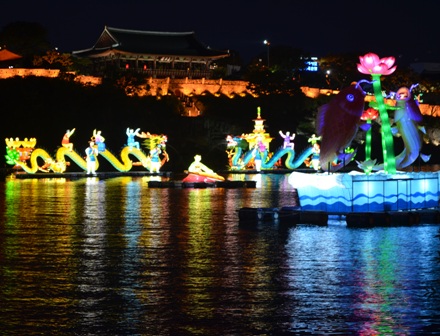
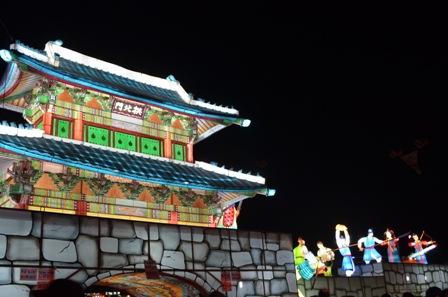
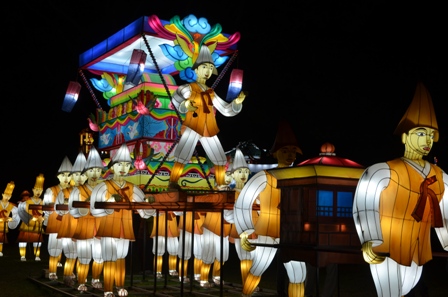
The Jinju Lantern Festival is pretty during the day, but it really comes alive and is very beautiful at night when all the lanterns are lit up all along the river.

Jinju Lantern Festival night 1

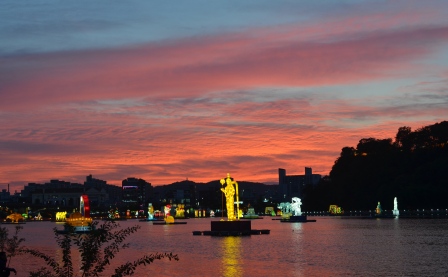
I relaxed along the river and watched the sunset. As the sun dropped below the horizon out of view, the salmon pink colors just washed across the sky and the river, casting a pink glow over everything. Once the sky turned dark, the lanterns and the Jinju Fortress lit up all along the river.

Jinju Lantern Festival night 11

Jinju Lantern Festival night 7

Jinju Lantern Festival night 6

Jinju Lantern Festival night 4

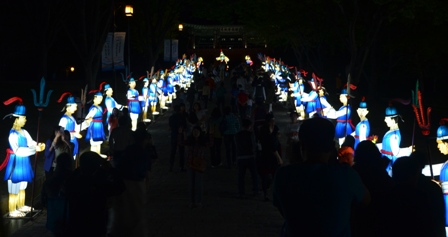
All that peace and quiet from earlier in the day went out the window after the sun went down. The lantern festival comes alive with beauty at night, so of course that is when the people swarm the festival.

Jinju Lantern Festival night 3

Jinju Lantern Festival night 2

Since I elected to take the train back to Seoul, the last train that connected me to Seoul that night left the station at 20:26. So that left me with about two and a half hours to enjoy the night festival. Of course factor in the time to try and get a taxi to the station, and that left me with an hour and forty-five minutes. I found myself running up against the clock enjoying the lanterns, ignoring the crowds as best as I could, taking all the pictures I could and taking in the view as much as possible.

Jinju Lantern Festival night 9

Jinju Lantern Festival night 8

Jinju Lantern Festival night 5

I finally was able to get across the river where I planned to catch my cab back to the train station. What was a quick walk across the river during the day when there was no line, became an extremely long line to get across the river at night. Of course the line was at the bridge that crossed right in the middle of the lanterns for the most beautiful view. I just had to walk a bit down the river to another bridge to get across the river in time to finish up my planned itinerary and have time to get a cab in time to not miss my train.

All the lanterns in the Jinju Fortress really came alive at night. I only saw part of the fortress at night, since I was on a tight time schedule.

Jinju Lantern Festival night 10

Jinju Lantern Festival night 15

Jinju Lantern Festival night 14

I ran out of time at the end of the evening. I probably should have taken a late bus back to Seoul so I didn’t feel rushed at the end. Of course, that would have gotten me back into Seoul well into the middle of night after the subways were shut down. So hey, I saw everything I wanted to in the evening. I just didn’t relax and take it all in. But frankly, with the sheer crush of people milling all about, I think I would have started wigging out among all those strangers if I had stayed longer.

Jinju Lantern Festival night 13

Jinju Lantern Festival night 16

If you like lanterns, I highly recommend the Jinju Namgang Lantern Festival. The festival is held the first two weeks in October.

Jinju Namgang Lantern Festival 2013 at day

Jinju Lantern Festival day 12


The Jinju Namgang Lantern Festival is another festival I almost went to last year, but got lazy. But now that I only have one year left in Korea, I am compelled to do all the things I want to do before I don’t have that opportunity anymore. I absolutely love lantern festivals, and this festival is a bit different than the Seoul Lotus Lantern Festival in the spring to commemorate Buddha’s birthday.

The festival is held along the Namgang River and the Jinju Fortress (Jinjuseong) across the river. I got to the lantern festival right as it opened early in the morning. I wanted to maximize my time at the festival and not feel rushed. For the first few hours, crowds were very sparse. Which is understandable, since the lantern festival really comes to life after dark. It was very peaceful walking along the river or just sitting by the water admiring the floating lanterns.

Jinju Lantern Festival day 6


Jinju Lantern Festival 3


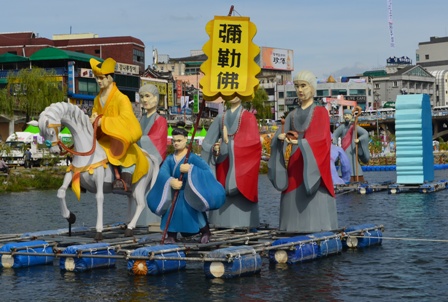
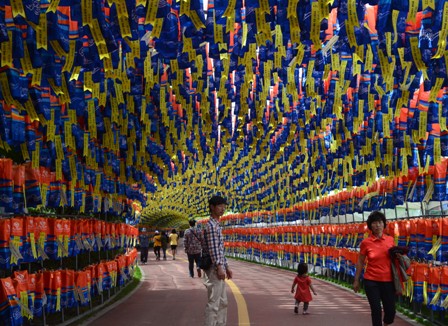
The lanterns are spread out on the water. The lanterns are a mixture of traditional Korean tableaus, Disney fairytale characters and international symbols, like the Statue of Liberty and the Sphinx. There are numerous floating bridges crossing the river (for a small fee of course) so you can easily get back and forth across the river for both parts of the festivals.


Jinju Lantern Festival day 11

Jinju Lantern Festival day 10

Jinju Lantern Festival day 9

Jinju Lantern Festival day 8

Jinju Lantern Festival day 7


The lantern festival is also held in conjunction with the Gacheon Arts Festival and the Jinju Silk Festival. All the festival events and activities are on the river, so you can enjoy a wide variety of activities from all festivals, like enjoying local artists’ paintings. The lantern festival has a wide variety of Korean and international food booths to eat your way through the day. Like most Korean festivals I’ve been to, there were also experiential booths to make your own lanterns, some of which you could light with candles and float in the river at night or desire wish lanterns you can hang up in the lantern tunnels.

Jinju Lantern Festival day 4

Jinju Lantern Festival day 5


The other main section of the lantern festival is held across the river at the Jinju Fortress. The fortress was first used to defend the region during the Japanese invasion Imjin Waeran in 1592/1593. The fortress is now reconstructed, and within the walls, there are a couple of temples, shrines and the Jinju National Museum. A wide variety of lanterns are set up in Korean traditional tableaus such as traditional Korean fairy tales and the Korean military forces defending the fortress.

Jinju Lantern Festival day 16

Jinju Lantern Festival day 15

Jinju Lantern Festival day 14

Jinju Lantern Festival day 13


Throughout the day on the fortress premises there were a wide variety of Korean traditional folk performances like musical dance performances and examples of Korean martial arts.

Jinju Lantern Festival day 2

Jinju Lantern Festival day 1


Jinju is very easy to reach from Seoul. There are numerous buses from Seoul’s Gangnam Express Bus Terminal to the Jinju Express Bus Terminal. I chose to take the train, just because I prefer trains if they are available. The direct KTX train from Seoul leaves several times a day for the three and a half hour trip to Jinju. Know that if you take the KTX train, the train station is south of the city center, not within walking distance. I would recommend that unless you speak Korean, it might be best to take a taxi (approximately 15 minute drive) to the city center. I originally took the bus to the festival and ended about a 2 km walk from the festival site.  The Express Bus Terminal is located about a 20 minute walk down the river from the lantern festival.

Andong Mask Festival 2013

Andong Mask Festival mask dance theater

Last year I discovered the existence of the Andong Mask Festival, but was too lazy to go to it. Instead I spent my fall researching all the different sorts of fall activities I would do my second year in South Korea. I am very glad I did go to this festival, because it is large and interesting, as are most Korean festivals.

Andong Mask Festival signs

The main festival site was located in town a short bus ride (or taxi ride) away from the Andong train station or the Andong bus station. If you take the bus directly from the train or bus station, walk down the main street (left from the train station or right from the bus station) to the bus stop (don’t cross the street like you would if you were going to Hahoe Maeul Folk Village first). However during the festival, the same bus (#46) will connect the Hahoe Maeul Folk Village, the bus and train stations and the festival site on an hourly basis.

Andong Mask Festival site

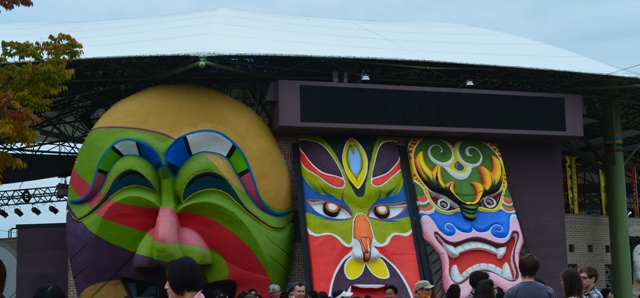
There were multiple things to do on site. There was a theater to watch Korean mask dances or foreign mask dances throughout the day. There were stages for different musical concerts. There were different booths for foods and art products. There were plenty of toys and games for children to play, since most Korean festivals are very much family friendly and offer activities and experiences for the whole family or even just individuals like myself. There were even strange things like these robot rickshaws you can ride (I admit that when I first saw them, I thought they were children in costume pulling these rickshaws).

Andong Mask Festival robot  rickshaws

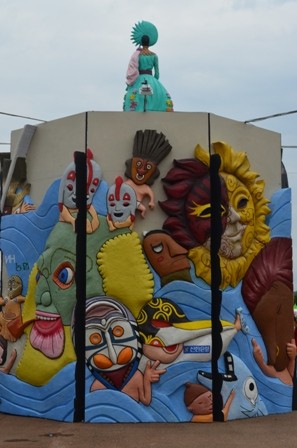
There were also exhibits of different masks around the world, since this was not just a Korean mask festival, but it incorporated mask traditions from different countries.

Andong Mask Festival mask exhibit

Andong Mask Festival masks of the world

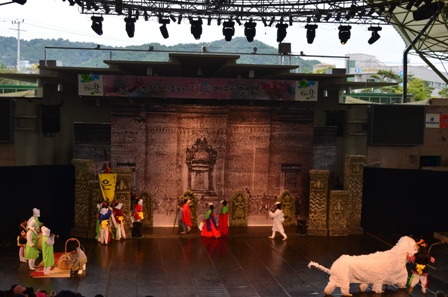
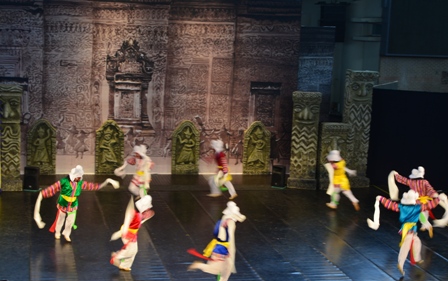
While I was there, I took in a mask dance performance. There were different performances of both Korean and foreign mask dances at regular intervals throughout the day, and I chose to watch the Eunyul MaskDance. Each performance was only 7,000 won (less than $7 USD) for an hour long show. All these different dances had different tableau performances, though I will admit I wasn’t exactly sure what the story was. I just enjoyed the traditional folk music and seeing different folk traditions play out before my eyes.

Andong Mask Festival mask dance group scene

Andong Mask Festival dragon dance

Andong Mask Festival group dance

Andong Mask Festival couples dance

Andong Mask Festival ribbon dance

And like most fun Korean festivals, there were experience booths to make your own mask.

Andong Mask Festival mask experience booth

You picked a booth that had the type of mask you are interested in making (there are multiple booths with different sorts of masks depending on your interests). Making your own mask only cost 5,000 won. You picked a mask and you were given a craft table and a mask decorating kit. The kit consisted of colored granular glue (white, black, red, yellow and blue). You can mix and match the colors to make whatever sort of color you want and you can decorate your mask in whatever design you want. I chose my particular mask, because it reminded me of a butterfly. I adore the color purple, so I used up all my red and blue to make the purple outline. I ultimately ended up using my university alma mater’s colors, the University of Washington  purple and gold (or yellow in this case). As I said, I was going for a beautiful butterfly, but in the end it looked more like a Mexican wrestling mask. But it’s my creation and I love it anyway.

Andong Mask Festival my artistic creation

If you are curious about masks, mask dances, the Andong Hahoe Maeul Folk Village, or just want to enjoy a pleasurable afternoon at a traditional Korean festival, I highly recommend the Andong Mask Festival. The festival lasts two weeks every year, usually the last weekend of September and the first weekend of October. Andong is an easy day trip from Seoul, and you can easily take the bus or the train to and from the festival.

Andong Hahoe Maeul Folk Village

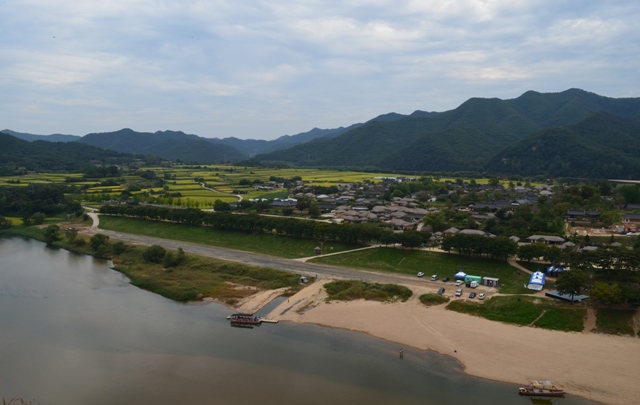
Andong Hahoe Maeul cliffside view

The previous weekend, I made my way south to Andong for the Andong Mask Festival. The two-week annual festival is held in two main areas: the Mask Festival site in town (the subject of the next post) and the Hahoe Maeul Folk Village. If you’ve been to the Korean Folk Village in Suwon, the first thought could be that this village is another sort of museum. However, this is a real, living village for people to live and work.

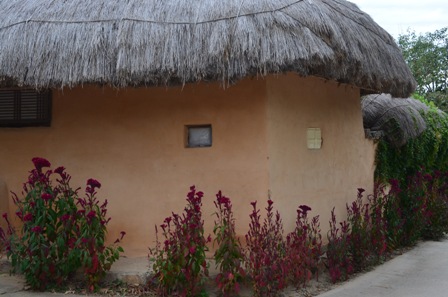
Andong Hahoe Maeul thatched huts

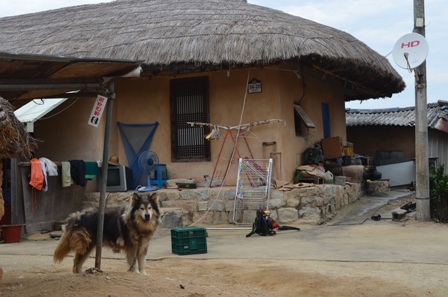
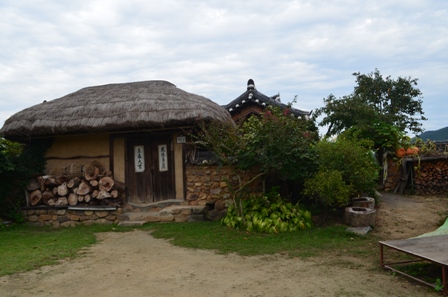
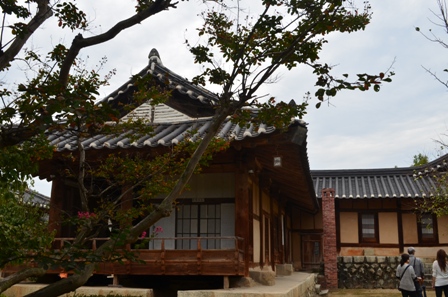
Hahoe is a village where the Ryu family originated and where its descendants have lived together for 600 years. The tile and thatched roofed homes have been preserved for hundreds of years (though undoubtedly reinforced with modern construction), even though the village dwellers have modern conveniences like cars, electricity, running water, indoor plumbing and satellite television.

Andong Hahoe Maeul Bukchon Residence

Andong Hahoe Maeul thatched hut with fluffy dog

The village is a pleasant place to spend a couple hours. Visitors can walk through the village peacefully among people living their lives. There are restaurants and stores for visitors, and there are just normal homes for individuals to live their lives.

Andong Hahoe Maeul stone walkways

Andong Hahoe Maeul flower lined street

The village is tucked among the surrounding mountains and is set along the Nakdong River, which flows are the river in a S shape and gives the village name. Ha means river and hoe means turning around.

Andong Hahoe Maeul thatched hut autumn scene

Andong Hahoe Maeul home with trees

Andong Hahoe Maeul hut with orange berry tree

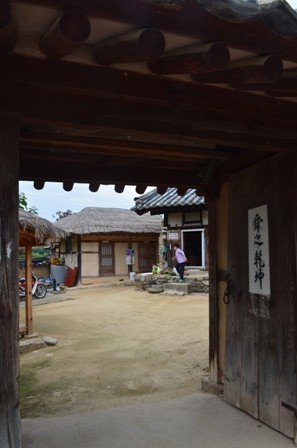
Visitors can walk around the village and peek into open doorways of walled homes to get a glimpse of normal village life.

Andong Hahoe Maeul doorway view

Andong Hahoe Maeul thatched roof  hut

In the center of the village resides the Samsindang, called the Samsin Goddess Tree. The zelkova tree is 600 years old. The tree is in the residence of the Samsin Goddess, who oversees pregnancy and child birth. Visitors can leave wishes around the tree.

Andong Hahoe Maeul Samsin Goddess tree

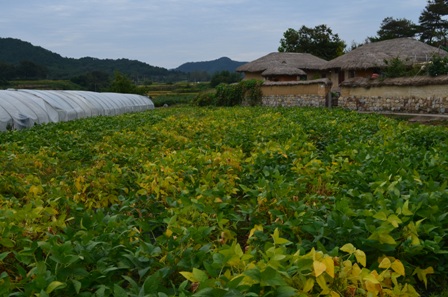
When you are done walking around Hahoe Maeul, you can cross the river on a small ferry for a small fee for a round trip (there is no bridge across the river anywhere near the village) and hike a short way up Buyongdae Cliff for a beautiful overlook of the village below (the lead picture on this post). You can also see the crop fields that surround the village and the river as it stretches around the village.

Andong Hahoe Maeul crop fields

Andong is very easy to reach from Seoul by public transportation. There are numerous daily buses from Dong Seoul Bus Terminal, but I prefer the train if there is that option. Most of the trains leave from Cheongnyangni Station (a stop off subway line 1). There are approximately seven trains daily and the direct train ride lasts approximately four hours.

From the Andong train station, Hahoe Maeul is pretty easy to reach, but don’t make the mistake I did. I got on the wrong numbered bus and it wasn’t just the wrong bus, but it was also heading in the wrong direction. I’m normally very good with directions, but sometimes I have to guess when it comes to vague directions. My guide book said I could take the #3 bus and it was supposed to go to Hahoe Maeul. That is not true. I ended up at the Andong Culture Complex (I saw that on the bus, and thought that was the right destination) and there was no one around and quickly figured out I was in the wrong place. Thankfully another bus came along shortly after that and I went back to the train station. If you take the bus to Hahoe Maeul, you need to take bus #46. Cross the street from the train station and head left to the bus stop. There are buses to the village approximately once an hour, and the trip takes approximately 30 minutes. However, if you don’t want to wait, you can easily take a taxi to the village, and the cost will be approximately 30,000 won (less than $30 USD depending on the exchange rate).

Hahoe Maeul is an interesting view into how villages used to look several hundred years ago, but it blends well into the modern world.