Xi’An Bingmayong- Terra Cotta Warriors

Terra Cotta Warriors-16

I spent Memorial Day weekend in Xi’An, China. I have been to China before a couple times, and I was fascinated by the historical relics that reside in the area. China is home to thousands of years of fascinating history and cultures, some who have only been recently recovered in the past several decades.
Terra Cotta Warriors-18

There are a wide variety of things to see and do in Xi’An, and one of the things that should be at the top of the list is visiting Bingmayong, better known as the Terra Cotta Warriors.

The Terra Cotta Warriors are part of the tomb of Qin Shi Huang, and they date from around two thousand years ago. After Qin Shi Huang died, supposedly part of the tomb site was plundered by the empire’s enemies, but the tomb soon enough passed into history and wasn’t rediscovered in modern times until around 40 years ago when local farmers were digging for wells In the past 40 years, three pits have been excavated and their treasures unearthed.

Terra Cotta Warriors-17

The easiest way to visit the Terra Cotta Warriors is with a tour group, and pretty much every hotel and hostel offers their own tour. The tomb is located about an hour’s drive outside of Xi’An, and is located about a 1500 meters walk from the parking lot. I liked that my tour guide had us visit Pits 2 and 3 first, because they are smaller. We finished up at Pit 1, so my viewing experience increased to end at the most spectacular site.
Terra Cotta Warriors-15

It would probably be best if you went early when it opened around 0830, but most tour groups don’t seem to get there until late morning or after lunch. So just be aware, if you go with a tour group, you will likely be one of hundreds of people on site at the time.

Terra Cotta Warriors-14

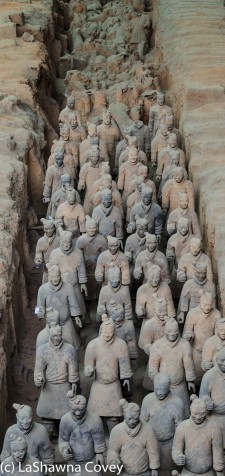
There are three pits on site to visit. Pit 1 is the largest and most famous, and therefore the most crowded. Wait long enough and a space by the railing overlooking the pit will open up, but it is definitely not a quiet, peaceful or solitary activity, unless you can block out the noise of the people around you.
Terra Cotta Warriors-3

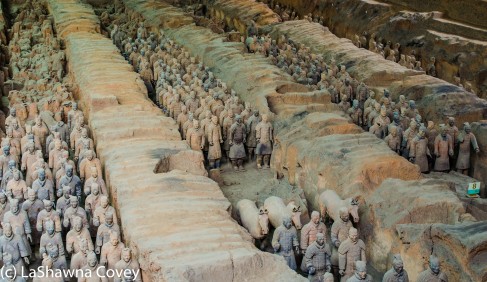
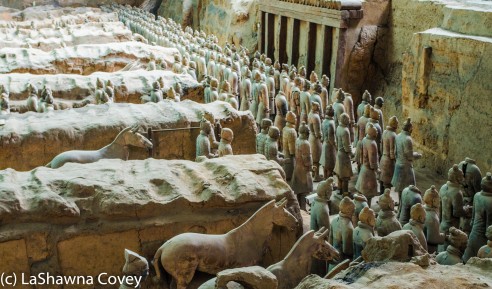
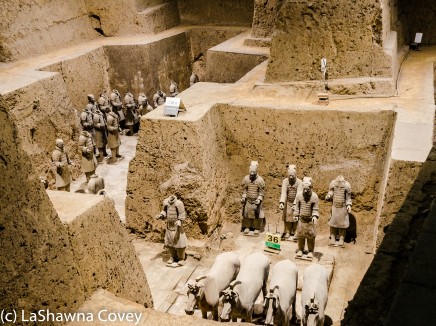
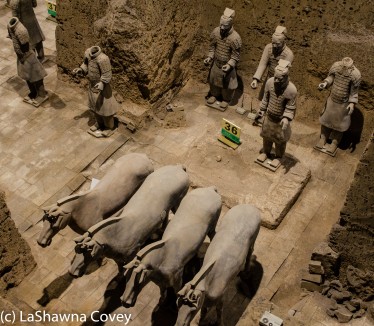
Pit 1 covers an area of over 14,000 square meters on site. Over 2000 terra cotta warriors and horses have been uncovered so far, and it is believed that over 6000 warriors might still be buried. All the warriors’ heads were hand crafted over a period of around 30 years by around 700,000 workers. All the warriors represented the minority groups found in the empire at the time, along with a mixture of horses and military forces.

Terra Cotta Warriors-13

Terra Cotta Warriors-2

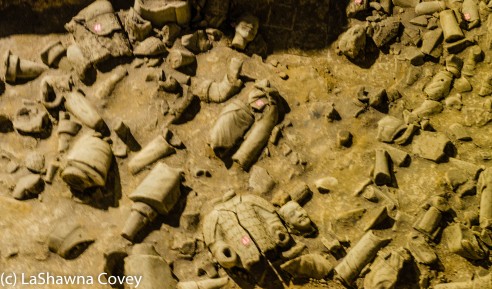
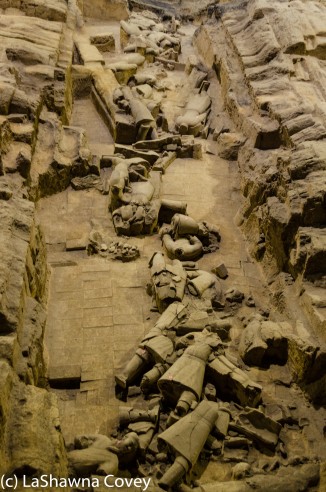
Pits 2 and 3 are smaller and there are less artifacts to see. Pit 2 consists of a mixture of military forces: archers, charioteers, infantryman, and cavalrymen. There are still plenty of warriors, some broken, some intact in Pit 2, along with remnants of wooden chariots.
Terra Cotta Warriors-4

Terra Cotta Warriors-1

Pit 2 hasn’t been fully excavated yet, but some of the intact warriors have been removed from the pit itself and displayed in cases around the pit.

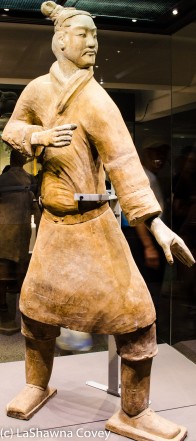
Terra Cotta Warrior senior officer

Terra Cotta Warrior senior officer

Terra Cotta Warrior midlevel officer
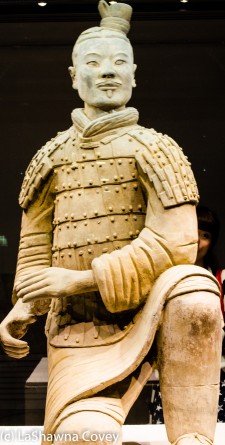
Terra Cotta Warrior midlevel officer

Terra Cotta Warrior archer

Terra Cotta Warrior infantryman

Terra Cotta Warriors-6

Terra Cotta Warrior archer

Terra Cotta Warrior cavalryman

Terra Cotta Warrior cavalryman

My tour guide stated that Pit 3 is thought to represent the headquarters element of the military formation. Comparatively fewer warriors have been unearthed in this pit (only around 68 senior officers), possibly because the pit might have been raided at some point throughout history.
Terra Cotta Warriors-10

After the visit to the terra cotta warriors, we took a shuttle bus over to the Tomb of Qin Shi Huang, which is about a 10 minute bus ride away. On first glance, the tomb looks just like a forested hill, but the hill is definitely man made. The tomb has not been excavated yet. Part of the legend is it is booby-trapped with lakes of mercury. That hasn’t been independently verified, though my tour guide stated that mercury levels in the water around the tomb are higher than normal, so it is a possibility.
Terra Cotta Warriors-11

As I mentioned earlier, the Terra Cotta Warriors are an absolute must do when visiting Xi’An. Even if you aren’t into archaeology, this is a historical site that should not be missed.

Terra Cotta Warriors-12


Under a Moonlit Sky: A Night Tour of Changdeokgung Palace

Changdeokgung Palace by day and night-30

About a week ago, I had the opportunity to do a moonlit tour of Changdeokgung Palace. I had visited the palace the past fall, but this was an opportunity to see the palace in a new light (literally). During this year from April to November, the palace offers up moonlit tours twice a month, on the full moon and one day next to it.

Changdeokgung Palace by day and night-25

Changdeokgung Palace by day and night-35

I love evening tours, and figured this would be a good opportunity to do some night photo shooting as well. The tour started at the main gate at 2000, at which point, it was almost completely dark. Luckily for us, the weather was good, though a tiny bit hazy, so it wasn’t a perfectly clear moonlit night.

Changdeokgung Palace by day and night-20

Changdeokgung Palace by day and night-21

At least it didn’t rain though. We were taken through parts of the palace grounds, from the main hall, to different out buildings. We didn’t actually enter any of the buildings, but we were able to look inside. We had lanterns to guide us on the trail, which was convenient for some of the stairs.

Changdeokgung Palace by day and night-22

Changdeokgung Palace by day and night-23

Changdeokgung Palace by day and night-27

Changdeokgung Palace by day and night-26

After seeing some of the buildings, we were taken back to the Secret Garden. We didn’t see the full tour of the Secret Garden like I did during a day tour, but the most scenic places of the garden, like the Buyongjeong Pavilion were shown. All the buildings were very lushly lit and it was made for some nice photography.

Changdeokgung Palace by day and night-34

Changdeokgung Palace by day and night-33

Changdeokgung Palace by day and night-32

The actual walking tour of the grounds took about 90 minutes, and the last 30 minutes was a sampling of cultural performances. We were treated to a variety of Korean dance, opera and traditional music in an open air setting, so it was pleasantly cool by this point in the evening. It was a good opportunity to see different aspects of Korean culture you might not be able to see. We were also given some traditional Korean tea and sweets to enjoy the performance.

Changdeokgung Palace by day and night-37

Changdeokgung Palace by day and night-38

This tour is geared more toward cultural awareness rather than photography, which is why tripods are specifically banned in the advertisement for the tour. However, in my group there were numerous people who brought and used tripods and the tour guides did not prevent anyone from using them. I know my pictures would have turned out better if I had brought my tripod.

Changdeokgung Palace by day and night-36

Changdeokgung Palace by day and night-31

This is not a tour open to just anyone. This is a tour just for foreigners, so no Koreans are allowed to attend. Three languages are offered for the tours: English, Japanese and Chinese. The tickets are easy to buy online through Interpark, and you pick up your ticket at the venue after 1930 the day of the event. Tickets cost 30,000 won per person, and I believe one person can reserve two tickets at a time. Make sure you bring some form of an ID, such as a passport to prove your identity when you check in at the palace. The total tour lasts around two hours, so figure you will spend 2000-2200 in the evening there. Changdeokgung Palace is easily reached from metro line 3 (Anguk stop, exit 3), and it is a few hundred meters up the road, or you can walk to the palace from metro stop Jongno-3(sam)-ga (Lines 1,3,5, exit 7).

Changdeokgung Palace by day and night-28

If you like moonlit tours, particularly of palaces, and would like to see a different aspect of Korean culture, I highly recommend the tour.

Changdeokgung Palace by day and night-29

Luscious Fall Colors at Changdeokgung Palace and the Secret Garden

Changdeokgung Palace by day and night-13

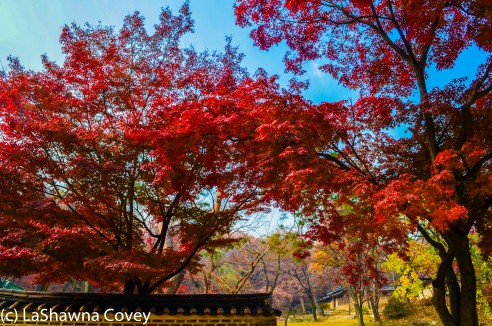
Last fall I took my mom to visit Changdeokgung Palace when she came to visit Korea. I had visited the palace on a previous tour, but not during fall. At the time, the fall leaves were just a bit past peak color, but they were still vibrant enough to make you stop and stare.

Changdeokgung Palace by day and night-14


Changdeokgung Palace by day and night-9

We got to the palace relatively early, because we had a full day planned of palace visiting and walking around Seoul. We first did the Secret Garden tour, which is to the rear of Changdeokgung Palace, and actually makes up the bulk of the complex.

Changdeokgung Palace by day and night-8

Changdeokgung Palace by day and night-3

You can only access the garden via a guided tour, of which there are multiple ones throughout the day, in both Korean and English. However there are only two tours in English, at 1130 and 1430.

Changdeokgung Palace by day and night-2

Changdeokgung Palace by day and night-7

The garden was designed for the private pleasure of the king and his family. It has a wide variety of buildings, gardens, ponds, flowers, and trees, some of which are hundreds of years old.

Changdeokgung Palace by day and night-15

Changdeokgung Palace by day and night-16

The highlight of the Secret Garden tour is the Buyongjeong Pavilion on the Buyongjeong Pond, which was restored a couple of years ago.

Changdeokgung Palace by day and night-6

Changdeokgung Palace by day and night-5

The tour of the Secret Garden lasts about two hours, and it moves at a leisurely pace. You definitely have plenty of time to enjoy the scenery, listen to the tour guide and take pictures.

Changdeokgung Palace by day and night-11

Changdeokgung Palace by day and night-12

This was definitely one of the most beautiful places to see in Seoul in the fall. There are many places that have colorful leaves, but the Secret Garden has some of the greatest concentration of fall beauty.

Changdeokgung Palace by day and night-10

Changdeokgung Palace by day and night-4

Changdeokgung Palace is easy to get to, since it is centrally located in Seoul. You can reach it via metro line 3 (Anguk stop, exit 3), and it is a few hundred meters up the road, or you can walk to the palace from metro stop Jongno-3(sam)-ga (Lines 1,3,5, exit 7). There are separate English language tours for the palace (though you can walk through most of the palace grounds on your own) and the garden (guided tour required). It is open from 0900-1700 (winter) or 1830 (summer).

Changdeokgung Palace by day and night-1

Changdeokgung Palace by day and night-17

If you like palaces, and especially if you love beautiful gardens, this is definitely a palace to visit. And if you have the opportunity to visit it in the fall, that is even better.

Changdeokgung Palace by day and night-18

Changdeokgung Palace by day and night-19

Jirisan Baraebong Royal Azalea Hike


Jirisan Baraebong Royal Azalea Hik-15

A couple weekends ago, I finally was able to go on the Baraebong Peak Royal Azalea hike in Jirisan National Park. I read about this hike last year, but wasn’t able to do the hike. Since this year is my last spring in Korea, I knew I really needed to do this, because the pictures I’ve seen of this hike are absolutely beautiful. Luckily for me, in my online searches about this hike, I discovered the Seoul Meetup group that was planning to do this hike, and I eagerly signed up.

Jirisan Baraebong Royal Azalea Hik-1

After signing up, I realized that the hike the meetup group does, is only a short version of the hike. The true hike is the Jeongnyeonchi Hill Baraebong Peak Course. It starts at the Jeongnyeonchi service area and ends at Undong village. That hike is about 12.6 kilometers, and most of it traverses a ridgeline and passes through numerous passes that are covered in colorful azaleas. Unlike most hikes I have done in Korea, that hike has very little in the way of steep inclines, and the one steep decline is at the end of the hike.

Jirisan Baraebong Royal Azalea Hik-2

Jirisan Baraebong Royal Azalea Hik-8

The shorter hike we did started at Undong village and continued up the hill to Baraebong Peak with a diversion to Pallangchi Pass, with a return to Undong village. The hike we did was around 8 kilometers. This hike was also the steepest part of the whole hike. The hike starts at Undong village and ascends sharply to Baraebong Samgeori. The altitude gain on this hike was over 400 meters in a brief period of time.

Jirisan Baraebong Royal Azalea Hik-3

Jirisan Baraebong Royal Azalea Hik-9

I was definitely feeling the hike in my legs. It was in the middle of the day, and the sun was bright and overhead. There was only minimal shade on this hike, but I took advantage of it whenever I could. Surprisingly, all of these spring hikes I’ve done this year have felt easier than the fall hikes I did. I’ve actually been passing Korean hikers on the paths. My knees certainly feel better. I would like to think that I am simply fitter now than I was in the fall. Or maybe I am just missing all the fitter Korean hikers. But the more likely answer is that I’ve been hiking on easier paths. Sure, the trails are steep, but the trails are wide and surprisingly well-benched. At times I even felt like I was hiking in New Zealand.

Jirisan Baraebong Royal Azalea Hik-4

Jirisan Baraebong Royal Azalea Hik-10

This hike is very popular, particularly this time of the year. There were scores of tour buses at Undong village, and even more groups hiking in from Jeongnyeonchi pass. This popularity is probably why the trail is so well benched, but it also means it is VERY crowded.

Jirisan Baraebong Royal Azalea Hik-12

Jirisan Baraebong Royal Azalea Hik-13

For most of the trail, that is not really that big of a deal, but parts of the trail around Pallangchi pass are rather narrow, so there were times a long line formed on the trail. Sure that make the walking slower, but this also allowed a greater opportunity to take in the beautiful azaleas.

Jirisan Baraebong Royal Azalea Hik-5

Jirisan Baraebong Royal Azalea Hik-14

The azaleas at lower altitudes already passed their blooming season, but as I ascended in altitude, there were more and more azaleas on the path.

Jirisan Baraebong Royal Azalea Hik-19

Jirisan Baraebong Royal Azalea Hik-16

Once I reached Baraebong Samegori, I ascended to the top of the peak. Most of the trail was relatively flat, but the last 250 meters before hitting the peak were so steep, but the view from the top was worth it. I could see all the surrounding mountains, and I could see further down the trail, where the patches of azaleas were abundant around Pallangchi pass. I had plenty of time before having to return to the bus, so it was a pretty easy walk out to the pass.

Jirisan Baraebong Royal Azalea Hik-6

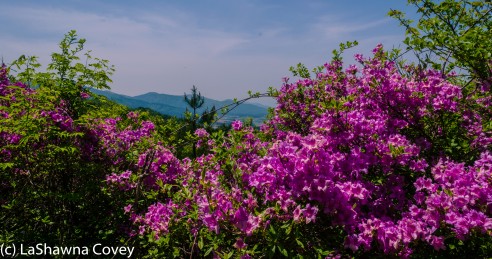
Pallangchi pass was definitely worth the walk. All around the areas were thousands of bright purple azalea flowers. The hills were fields of pink, and I had never seen anything quite like it.

Jirisan Baraebong Royal Azalea Hik-7

Independent travel for this hike is not exceptionally easy or cheap, but it is doable. The quickest way is probably to take a train from Yongsan to Namwon station, and then a taxi to Jeongnyeonchi service area. At the end of the hike at Undong village, there were plenty of taxis waiting, to get a ride back to Namwon station. There really aren’t any buses in the area, so you really have to take a taxi or be part of a tour group.

Jirisan Baraebong Royal Azalea Hik-11

If you have the opportunity to do this hike, I highly recommend it. I have never run into the opportunity to do a hike that afforded an opportunity to see so many wild, colorful azaleas in one place. Parts of the hills were all pink, and even the parts that aren’t, offer up so many beautiful views of the surrounding Jirisan National Park.

Jirisan Baraebong Royal Azalea Hik-17

Jirisan Baraebong Royal Azalea Hik-18

A couple of tips for this hike. If possible, I would highly recommend you start this hike early, particularly if you are doing the full 12.6 kilometers. This will hopefully allow you to get out in front of the bulk of the Koren hiking groups, though there will be the really dedicated hikers out there. Definitely take plenty of water, sunscreen, a hat and sunglasses, because the bulk of the hike is very much exposed, and the sun will beat down on your head during a sunny and bright day.


Morning Calm Arboretum Spring Flower Festival 2014

Morning Calm Arboretum Spring 2014-4

The second half of my day trip to Nami Island was a visit to the  Morning Calm Arboretum. I had visited before a year ago for the winter Lighting Festival, but wanted to see it in the full light of the spring blooming season.

Morning Calm Arboretum Spring 2014-11

Morning Calm Arboretum Spring 2014-14

It is actually reasonably easy to combine the two places into one day trip. They are linked by the Gapyeong Resort Shuttle Bus that runs from Gapyeong Station to Morning Calm Arboretum on an hourly basis, and it takes a little over an hour to get from Nami Island to Morning Calm Arboretum under normal traffic conditions.

Morning Calm Arboretum Spring 2014-10

Morning Calm Arboretum Spring 2014-20

I was done with Nami Island by noon, so I figured I would hit the arboretum by 1330 and be on the train back to Seoul by 1700. Well…that was the intention anyway, but the reality was far different. The next shuttle bus was due at 1215, but over an hour and a half later, that bus still had not arrived. Finally a bus did arrive, and I got on it, but it only went as far as Petit France, which is a fake French theme park between Nami Island and Morning Calm Arboretum.

Morning Calm Arboretum Spring 2014-17

Morning Calm Arboretum Spring 2014-13

Morning Calm Arboretum Spring 2014-3

Eventually a bus did arrive, and I figured I was home free to get to the arboretum and enjoy a couple hours of viewing before heading home. Again, that was the plan. However, this was a day when the bus ran into the absolutely horrific Korean traffic in places. Due to the VERY long line to get a parking space, it took the bus well over an hour to arrive at the arboretum. By this point, I had about an hour and a half to enjoy the flowers before having to catch a bus back.

Morning Calm Arboretum Spring 2014-15

Morning Calm Arboretum Spring 2014-18

Morning Calm Arboretum Spring 2014-16

After all this waiting (which isn’t something I am particularly good at) in the hot sun, my mood was a bit surly, and wasn’t helped by the hordes of crowds at the garden. But once I was able to relax and take in all the colorful flowers, my blood pressure stopped dropping.

Morning Calm Arboretum Spring 2014-8

Morning Calm Arboretum Spring 2014-12

Morning Calm Arboretum Spring 2014-9

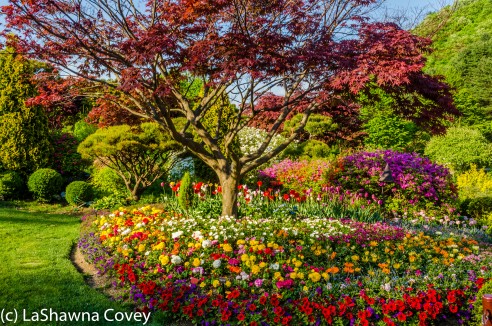
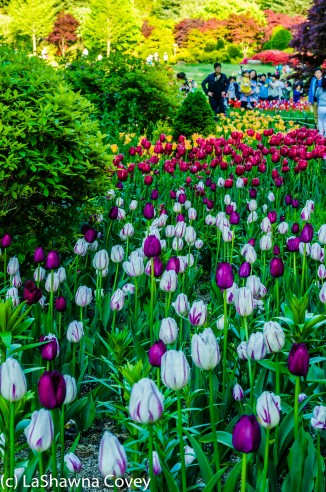
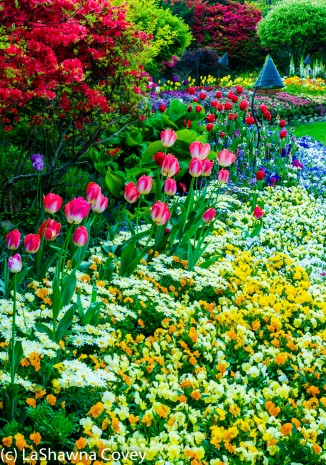
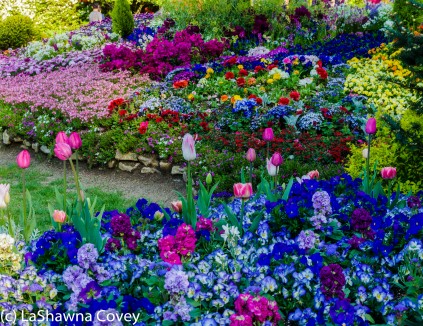
The one upside to this extended delay is that I missed the harsh overhead sunlight in the middle of the day, and instead was treated to the softer, more attractive light from the setting sun. I still wish I had more time to enjoy the garden, because there were so many beautiful flowers. The azaleas were about at peak bloom. The multi-colored tulips were throughout the garden, and a wide variety of other wild flowers was interspersed throughout the gardens.

Morning Calm Arboretum Spring 2014-2

Morning Calm Arboretum Spring 2014-5

Morning Calm Arboretum Spring 2014-21

The arboretum is a very beautiful place to visit, though you will definitely have to fight through the considerable crowds in the afternoon.If I had to go again, I would go in early morning right when it opens around 0830.  I’ve found that the best time to visit any popular place in Korea is in the morning, because crowds don’t tend to show up until late morning/early afternoon.

Morning Calm Arboretum Spring 2014-7

Morning Calm Arboretum Spring 2014-1

Morning Calm Arboretum Spring 2014-6

Getting back to Seoul from Morning Calm Arboretum is pretty easy. There is a bus that leaves on the hour heading toward Cheongpygeong Station, which is a stop on the metro line and the ITX line back to Seoul. If you love beautiful flowers, this is definitely a great place to see them.

Morning Calm Arboretum Spring 2014-19

Nami Island Zipline and Gardens

Nami Island-5

I had been wanting to visit Nami Island for a while now. My goal was to visit last fall, because Nami Island in autumn is supposed to be a spectacularly beautiful place, but due to weather and competing activities, I didn’t make it. So I decided to wait until peak spring bloom season and combine a trip to Nami Island with the Morning Calm Arboretum, which is located not that far from the island, so it makes for a full and satisfying day trip from Seoul.

Nami Island-10

Nami Island-8

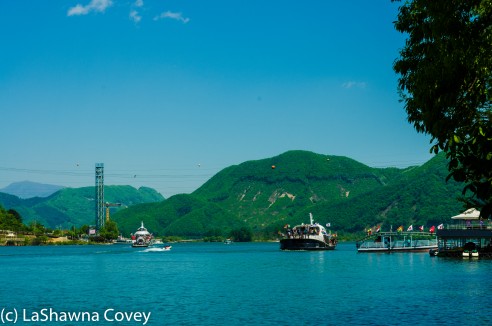
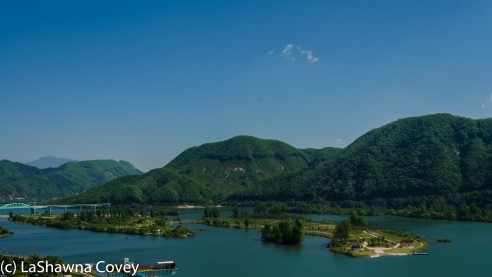
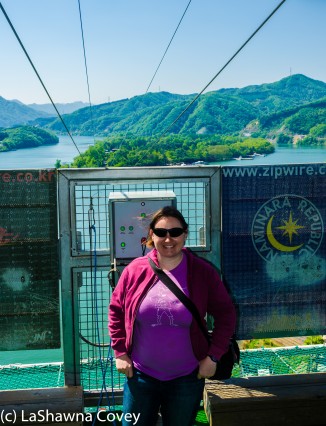
So the first Saturday in May, I decided to take advantage of the sunny and beautiful weather to make it happen. I hopped on the ITX train from Yongsan Station to Gapyeong and was soon at the dock for Nami Island. I always planned on taking the zipline to Nami Island. I love zipline rides, and this particular ride is the longest in South Korea. The zipline is over 3,000 feet long and it goes over the river from the dock to Nami Island. The zipline tower is located right next to the dock, and it’s the tallest structure in the area, so it can’t be missed.

Nami Island-1

I arrived at the dock around 0930, and was ready for the 1000 zipline departure. It was good I arrived when I did, because the crowds started growing shortly afterward. The view of the surrounding areas was really beautiful .

Nami Island-2

The zipline ride itself is a lot of fun. The ride only lasts about 90 seconds, but it is very peaceful. It’s not exceptionally thrill seeking, just because it’s not very fast or dangerous, though people who are afraid of heights would probably be very nervous.

Once I got to the island, it was pretty easy to walk around. Nami Island is only about 3 miles in circumference, so you can cover the island in a relatively short period of time, depending on any stops you want to make. There are only a few vehicles on the island, vehicles that support the hotels on the island, plus the electric vehicles that provide tours of the island. There are some paths, with parks and gardens to enjoy the area, have a picnic, relax and play. There are some art exhibitions, restaurants and stores. Nami Island is the setting of the TV show “Winter Sonata” , and it’s not that far from Seoul, so it is packed with tourists on the weekends, particularly in the spring and the fall when it is the most beautiful.

Nami Island-6

Nami Island-7

There wasn’t much else to do on the island, particularly since I was on my own. Most of the people there are in groups who were just up there to play and relax, and not necessarily see any particular sights. I walked around, I saw the sights, and I was ready to leave  after about a couple hours. I can absolutely see why this would be a photographer’s paradise in the fall when peak autumn color hits.

Nami Island-9

It is actually very easy to reach Nami Island from Seoul. The quickest way is to take the ITX train from Yongsan or Cheongnyangi Station to Gapyeon Station. Both Yongsan and Cheongnyangi are off subway line 1. The ITX train departs approximately once a hour. An alternate way is to take a metro train from Sangbong Station (line 7) to Gapyeong. The ITX train from Yongsan takes approximately 45 minutes, while the metro train takes a bit over an hour. From Gapyeong Station, you can easily take a taxi, the Gapyeong Tourist Resort shuttle bus (departing once an hour) or city bus 33-8 to the Nami Island dock. The two options for arriving at Nami Island are the ferry (approximately every 15 minutes during the day), or the zipline (costlier, but way more fun). Admission to Nami Island is 10,000 won, and that includes the ferry rides to and from the island. The zipline costs 38,000 won, is open from 0900-1800, and includes admission to the island and a ferry ride back.

Nami Island-4

Seonunsa Buddhist Temple Stay

Seonunsa Temple-12

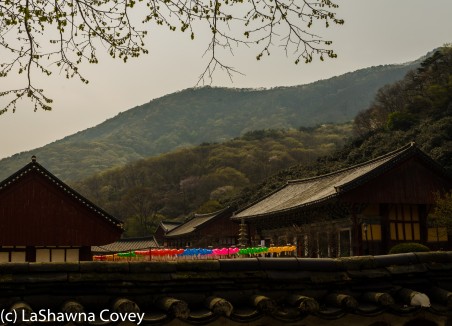
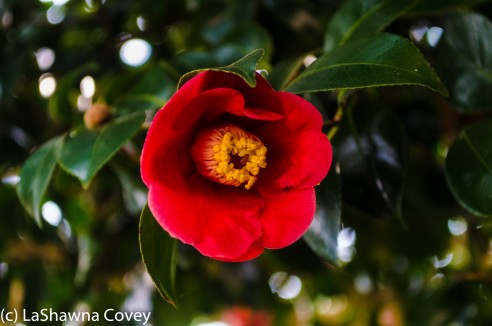
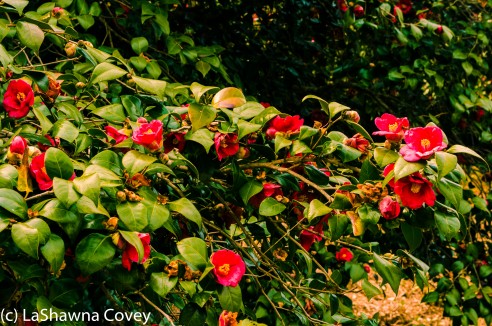
A few weeks ago, I decided to visit Seonunsa Temple for another temple stay. I wanted to try another Buddhist temple stay, and I was intrigued by Seonunsa Temple in particular. The temple is deep within Seonunsan Provincial Park, in the Jeolla-Do province, which is located in the deep southern part of South Korea. In particular, the temple is renowned for its 500-year old red camellia trees that bloom in early spring. Being a sucker for beautiful nature, and beautiful flowers in particular, I had to visit Seonunsa at some point before I left Korea.

Seonunsa Temple-6

Seonunsa Temple-8

Like all other major Buddhist temples in Korea, Seonunsa Temple offers their own Temple Stay Program. They offer a weekend experience program the second and fourth weekends of the month, so I went the second weekend in April, figuring that it would be maximum bloom season for the camellias.

Seonunsa Temple-7

Seonunsa Temple-11

I took the train and then a bus to Seonunsa Temple and arrived on site around lunch time. I took the available hours before check-in to do some hiking in the area. There are numerous trails in the park, and I selected one that wasn’t very long, but ended up at a nice viewpoint. Most of the trail was surprisingly easy, with the exception of a very short, very steep incline up some stairs to reach the top. The weather wasn’t that great, so it was a bit hazy, but at least it wasn’t raining.

Seonunsa Temple-1

Seonunsa Temple-2

After my hike, I toured around Seonunsa Temple grounds on my own. I saw the camellias, but I think I missed peak blooming season. Like every other flower this spring, it bloomed early. But there were still enough beautiful, red camellia flowers in huge trees to get a hint of what it likely looked like at peak bloom (plus I’ve seen pictures, which is why I wanted to visit Seonunsa Temple in the first place).

Seonunsa Temple-16

Seonunsa Temple-5

The temple stay program for Seonunsa Temple is very similar to the program at Haeinsa Temple. I checked in mid Saturday afternoon and was given my own room for the night (only because there weren’t any other female single travelers). I thought I would be about the only one on site, since Seonunsa Temple is not as popular as Haeinsa Temple, but there was a group of high school students from the USA participating in the same program as I was.

Seonunsa Temple-13

Seonunsa Temple-10

After orientation and dinner, we had the evening drum ceremony and the evening service in the temple. After that, we retired to a ceremonial hall for the 108 bows. I don’t know if I was just fitter than I was at the Haeinsa Temple, or if it was just mentally easier, because there was a countdown with the presentation, but it was much easier this time around. After the 108 bows, we all made a Buddhist prayer necklace as a souvenir.

Seonunsa Temple-3

Seonunsa Temple-4

The morning dawned very early at 0400 with the morning ceremony and breakfast. Originally, the morning program included a hike to the Dosolam Hermitage, but since it was raining pretty heavily, I decided to cut my trip short and head back to Seoul early. It is amazing how long your day can be when it starts at 0400, but I made it back to Seoul in time for an early afternoon showing of Captain America: Winter Soldier (my backup plan). So everything worked out for the best. If I had known the weather would be crap on Sunday, I would have done the Dosolam Hermitage hike, but the one I did was enjoyable enough, so it wasn’t a total loss.

Seonunsa Temple-9

Seonunsa Temple-14

Getting to Seonunsa Temple is fairly easy. I chose to take a KTX train from Yongsan Station in Seoul to Jeong-eup Station. From there, I walked a few blocks to the Jeong-eup Bus Station to catch the bus to Seonunsa. There is a direct bus from Jeong-eup to Seonunsa about four times a day, and takes 50 minutes. However, the bus only comes every two hours, so depending on when you arrive, it might actually be quicker to take a bus to Gochang and transfer to another bus to Seonunsa. It is the same coming back, because there were earlier buses connecting through Gochang that got me back to Jeong-eup quicker than waiting for a direct bus from Seonunsa to Jeong-eup.

Seonunsa Temple-15

Haeinsa Buddhist Temple Stay

Haeinsa Temple-11

When I first knew I was moving back to Korea, I bought myself the latest South Korea guide book to plan all the different places to see and visit. One of the things that caught my eye was the Temple Stay program. South Korea has a special program that enables individuals and groups to stay in a wide variety of Buddhist temples for a specific time, usually a weekend.

Haeinsa Temple-18

The Temple Stay program offers up the opportunity for experience and relaxation programs. These programs typically involve at least one overnight at the temple, along with some organized temple activities. Based on my guide book’s recommendation, I selected the Haeinsa Temple Stay program.

Haeinsa Temple-2

Haeinsa Temple is one of the “Three Jewel” temples of South Korea, and the temple was founded in C.E. 802 by two monks. It was designated a UNESCO World Heritage site, and is located in Gayasan National Park. The temple is home to the famous Tripitaka Koreana, which is the Buddhist equivalent of the Bible or the Koran. The Tripitaka Koreana is comprised of 81,340 wooden blocks, the oldest of which are over 770 years old, and is housed in four halls in the temple complex.

Haeinsa Temple-9

Haeinsa Temple-17

I elected to visit Haeinsa Temple in the fall of 2012, and it was my first overnight trip this tour in Korea, and certainly my first overnight to a Buddhist temple. I combined the trip with some hiking in the Gayasan National Park. I visited in early October, so the leaves were just starting to turn colors, but it was a couple weeks off from peak foliage. I arrived at Gayasan National Park around lunch time on Saturday and spent a few hours hiking toward the Sangwangbong Peak, until I had to return to Haeinsa Temple to check in for my temple stay program.

Haeinsa Temple-4

Haeinsa Temple-14

The Haeinsa Temple Stay program consists of two days and one night. I checked in to the temple at 1600, and was given a gray temple uniform (you can still wear your clothes underneath to stay warm, because it can get very cool at night). There was a fairly large group of us for the program and we first got some basic instructions on the timeline of activities and proper temple etiquette. Then it was dinner time, and since this was a Buddhist temple, dinner was purely vegetarian, and it was rather tasty. It was an all you can eat buffet, with the caveat that you had to eat everything on your plate and not waste any food.

Haeinsa Temple-1

Haeinsa Temple-15

After dinner, the evening program commenced. The first thing was the playing of the drums and gongs by the monks for 10 minutes. I had never heard anything quite like it before, and it was very resonant and peaceful. After the drum ceremony, we participated in the evening service in the beautiful main temple, and finished off with a tea service before going to bed at 2100.

Haeinsa Temple-10

Haeinsa Temple-16

Yes, bed time is needed to be super early, because we woke up super early at 0300. Dawn service started at 0330, which is very similar to evening service. Then we retired to a separate hall for 108 bows and meditation. The 108 bows are exactly what they sound like- 108 full body bows where you drop to your knees (thankfully on a thick cushion on the floor), bow your head to the ground, hold for a few seconds, and then stand up and do it again. I am reasonably good shape, but I won’t lie and say that I wasn’t feeling it by the end. I was sweating, and my thighs were sore and shaking from the exertion. So I enjoyed the peaceful meditation afterward to relax.

Haeinsa Temple-7

Haeinsa Temple-5

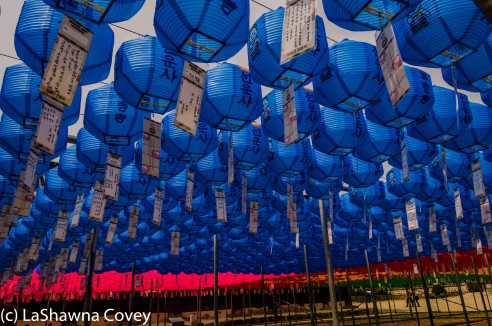
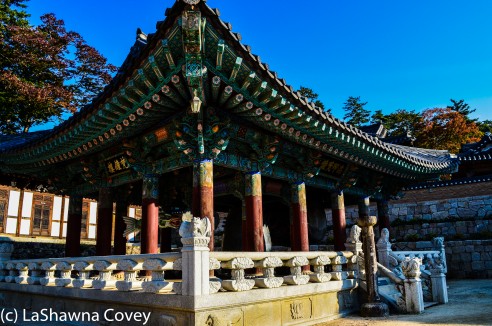
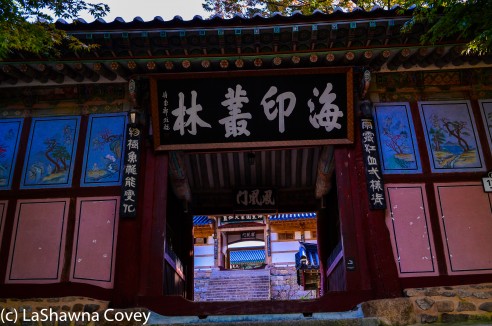
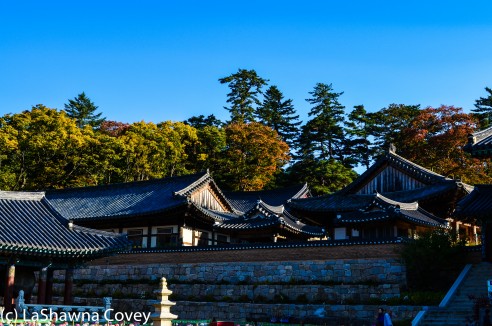
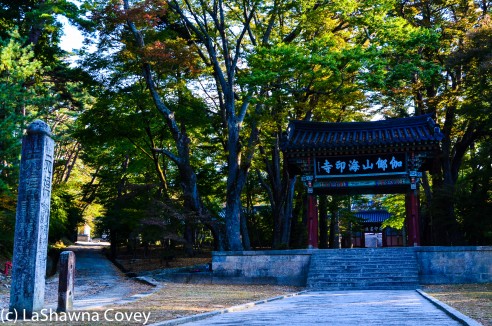
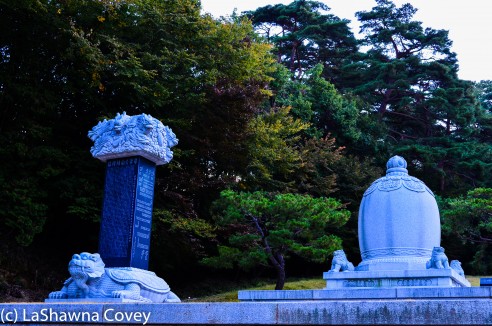
After all that, it was only 0600 and time for breakfast. After breakfast, we got an extensive tour of the temple grounds. The temple complex is one of the larger ones I have visited. There were multiple gates and stone stelae, that were engraved with the history of the temple on it. The buildings were very colorfully decorated like most Buddhist temples, but these colors were particularly bright and intricate. We also were able to see the Tripitaka Koreana, and it was quite amazing to see all the wooden blocks that comprise the collection.

Haeinsa Temple-12

After the tour, it was late morning and the rest of the program consisted of simply cleaning up and then leaving around lunch time. After that I did some more hiking in Gaysan National Park. It was Sunday, so the trails were filled with Korean hikers. The day was sunny and bright and I was surrounded by beautiful trees and a river, and there were enough color to give a hint of autumn.

Haeinsa Temple-6

Traveling to Haeinsa Temple is pretty easy. Take a train (preferably a KTX since is quicker) to Dongdaegu Station. The train station is a stop on the Daegu Subway Line 1. Take the train to Seongdangmot subway stop to Seobu Intercity Bus Termina. Take Exit 3 and the bus station is right next to the exit. There are buses to Haeinsa that depart from Seobu approximately every 20 minutes, and the trip takes about an hour, and is the last stop.

Haeinsa Temple-13

If you like beautiful nature and beautiful Buddhist temples, I highly recommend Haeinsa Temple, even for a day visit and a short hike. If you are really interested in experiencing in a taste of Buddhist temple life, I recommend the Temple Stay program. The program makes it very easy for visitors to experience temple life. Simply visit their website, Templestay.com, find a temple that suits you, and sign up via their website. Different temple programs cost different prices, but the Haeinsa Temple experiential program costs 60,000 won for the 2 day, 1 night program, and that includes everything. I am glad I did it, because it was something new and different. It gave me a window into a different world and a different way of thinking and being.

Haeinsa Temple-3


Icheon Baeksa Sansuyu Festival

Icheon Baeksma Sansuyu Festival-7

Spring is my second favorite time of the year in Korea, after autumn. The wide variety of flowers are blooming all over the country in a wide variety of colors and shapes. Spring typically starts in April, but this year, spring started about three weeks early due to an unseasonably warm winter that lead to an unseasonably early and warm spring.

Icheon Baeksma Sansuyu Festival-2

Among the first flowers that tend to bloom are the cherry blossoms and the sansuyu flowers. So in that spirit, I headed down south to the city of Icheon (an approximately one hour bus ride south of Seoul) for the Baeksa Sansuyu Festival. This festival is one of the first of the spring season.

Icheon Baeksma Sansuyu Festival-4

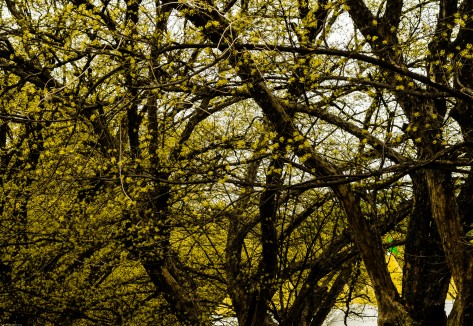
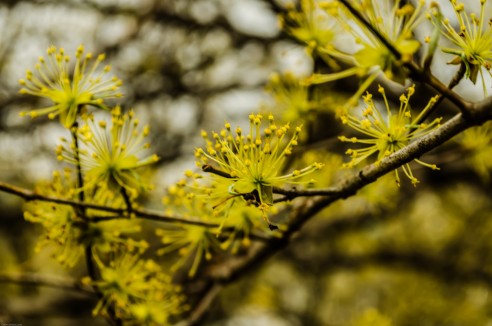
But since spring flower festivals are entirely weather and flower dependent, there is a potential for disappointment. For me, the two biggest disappointments are rain and missing the blooming season. Both of those were present for this festival. The sky was gray and gloomy with increasing sprinkles of rain while I was at the festival. Having never seen sansuyu flowers before, I couldn’t know for sure, but it really seemed that the festival was a week early. Sure the yellow flowers were blooming, but I don’t think they had hit full bloom when I visited.

Icheon Baeksma Sansuyu Festival-3

Icheon Baeksma Sansuyu Festival-5

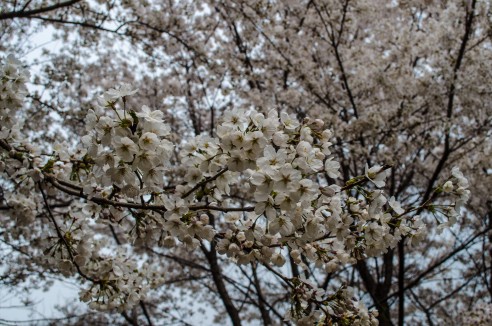
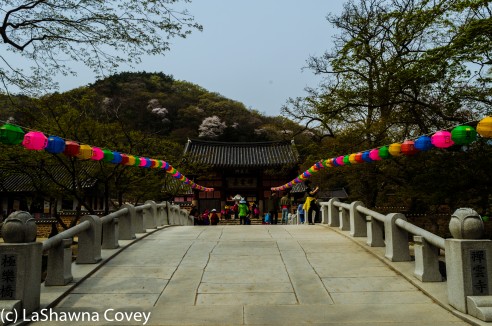
There were also a few cherry trees at the festival site for a nice color contrast.
Icheon Baeksma Sansuyu Festival-1

The festival was the standard setup for a Korean festival. There were cultural performances, a wide variety of food vendors, and a wide variety of local crafts for sale.

Icheon Baeksma Sansuyu Festival-6

After the festival, I walked around Icheon for a bit, and enjoyed the cherry blossoms at the park before heading home to Seoul.

Icheon Baeksma Sansuyu Festival-8

Hwagae Cherry Blossoms and Buril Falls

Hwage Cherry Blossoms and Buril Falls-15

My favorite part of Korean spring is the blooming of the cherry blossoms. I adore the gorgeous pink and white blooms that fill the cities and countryside for such a brief time. While the cherry blossoms are a delicate beauty, they are also a very ephemeral beauty.  Cherry blossom season only lasts about seven to ten days, so it’s nearly impossible to see all the places where cherry blossoms bloom in one spring season.

Hwage Cherry Blossoms and Buril Falls-1

Hwage Cherry Blossoms and Buril Falls-6

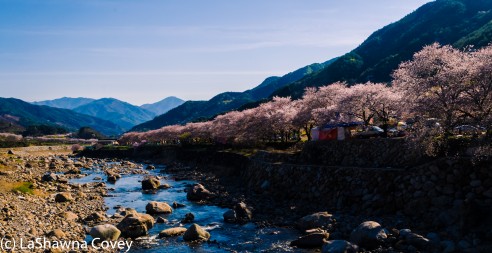
Last year, I confined most of my cherry blossom hunting to around Seoul, but this year I pushed farther afield.  I decided to make a trek down to Hwagae. I went the week after their official cherry blossom festival, hoping to avoid the hordes of crowds I read about. Of course the danger of going the week after the festival, is that I missed peak blossoms, but there were still enough to enjoy plenty of color. I also took the advantage to combine a few sightseeing places into one trip. I was able to see the Hwagae cherry blossoms, the Ssanggyesa Temple and Buril Falls in Jirisan National Park in one long day trip.

Hwage Cherry Blossoms and Buril Falls-2

Hwagae is fairly easy to reach by bus from the Seoul Nambu Bus Terminal. There are numerous buses per day, and it takes about three and a half hours (traffic depending) to reach Hwagae.  I wished I had taken the first bus out of Seoul, which would have given me an extra hour and a half in Hwagae, but I was able to see everything I wanted to see (albeit not at the most relaxed pace).

Hwage Cherry Blossoms and Buril Falls-3

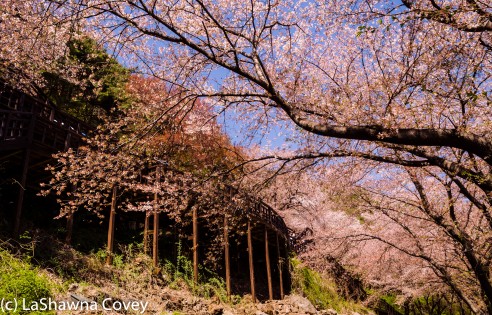
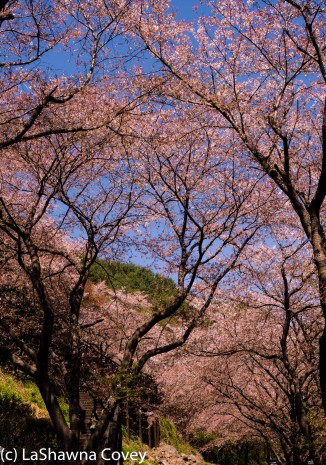
Hwagae is a tremendous opportunity to see a bulk of the cherry blossoms. There is an approximately four kilometer stretch of road from the town of Hwagae to Ssanggyesa Temple, and most of the road is lined with gorgeous cherry blossom trees on both sides. It is a very easy walk on flat road by a river (just pay attention to the traffic, though it was often so backed up that I was moving faster than some of the cars), and it is a great opportunity to get your cherry blossom fix. The opportunity for beautiful nature viewing and nature photography are abundant.

Hwage Cherry Blossoms and Buril Falls-4

Hwage Cherry Blossoms and Buril Falls-5

The end of this road is Ssanggyesa Temple (follow the signs), which is a small Buddhist temple complex originating in the year 723, but was rebuilt in 1632. I didn’t spend an extraordinary time at the temple, because I was pressed for time, but it was pretty nonetheless.

Hwage Cherry Blossoms and Buril Falls-10

Hwage Cherry Blossoms and Buril Falls-14

The last sightseeing part of my day was Buril Falls, which is on the edge of Jirisan National Park. The hike from Ssanggyesa Temple to Buril Falls is only about 2.4 kilometers. The hike is considered an “easy” hike, and I suppose it is by Korean standards. Most of the hike to the falls is uphill, sometimes over the uneven terrain I am so used to, but the most strenuous part of the journey is the first 500  meters from Ssanggyesa Temple and the 100 meters up very steep stairs on the return trip from Buril Falls (your knees will probably feel both the uphill and the downhill of that climb). Then the uphill levels out a bit and becomes easier and it took an hour and twenty minutes to reach the falls, and an hour to return, less if you are a faster walker. The trail ends at Buril Falls, which is considered one of the 10 scenic beauties of Jirisan National Park.

Hwage Cherry Blossoms and Buril Falls-12

Hwage Cherry Blossoms and Buril Falls-11

Retracing my steps was fairly quick, and soon enough, I was back to the temple and cherry blossom road to hike back to Hwagae. It was only a one hour walk back to town, and the sun was approaching sunset, giving the cherry blossom trees a beautiful, soft, pink glow.

Hwage Cherry Blossoms and Buril Falls-9

Hwage Cherry Blossoms and Buril Falls-16

I was hoping to take the direct bus back to Seoul, but that wasn’t happening. There were large groups of people waiting at the bus stop and all the buses back to Seoul were sold out for the night. But all was not lost. I caught a local bus to the town of Gurye (about 20 kilometers away) and then took a taxi to the Gurye-gu KTX station to catch a train back to Seoul. Of course all seats on the train were sold out, as it often happens on the Sunday evening trains back to Seoul. Thankfully for me, you don’t need a reserved seat to ride the train. You just need to be willing to stand for the few hours to get back into Seoul.

Hwage Cherry Blossoms and Buril Falls-8


Hwage Cherry Blossoms and Buril Falls-7

I highly recommend Hwagae as a lovely day trip from Seoul. Even though the crowds will be thick that time of year, it is definitely worth your while to go during cherry blossom season. There are few places you can see so many cherry blossoms in one area, and there are so many other sites to visit at the same time.