South Korea Demilitarized Zone Tour (with Dorasan Station and Third Tunnel)

DMZ tour-1

There are a few things I would consider “must do” activities if visiting or living in South Korea as an American. One of them is definitely visiting the Demilitarized Zone. It is certainly not the most beautiful thing to see in Korea, but it does show why we (as in the Americans) came to Korea over 60 years ago, and why our armed forces are still here, and we consider South Korea to be of top strategic value to the US national interests in Asia.

DMZ tour-5

The Demilitarized Zone, or DMZ for short, stretches across all of the Korean Peninsula, bisecting it roughly (though not exactly) along the 38th Parallel where the Korean War armistice was signed in 1953. The DMZ is two miles wide and is considered the most land-mined part of the entire world, and both sides are strung with barbed wire and frequently guarded to prevent people from entering the DMZ.

DMZ tour-13

While there are different parts of the DMZ that can be visited, the easiest and most frequently visited entry point is in the west around Panmunjom, where the armistice was signed. It’s a roughly 90 minute bus ride from Seoul to the DMZ, and many different tours run periodically throughout the week. Visiting the DMZ is not something you can do independently, but must do as part of a tour group. Many different tour companies offer up tours, some more closely affiliated with the US military and some run by South Korean civilian tour agencies. Most of the reputable tour companies’ itineraries are the same, so you really won’t get more from any one tour company. I chose to go with the USO, which operates tours for both military and civilian personnel ($40 for military/ $80 for civilians).

DMZ tour-2

The first stop of the tour is at Camp Bonifas, where we received an introductory speech from our “tour guides” who are active duty military from the Joint Security Area. Then we were taken up to Panmunjom itself where we can visit the building where the armistice was signed, and even briefly step inside North Korean territory.

DMZ tour-4

When we were in the building, we could also see a couple North Korean troops come forward by the building, taking picture of all of us. So of course we turned around and started taking pictures of them, so it was all sort of meta.

DMZ tour-3

After visiting Panmunjom, we got a driving tour of part of the immediate area in the DMZ. We stopped at various places, such as an overlook where we could see into North Korea and see the huge giant flag that stands over Propaganda Village. Plus we also drove by the Bridge of No Return, where POWs were exchanged at the end of the Korean War.

DMZ tour-7

It is interesting to realize that even though the DMZ is heavily mined and guarded, it has become a sort of nature preserve. Because no humans have really stepped foot in the DMZ in over 60 years (with some minor exceptions), it has allowed nature, and particularly bird life, to thrive on its own. The DMZ is currently home to a wide variety of rare birds, and one day, if and when the DMZ goes away, at least parts of it might be kept as a nature preserve.

DMZ tour-6

Once the DMZ part of the tour was over, we still had two more sites to visit. The first stop was at the Dorasan train station, which is the northernmost train stop in South Korea, and the rail line connects with North Korea.

DMZ tour-9

There are actual trains that leave from Seoul and head to Dorasan and return a couple times a day.

DMZ tour-10

DMZ tour-11

You can buy a ticket for 500 won and go out onto the train platform. It’s a completely typical train station, though it was sort of funny to see the signs pointing toward Pyongyang.

DMZ tour-12

If and when the Koreas reunify, this rail line will be one of the first links between the two Koreas restored.

DMZ tour-8

The final stop of the tour is at the Third Tunnel. The tunnel is one of a few tunnels discovered where North Korea dug underground and opened up tunnels into South Korea as part of a secret invasion route. This tunnel is probably the best preserved for visitors. We walked down a tunnel into the actual North Korean tunnel and we could walk part of the way through the tunnel before having to turn back, because it was blocked. It was interesting to see all the different ways the ongoing conflict between North and South Korea has manifested over the years.

DMZ tour-14

The tour is a very full day that provides interesting historical and geopolitical information, and allows visitors a glimpse into a very real area of strategic interest. It is a very worthwhile place to visit.

DMZ tour-15

Muchangpo Beach Sea Parting

Muchangpo Sea Parting-14

Last month, I went on another Seoul Expat Meetup Group outing to Muchangpo Beach for the sea parting event. This sea parting is not the most famous one in Korea. The most famous one is the sea parting in Jindo, and each year in the spring (typically March or April, depending on the lunar cycle for the year) is the annual Jindo Sea Parting Festival where for roughly an hour, the sea parts to reveal the sea floor underneath and people are able to walk across it to a nearby sandbar. I considered going to the Jindo festival this year, but once I found out that the actual sea parting was around 0500 in the morning when it was completely dark and therefore  I would have been unable to see anything, I decided not to go.

Muchangpo Sea Parting-1

So when I saw the notice for the Muchangpo sea parting meetup, I couldn’t pass up an opportunity to see a sea parting, even if it is not the same grand scale as Jindo. The meetup was an entire day trip down to Muchangpo Beach in the morning, and an afternoon stop at the nearby Daechon Beach.  The day’s weather was gray and cloudy, but warm, and thankfully not raining.

Muchangpo Sea Parting-2

The term “sea parting” is a bit of a misnomer, and brings to mind the image of Moses parting the Red Sea. What is really going is a very extreme low tide, and in the case of Muchangpo, it is tied to the lunar cycle.

Muchangpo Sea Parting-3

Muchangpo Sea Parting-6

During this particular trip, the sea parting was from 1100-1200 on Sunday, June 15th. We arrived on site around 1030, and the tide was still going out. We started making the crossing at about 10 minutes until 1100, and the water was about mid calf deep at the time. We crossed to a small rocky outcropping that was exposed during the sea parting.

Muchangpo Sea Parting-4

Muchangpo Sea Parting-8

There really isn’t much to do on the tiny island (if you can call it that, since it was basically just exposed rocks), but walk around and look at stuff that is normally underwater. All around, there were groups of Koreans digging in the sand for all sorts of buried creatures to make into a nice meal.

Muchangpo Sea Parting-5

Muchangpo Sea Parting-7

The seaweed covered many of the rocks and was a very glistening green that almost looked painted on. We saw a wide variety of colorful starfish just hanging out in the waving seaweed.

Muchangpo Sea Parting-11

Muchangpo Sea Parting-13

Muchangpo Sea Parting-12

It was interesting to walk around and see stuff that is normally buried under several feet of water, and only occasionally see the light of day for a brief period.

Muchangpo Sea Parting-10

Muchangpo Sea Parting-9

After the hour was up, these air raid-like sirens sounded with an announcement in Korean and I assume telling us to return to the beach before the tide came in. As we walked back, the water level was lower than when we headed out to sea and it was only a couple inches deep in places and the path was clearly marked with buried tires.

Muchangpo Sea Parting-16

Muchangpo Sea Parting-15

However, not that long after noon, the tide started coming back in. Shortly after that, everything that was exposed to us was completely covered in water again, hidden only to be viewed again during the next sea parting.

Muchangpo Sea Parting-17

Muchangpo Sea Parting-18

Xi’An Muslim Quarter and Great Mosque (Da Qingzhensi)

Xian Muslim Quarter-8

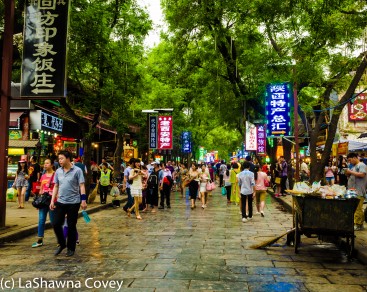
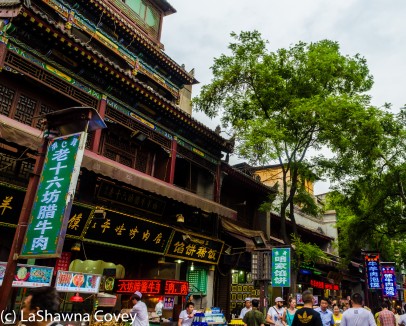
The third item on my Xi’an must do list was visiting the Muslim Quarter. Muslims have a very long history in Xi’an, over 1,200 years, and the Great Mosque (Da Qingzhensi) was founded in Xi’an during the Tang Dynasty in C.E. 742. The mosque is tucked away deep inside the Muslim Quarter, at the confluence of narrow and busy shopping streets. To get to the mosque involves a walk through one of the busiest, most colorful and vibrant parts of Xi’an.

Xian Muslim Quarter-1

Xian Muslim Quarter-2

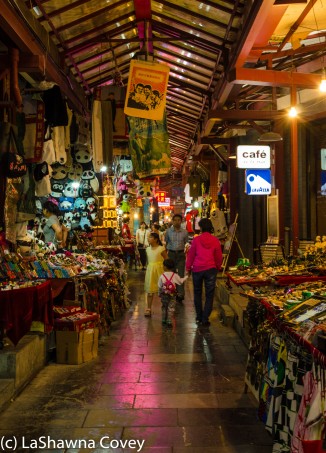
The Muslim Quarter is the best place for souvenir shopping in my opinion. There are a wide variety of shops around the city, but most of the stores are either geared specifically toward to the local buying market or more Western stores. But the Muslim Quarter is packed with stores selling local crafts, trinkets, art, jewelry, knockoff clothing, and pretty much anything you could want to buy as a tourist.

Xian Muslim Quarter-13

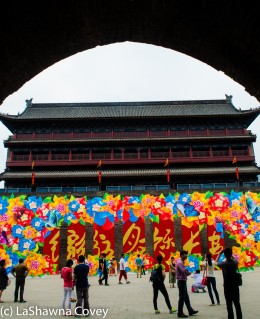
There are a couple ways to arrive at the Great Mosque. The main entrance to the Muslim Quarter is directly behind Drum Tower. One way is to travel down the narrow covered alleyway filled with vendors on the first left. Another possibility is to travel straight down the main street of the quarter for a few hundred meters, and take a left and then another left down the other end of the covered alleyway (follow the signs). Eventually you will find yourself at the mosque.

Xian Muslim Quarter-12

Xian Muslim Quarter-11

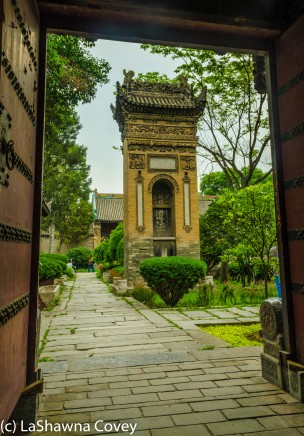
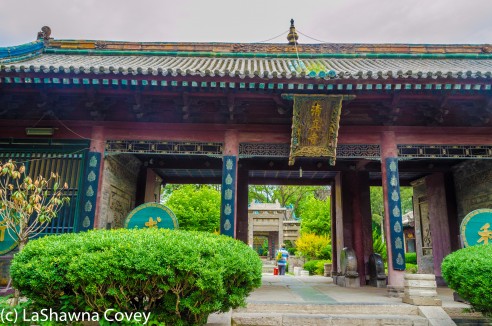
Da Qingzhensi is a peaceful complex in the densely populated neighborhood. The mosque complex is filled with buildings built in an aesthetically pleasing blend of Arabic and Chinese architectural styles.

Xian Muslim Quarter-4

Xian Muslim Quarter-5

The prayer hall is towards the back of the complex, and it has a blue tiled roof.

Xian Muslim Quarter-6

The mosque has its version of minaret which is closer to a Chinese temple pagoda.

Xian Muslim Quarter-9

Xian Muslim Quarter-10

After visiting the mosque, it is very easy to just wander around the rest of the streets of the quarter.

Xian Muslim Quarter-14

The Muslim Quarter is brightly lit with neon lights at all hours, but it particularly comes alive at night. It is also one of the best places in Xi’an to indulge in a wide variety of street food. You could literally eat your entire day away in the quarter. There are so many different meats and seafood on a stick to choose from.

Xian Muslim Quarter-16

There are sweets and beverages of all kind. I even planned on eating at a restaurant, one that came highly recommended for excellent Muslim food, Jiasan Guantang Baozi. Likely the food is excellent, however, it certainly was not what I was expecting. I was expecting Middle Eastern Muslim food, which I love very much. Chinese Muslim food is radically different, offering up all sorts of dishes from all sorts of meat parts I don’t typically see on restaurant menus. While the food is probably delicious, since it certainly wasn’t what I wanted, this restaurant was one of the few restaurants I actually walked out of without ordering.

IMG_20140525_192603

Instead of strange meat dishes, I indulged in a very tasty local specialty. It’s called rou jia mo, and it is finely chopped pork pressed between two halves of a solid steamed bun. I capped that off with some local delicacy. I don’t know what the name for it is, but it is some very sweet, dense cake dipped in honey. I had never seen anything like that before, and assumed it was pineapple until closer inspection.

Xian Muslim Quarter-15

As I mentioned before, definitely don’t miss the Muslim Quarter. It is very much worth your time.

A Bike Ride around the Xi’An City Walls (Chengqiang)

Xian City Walls-15

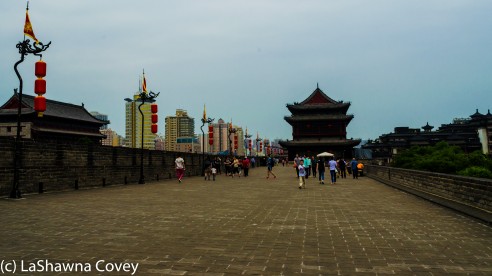
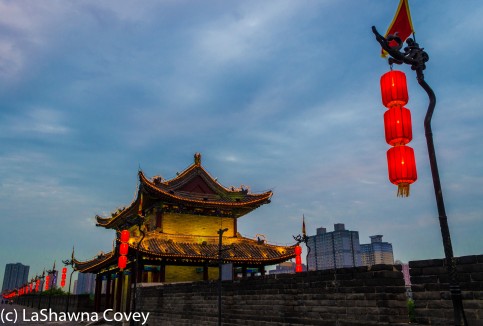
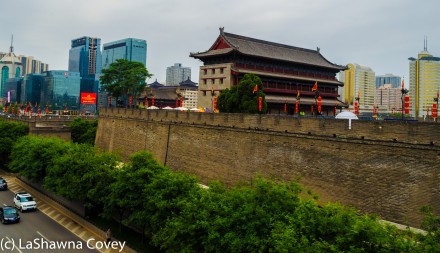
In my opinion, the second must do in Xi’An is a journey around the city walls. The walls in ancient times used to be much bigger, but now encircle what was the ancient center of the city. The walls were originally went back to the Tang Dynasty, but these city walls trace back to the Ming Dynasty, even though the city walls are now modern and new.

Xian City Walls-1

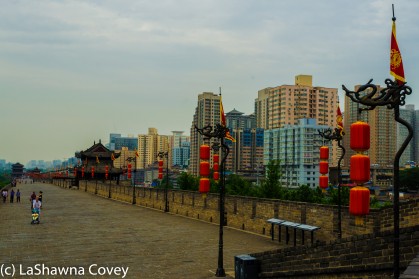
In the past few years, the walls have been completely reconnected again, so now it is possible to travel around the entire wall. The wall length is about 8.75 miles or 14 kilometers. The city wall is quite wide, and for the most part, fairly flat and easy to traverse. You can walk around the wall, you can ride in a golf cart, or you can do what I did and highly recommend, and bike around the wall.

Xian City Walls-8

Xian City Walls-3

The city wall is open from about 0800-2200 daily and costs about 54 yuan for admission. I chose to go up the wall around late afternoon to early evening. I figured it would be the perfect opportunity to see the walls and the city during daylight, but be around for after the sun sets and see the city and walls lit up at night.

Xian City Walls-10

Originally I figured I would walk around the wall, which would take about 3 hours at the speed I walk, not assuming lengthy stops for photos and enjoying the view. However, I am very glad I decided to bike around the walls. It only took me about 90 minutes to bike it, including stops for pictures. Of course I wasn’t just pedaling along at a leisurely pace. There are parts of the wall that are very scenic and the view is very captivating. However, there are also plenty of sections where the view wasn’t anything special. These times allowed me to get some speed going. There was something very freeing about speeding along the top of the wall with the wind whipping through my hair and the city sights speeding by.

Xian City Walls-4

The most scenic spots on the wall, and also the most crowded, are around the four main gates. The most common place for entry into the walls is at the South Gate (Nan Men), with the second most popular entry being the East Gate (Dorg Men). It is also possible to enter at the North and the West Gates, but they are not as popular. It seems like most visitors to the wall congregate around their gate of entry, enjoy the sights and then leave. Once you get past the gates, most of the wall is fairly empty, and it is easy to bike.

Xian City Walls-2

Xian City Walls-7

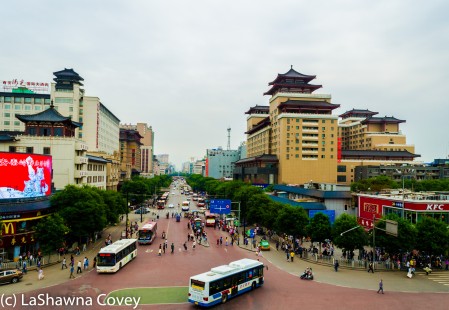
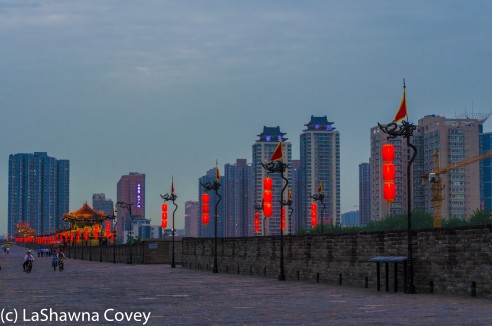
It was interesting to see the city from this vantage point and provided a good view of the contrasts of Xi’An. Before I came to Xi’An, I had visions of the city being sort of the Chinese version of an old, well-preserved walled city in Europe. I was disabused of that notion real quick, because Xi’An is a very modern city. Sure there are definitely remnants of Xi’An’s rich, ancient history, but they are tucked away or right next to something new and modern, so you have to search them out.

Xian City Walls-5

Xian City Walls-6

I could see the very modern buildings that populate the city center, and particularly outside of the walls in the surrounding suburbs. It really provided an overview of how Xi’An has evolved into the city it is. I could see the desperate poverty of buildings that could be best described as veritable slums juxtaposed against super modern Western luxury stores just several blocks away. I could see the contrast of the ancient city walls overlooking McDonald’s and Kentucky Fried Chicken.

Xian City Walls-9

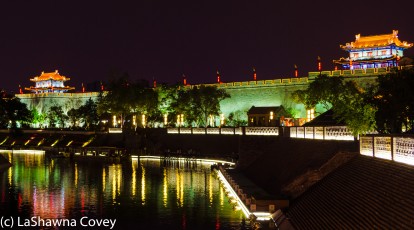
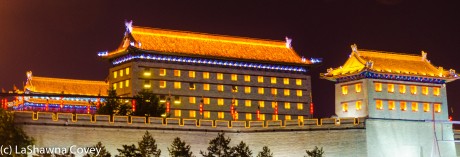
After my bike ride around the city walls, I just relaxed and took in the view and waited for night to fall. Once it did, the walls lit up. The walls themselves are lined with lights, along with the rampart towers and red lanterns. The city looks bright at night, in contrast with the gray haze of daylight. The view was very beautiful, and peaceful, because by this point, most of the people weren’t on the wall, except around the South Gate and there was silence around me. The weather was also cooler after the sun set, and there was a mild pleasing breeze.

Xian City Walls-11

Xian City Walls-12

Once darkness fell, the view of the city walls was very entrancing.

Xian City Walls-14

Xian City Walls-13

Xian City Walls-16

Definitely don’t pass up the opportunity to visit the city walls when you visit Xi’An. It’s a unique opportunity to see the city, and biking is a great option. It only costs 45 yuan to rent a single bike for two hours, and that is more than enough time to ride around the walls and enjoy the views.

Xian City Walls-18

Xian City Walls-17

Xian City Walls-19


Xi’An Bingmayong- Terra Cotta Warriors

Terra Cotta Warriors-16

I spent Memorial Day weekend in Xi’An, China. I have been to China before a couple times, and I was fascinated by the historical relics that reside in the area. China is home to thousands of years of fascinating history and cultures, some who have only been recently recovered in the past several decades.

Terra Cotta Warriors-18

There are a wide variety of things to see and do in Xi’An, and one of the things that should be at the top of the list is visiting Bingmayong, better known as the Terra Cotta Warriors.

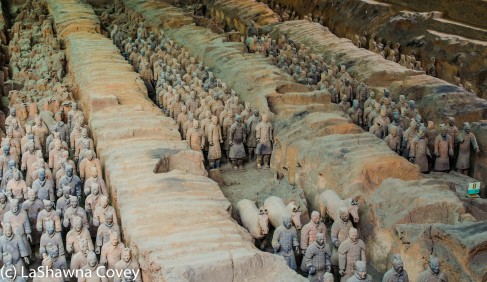
The Terra Cotta Warriors are part of the tomb of Qin Shi Huang, and they date from around two thousand years ago. After Qin Shi Huang died, supposedly part of the tomb site was plundered by the empire’s enemies, but the tomb soon enough passed into history and wasn’t rediscovered in modern times until around 40 years ago when local farmers were digging for wells In the past 40 years, three pits have been excavated and their treasures unearthed.

Terra Cotta Warriors-17

The easiest way to visit the Terra Cotta Warriors is with a tour group, and pretty much every hotel and hostel offers their own tour. The tomb is located about an hour’s drive outside of Xi’An, and is located about a 1500 meters walk from the parking lot. I liked that my tour guide had us visit Pits 2 and 3 first, because they are smaller. We finished up at Pit 1, so my viewing experience increased to end at the most spectacular site.

Terra Cotta Warriors-15

It would probably be best if you went early when it opened around 0830, but most tour groups don’t seem to get there until late morning or after lunch. So just be aware, if you go with a tour group, you will likely be one of hundreds of people on site at the time.

Terra Cotta Warriors-14

There are three pits on site to visit. Pit 1 is the largest and most famous, and therefore the most crowded. Wait long enough and a space by the railing overlooking the pit will open up, but it is definitely not a quiet, peaceful or solitary activity, unless you can block out the noise of the people around you.

Terra Cotta Warriors-3

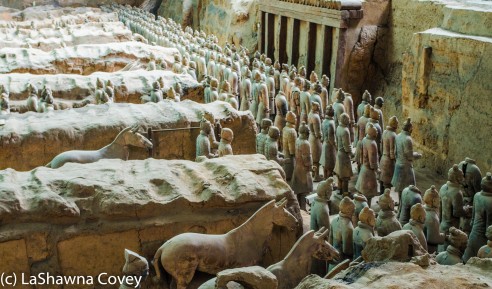
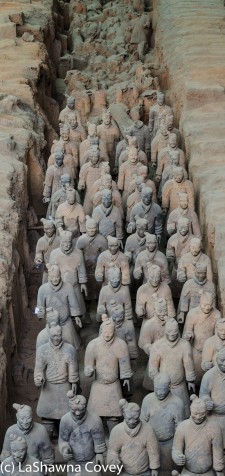
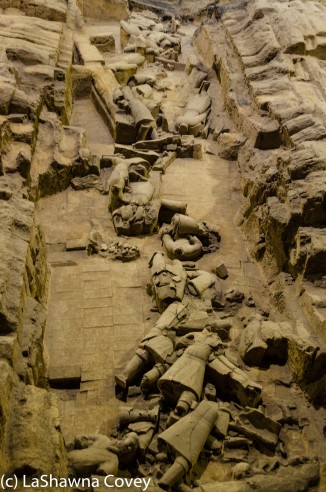
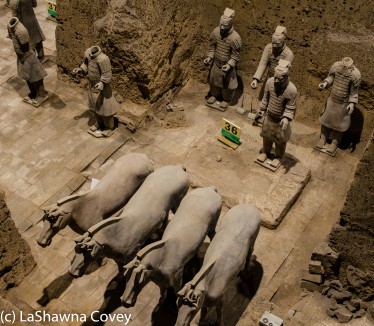
Pit 1 covers an area of over 14,000 square meters on site. Over 2000 terra cotta warriors and horses have been uncovered so far, and it is believed that over 6000 warriors might still be buried. All the warriors’ heads were hand crafted over a period of around 30 years by around 700,000 workers. All the warriors represented the minority groups found in the empire at the time, along with a mixture of horses and military forces.

Terra Cotta Warriors-13

Terra Cotta Warriors-2

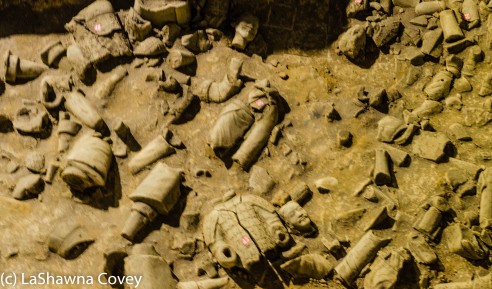
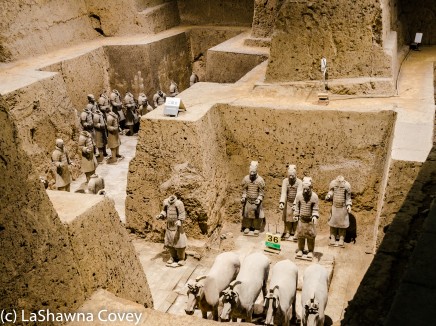
Pits 2 and 3 are smaller and there are less artifacts to see. Pit 2 consists of a mixture of military forces: archers, charioteers, infantryman, and cavalrymen. There are still plenty of warriors, some broken, some intact in Pit 2, along with remnants of wooden chariots.

Terra Cotta Warriors-4

Terra Cotta Warriors-1

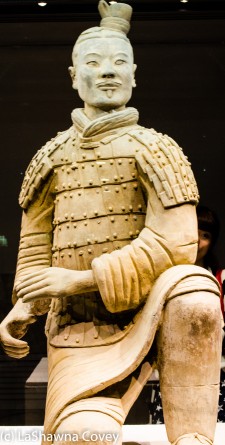
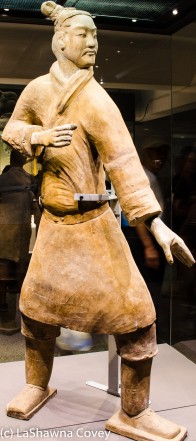
Pit 2 hasn’t been fully excavated yet, but some of the intact warriors have been removed from the pit itself and displayed in cases around the pit.

Terra Cotta Warrior senior officer

Terra Cotta Warrior senior officer

Terra Cotta Warrior midlevel officer

Terra Cotta Warrior midlevel officer

Terra Cotta Warrior archer

Terra Cotta Warrior infantryman

Terra Cotta Warriors-6

Terra Cotta Warrior archer

Terra Cotta Warrior cavalryman

Terra Cotta Warrior cavalryman

My tour guide stated that Pit 3 is thought to represent the headquarters element of the military formation. Comparatively fewer warriors have been unearthed in this pit (only around 68 senior officers), possibly because the pit might have been raided at some point throughout history.

Terra Cotta Warriors-10

After the visit to the terra cotta warriors, we took a shuttle bus over to the Tomb of Qin Shi Huang, which is about a 10 minute bus ride away. On first glance, the tomb looks just like a forested hill, but the hill is definitely man made. The tomb has not been excavated yet. Part of the legend is it is booby-trapped with lakes of mercury. That hasn’t been independently verified, though my tour guide stated that mercury levels in the water around the tomb are higher than normal, so it is a possibility.

Terra Cotta Warriors-11

As I mentioned earlier, the Terra Cotta Warriors are an absolute must do when visiting Xi’An. Even if you aren’t into archaeology, this is a historical site that should not be missed.

Terra Cotta Warriors-12


Under a Moonlit Sky: A Night Tour of Changdeokgung Palace

Changdeokgung Palace by day and night-30

About a week ago, I had the opportunity to do a moonlit tour of Changdeokgung Palace. I had visited the palace the past fall, but this was an opportunity to see the palace in a new light (literally). During this year from April to November, the palace offers up moonlit tours twice a month, on the full moon and one day next to it.

Changdeokgung Palace by day and night-25

Changdeokgung Palace by day and night-35

I love evening tours, and figured this would be a good opportunity to do some night photo shooting as well. The tour started at the main gate at 2000, at which point, it was almost completely dark. Luckily for us, the weather was good, though a tiny bit hazy, so it wasn’t a perfectly clear moonlit night.

Changdeokgung Palace by day and night-20

Changdeokgung Palace by day and night-21

At least it didn’t rain though. We were taken through parts of the palace grounds, from the main hall, to different out buildings. We didn’t actually enter any of the buildings, but we were able to look inside. We had lanterns to guide us on the trail, which was convenient for some of the stairs.

Changdeokgung Palace by day and night-22

Changdeokgung Palace by day and night-23

Changdeokgung Palace by day and night-27

Changdeokgung Palace by day and night-26

After seeing some of the buildings, we were taken back to the Secret Garden. We didn’t see the full tour of the Secret Garden like I did during a day tour, but the most scenic places of the garden, like the Buyongjeong Pavilion were shown. All the buildings were very lushly lit and it was made for some nice photography.

Changdeokgung Palace by day and night-34

Changdeokgung Palace by day and night-33

Changdeokgung Palace by day and night-32

The actual walking tour of the grounds took about 90 minutes, and the last 30 minutes was a sampling of cultural performances. We were treated to a variety of Korean dance, opera and traditional music in an open air setting, so it was pleasantly cool by this point in the evening. It was a good opportunity to see different aspects of Korean culture you might not be able to see. We were also given some traditional Korean tea and sweets to enjoy the performance.

Changdeokgung Palace by day and night-37

Changdeokgung Palace by day and night-38

This tour is geared more toward cultural awareness rather than photography, which is why tripods are specifically banned in the advertisement for the tour. However, in my group there were numerous people who brought and used tripods and the tour guides did not prevent anyone from using them. I know my pictures would have turned out better if I had brought my tripod.

Changdeokgung Palace by day and night-36

Changdeokgung Palace by day and night-31

This is not a tour open to just anyone. This is a tour just for foreigners, so no Koreans are allowed to attend. Three languages are offered for the tours: English, Japanese and Chinese. The tickets are easy to buy online through Interpark, and you pick up your ticket at the venue after 1930 the day of the event. Tickets cost 30,000 won per person, and I believe one person can reserve two tickets at a time. Make sure you bring some form of an ID, such as a passport to prove your identity when you check in at the palace. The total tour lasts around two hours, so figure you will spend 2000-2200 in the evening there. Changdeokgung Palace is easily reached from metro line 3 (Anguk stop, exit 3), and it is a few hundred meters up the road, or you can walk to the palace from metro stop Jongno-3(sam)-ga (Lines 1,3,5, exit 7).

Changdeokgung Palace by day and night-28

If you like moonlit tours, particularly of palaces, and would like to see a different aspect of Korean culture, I highly recommend the tour.

Changdeokgung Palace by day and night-29

Luscious Fall Colors at Changdeokgung Palace and the Secret Garden

Changdeokgung Palace by day and night-13

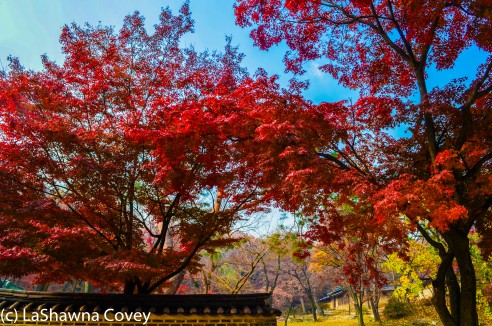
Last fall I took my mom to visit Changdeokgung Palace when she came to visit Korea. I had visited the palace on a previous tour, but not during fall. At the time, the fall leaves were just a bit past peak color, but they were still vibrant enough to make you stop and stare.

Changdeokgung Palace by day and night-14


Changdeokgung Palace by day and night-9

We got to the palace relatively early, because we had a full day planned of palace visiting and walking around Seoul. We first did the Secret Garden tour, which is to the rear of Changdeokgung Palace, and actually makes up the bulk of the complex.

Changdeokgung Palace by day and night-8

Changdeokgung Palace by day and night-3

You can only access the garden via a guided tour, of which there are multiple ones throughout the day, in both Korean and English. However there are only two tours in English, at 1130 and 1430.

Changdeokgung Palace by day and night-2

Changdeokgung Palace by day and night-7

The garden was designed for the private pleasure of the king and his family. It has a wide variety of buildings, gardens, ponds, flowers, and trees, some of which are hundreds of years old.

Changdeokgung Palace by day and night-15

Changdeokgung Palace by day and night-16

The highlight of the Secret Garden tour is the Buyongjeong Pavilion on the Buyongjeong Pond, which was restored a couple of years ago.

Changdeokgung Palace by day and night-6

Changdeokgung Palace by day and night-5

The tour of the Secret Garden lasts about two hours, and it moves at a leisurely pace. You definitely have plenty of time to enjoy the scenery, listen to the tour guide and take pictures.

Changdeokgung Palace by day and night-11

Changdeokgung Palace by day and night-12

This was definitely one of the most beautiful places to see in Seoul in the fall. There are many places that have colorful leaves, but the Secret Garden has some of the greatest concentration of fall beauty.

Changdeokgung Palace by day and night-10

Changdeokgung Palace by day and night-4

Changdeokgung Palace is easy to get to, since it is centrally located in Seoul. You can reach it via metro line 3 (Anguk stop, exit 3), and it is a few hundred meters up the road, or you can walk to the palace from metro stop Jongno-3(sam)-ga (Lines 1,3,5, exit 7). There are separate English language tours for the palace (though you can walk through most of the palace grounds on your own) and the garden (guided tour required). It is open from 0900-1700 (winter) or 1830 (summer).

Changdeokgung Palace by day and night-1

Changdeokgung Palace by day and night-17

If you like palaces, and especially if you love beautiful gardens, this is definitely a palace to visit. And if you have the opportunity to visit it in the fall, that is even better.
Changdeokgung Palace by day and night-18

Changdeokgung Palace by day and night-19

Jirisan Baraebong Royal Azalea Hike


Jirisan Baraebong Royal Azalea Hik-15

A couple weekends ago, I finally was able to go on the Baraebong Peak Royal Azalea hike in Jirisan National Park. I read about this hike last year, but wasn’t able to do the hike. Since this year is my last spring in Korea, I knew I really needed to do this, because the pictures I’ve seen of this hike are absolutely beautiful. Luckily for me, in my online searches about this hike, I discovered the Seoul Meetup group that was planning to do this hike, and I eagerly signed up.

Jirisan Baraebong Royal Azalea Hik-1

After signing up, I realized that the hike the meetup group does, is only a short version of the hike. The true hike is the Jeongnyeonchi Hill Baraebong Peak Course. It starts at the Jeongnyeonchi service area and ends at Undong village. That hike is about 12.6 kilometers, and most of it traverses a ridgeline and passes through numerous passes that are covered in colorful azaleas. Unlike most hikes I have done in Korea, that hike has very little in the way of steep inclines, and the one steep decline is at the end of the hike.

Jirisan Baraebong Royal Azalea Hik-2

Jirisan Baraebong Royal Azalea Hik-8

The shorter hike we did started at Undong village and continued up the hill to Baraebong Peak with a diversion to Pallangchi Pass, with a return to Undong village. The hike we did was around 8 kilometers. This hike was also the steepest part of the whole hike. The hike starts at Undong village and ascends sharply to Baraebong Samgeori. The altitude gain on this hike was over 400 meters in a brief period of time.

Jirisan Baraebong Royal Azalea Hik-3

Jirisan Baraebong Royal Azalea Hik-9

I was definitely feeling the hike in my legs. It was in the middle of the day, and the sun was bright and overhead. There was only minimal shade on this hike, but I took advantage of it whenever I could. Surprisingly, all of these spring hikes I’ve done this year have felt easier than the fall hikes I did. I’ve actually been passing Korean hikers on the paths. My knees certainly feel better. I would like to think that I am simply fitter now than I was in the fall. Or maybe I am just missing all the fitter Korean hikers. But the more likely answer is that I’ve been hiking on easier paths. Sure, the trails are steep, but the trails are wide and surprisingly well-benched. At times I even felt like I was hiking in New Zealand.

Jirisan Baraebong Royal Azalea Hik-4

Jirisan Baraebong Royal Azalea Hik-10

This hike is very popular, particularly this time of the year. There were scores of tour buses at Undong village, and even more groups hiking in from Jeongnyeonchi pass. This popularity is probably why the trail is so well benched, but it also means it is VERY crowded.

Jirisan Baraebong Royal Azalea Hik-12

Jirisan Baraebong Royal Azalea Hik-13

For most of the trail, that is not really that big of a deal, but parts of the trail around Pallangchi pass are rather narrow, so there were times a long line formed on the trail. Sure that make the walking slower, but this also allowed a greater opportunity to take in the beautiful azaleas.

Jirisan Baraebong Royal Azalea Hik-5

Jirisan Baraebong Royal Azalea Hik-14

The azaleas at lower altitudes already passed their blooming season, but as I ascended in altitude, there were more and more azaleas on the path.

Jirisan Baraebong Royal Azalea Hik-19

Jirisan Baraebong Royal Azalea Hik-16

Once I reached Baraebong Samegori, I ascended to the top of the peak. Most of the trail was relatively flat, but the last 250 meters before hitting the peak were so steep, but the view from the top was worth it. I could see all the surrounding mountains, and I could see further down the trail, where the patches of azaleas were abundant around Pallangchi pass. I had plenty of time before having to return to the bus, so it was a pretty easy walk out to the pass.

Jirisan Baraebong Royal Azalea Hik-6

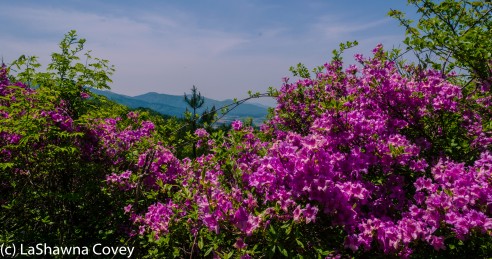
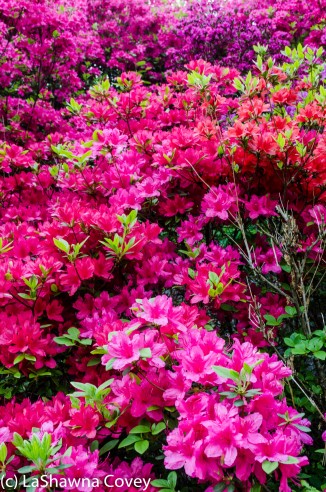
Pallangchi pass was definitely worth the walk. All around the areas were thousands of bright purple azalea flowers. The hills were fields of pink, and I had never seen anything quite like it.
Jirisan Baraebong Royal Azalea Hik-7

Independent travel for this hike is not exceptionally easy or cheap, but it is doable. The quickest way is probably to take a train from Yongsan to Namwon station, and then a taxi to Jeongnyeonchi service area. At the end of the hike at Undong village, there were plenty of taxis waiting, to get a ride back to Namwon station. There really aren’t any buses in the area, so you really have to take a taxi or be part of a tour group.

Jirisan Baraebong Royal Azalea Hik-11

If you have the opportunity to do this hike, I highly recommend it. I have never run into the opportunity to do a hike that afforded an opportunity to see so many wild, colorful azaleas in one place. Parts of the hills were all pink, and even the parts that aren’t, offer up so many beautiful views of the surrounding Jirisan National Park.

Jirisan Baraebong Royal Azalea Hik-17

Jirisan Baraebong Royal Azalea Hik-18

A couple of tips for this hike. If possible, I would highly recommend you start this hike early, particularly if you are doing the full 12.6 kilometers. This will hopefully allow you to get out in front of the bulk of the Koren hiking groups, though there will be the really dedicated hikers out there. Definitely take plenty of water, sunscreen, a hat and sunglasses, because the bulk of the hike is very much exposed, and the sun will beat down on your head during a sunny and bright day.


Morning Calm Arboretum Spring Flower Festival 2014

Morning Calm Arboretum Spring 2014-4

The second half of my day trip to Nami Island was a visit to the  Morning Calm Arboretum. I had visited before a year ago for the winter Lighting Festival, but wanted to see it in the full light of the spring blooming season.

Morning Calm Arboretum Spring 2014-11

Morning Calm Arboretum Spring 2014-14

It is actually reasonably easy to combine the two places into one day trip. They are linked by the Gapyeong Resort Shuttle Bus that runs from Gapyeong Station to Morning Calm Arboretum on an hourly basis, and it takes a little over an hour to get from Nami Island to Morning Calm Arboretum under normal traffic conditions.

Morning Calm Arboretum Spring 2014-10

Morning Calm Arboretum Spring 2014-20

I was done with Nami Island by noon, so I figured I would hit the arboretum by 1330 and be on the train back to Seoul by 1700. Well…that was the intention anyway, but the reality was far different. The next shuttle bus was due at 1215, but over an hour and a half later, that bus still had not arrived. Finally a bus did arrive, and I got on it, but it only went as far as Petit France, which is a fake French theme park between Nami Island and Morning Calm Arboretum.

Morning Calm Arboretum Spring 2014-17

Morning Calm Arboretum Spring 2014-13

Morning Calm Arboretum Spring 2014-3

Eventually a bus did arrive, and I figured I was home free to get to the arboretum and enjoy a couple hours of viewing before heading home. Again, that was the plan. However, this was a day when the bus ran into the absolutely horrific Korean traffic in places. Due to the VERY long line to get a parking space, it took the bus well over an hour to arrive at the arboretum. By this point, I had about an hour and a half to enjoy the flowers before having to catch a bus back.

Morning Calm Arboretum Spring 2014-15

Morning Calm Arboretum Spring 2014-18

Morning Calm Arboretum Spring 2014-16

After all this waiting (which isn’t something I am particularly good at) in the hot sun, my mood was a bit surly, and wasn’t helped by the hordes of crowds at the garden. But once I was able to relax and take in all the colorful flowers, my blood pressure stopped dropping.

Morning Calm Arboretum Spring 2014-8

Morning Calm Arboretum Spring 2014-12

Morning Calm Arboretum Spring 2014-9

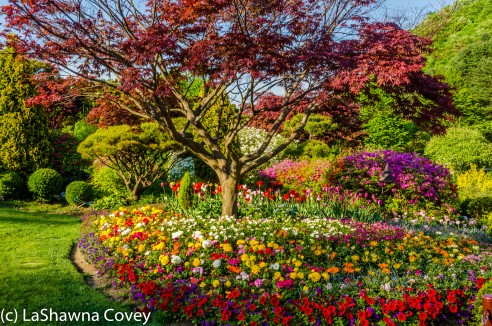
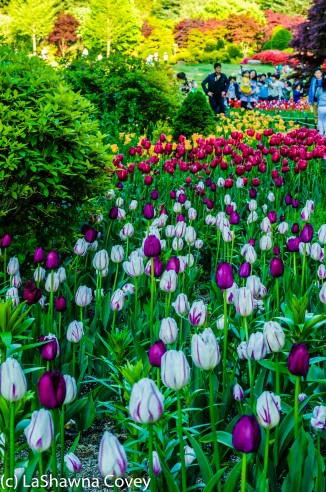
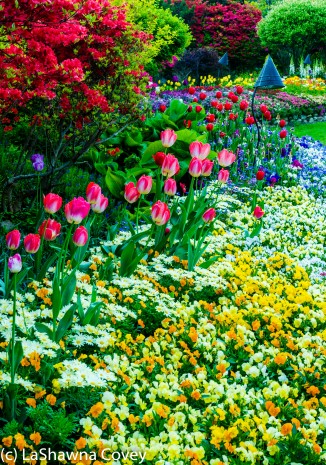
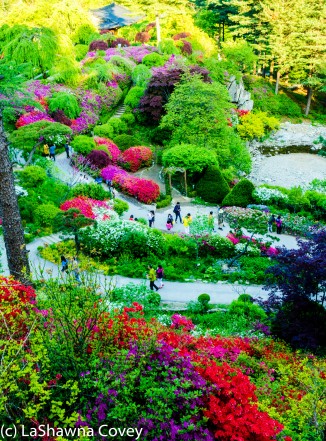
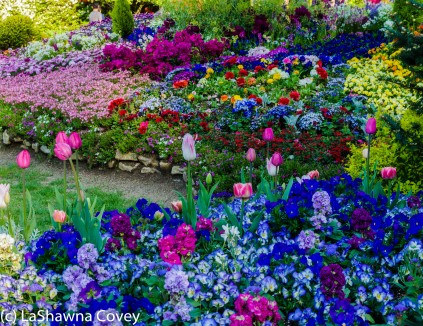
The one upside to this extended delay is that I missed the harsh overhead sunlight in the middle of the day, and instead was treated to the softer, more attractive light from the setting sun. I still wish I had more time to enjoy the garden, because there were so many beautiful flowers. The azaleas were about at peak bloom. The multi-colored tulips were throughout the garden, and a wide variety of other wild flowers was interspersed throughout the gardens.

Morning Calm Arboretum Spring 2014-2

Morning Calm Arboretum Spring 2014-5

Morning Calm Arboretum Spring 2014-21

The arboretum is a very beautiful place to visit, though you will definitely have to fight through the considerable crowds in the afternoon.If I had to go again, I would go in early morning right when it opens around 0830.  I’ve found that the best time to visit any popular place in Korea is in the morning, because crowds don’t tend to show up until late morning/early afternoon.

Morning Calm Arboretum Spring 2014-7

Morning Calm Arboretum Spring 2014-1

Morning Calm Arboretum Spring 2014-6

Getting back to Seoul from Morning Calm Arboretum is pretty easy. There is a bus that leaves on the hour heading toward Cheongpygeong Station, which is a stop on the metro line and the ITX line back to Seoul. If you love beautiful flowers, this is definitely a great place to see them.

Morning Calm Arboretum Spring 2014-19

Nami Island Zipline and Gardens

Nami Island-5

I had been wanting to visit Nami Island for a while now. My goal was to visit last fall, because Nami Island in autumn is supposed to be a spectacularly beautiful place, but due to weather and competing activities, I didn’t make it. So I decided to wait until peak spring bloom season and combine a trip to Nami Island with the Morning Calm Arboretum, which is located not that far from the island, so it makes for a full and satisfying day trip from Seoul.

Nami Island-10

Nami Island-8

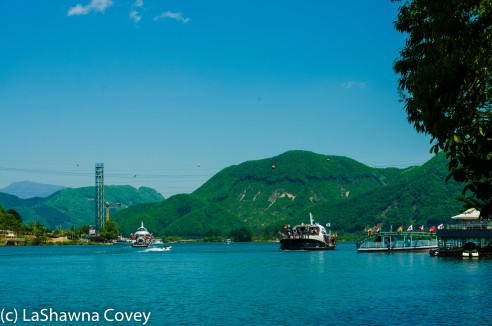
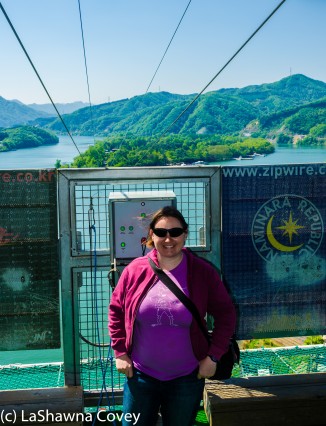
So the first Saturday in May, I decided to take advantage of the sunny and beautiful weather to make it happen. I hopped on the ITX train from Yongsan Station to Gapyeong and was soon at the dock for Nami Island. I always planned on taking the zipline to Nami Island. I love zipline rides, and this particular ride is the longest in South Korea. The zipline is over 3,000 feet long and it goes over the river from the dock to Nami Island. The zipline tower is located right next to the dock, and it’s the tallest structure in the area, so it can’t be missed.

Nami Island-1

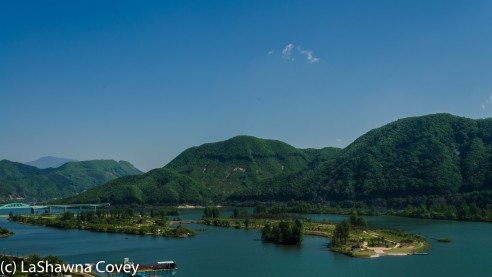
I arrived at the dock around 0930, and was ready for the 1000 zipline departure. It was good I arrived when I did, because the crowds started growing shortly afterward. The view of the surrounding areas was really beautiful .

Nami Island-2

The zipline ride itself is a lot of fun. The ride only lasts about 90 seconds, but it is very peaceful. It’s not exceptionally thrill seeking, just because it’s not very fast or dangerous, though people who are afraid of heights would probably be very nervous.

Once I got to the island, it was pretty easy to walk around. Nami Island is only about 3 miles in circumference, so you can cover the island in a relatively short period of time, depending on any stops you want to make. There are only a few vehicles on the island, vehicles that support the hotels on the island, plus the electric vehicles that provide tours of the island. There are some paths, with parks and gardens to enjoy the area, have a picnic, relax and play. There are some art exhibitions, restaurants and stores. Nami Island is the setting of the TV show “Winter Sonata” , and it’s not that far from Seoul, so it is packed with tourists on the weekends, particularly in the spring and the fall when it is the most beautiful.

Nami Island-6

Nami Island-7

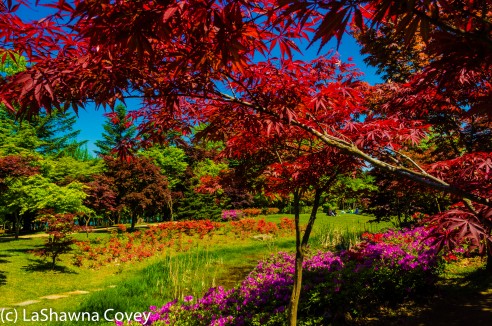
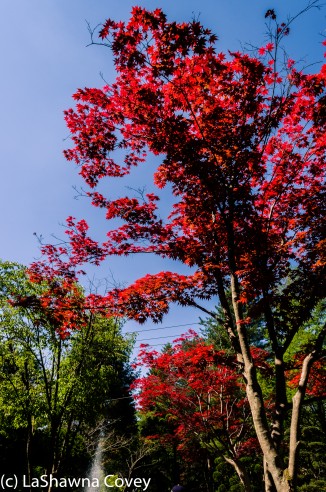
There wasn’t much else to do on the island, particularly since I was on my own. Most of the people there are in groups who were just up there to play and relax, and not necessarily see any particular sights. I walked around, I saw the sights, and I was ready to leave  after about a couple hours. I can absolutely see why this would be a photographer’s paradise in the fall when peak autumn color hits.

Nami Island-9

It is actually very easy to reach Nami Island from Seoul. The quickest way is to take the ITX train from Yongsan or Cheongnyangi Station to Gapyeon Station. Both Yongsan and Cheongnyangi are off subway line 1. The ITX train departs approximately once a hour. An alternate way is to take a metro train from Sangbong Station (line 7) to Gapyeong. The ITX train from Yongsan takes approximately 45 minutes, while the metro train takes a bit over an hour. From Gapyeong Station, you can easily take a taxi, the Gapyeong Tourist Resort shuttle bus (departing once an hour) or city bus 33-8 to the Nami Island dock. The two options for arriving at Nami Island are the ferry (approximately every 15 minutes during the day), or the zipline (costlier, but way more fun). Admission to Nami Island is 10,000 won, and that includes the ferry rides to and from the island. The zipline costs 38,000 won, is open from 0900-1800, and includes admission to the island and a ferry ride back.

Nami Island-4