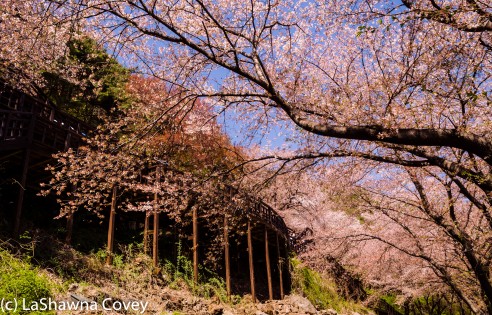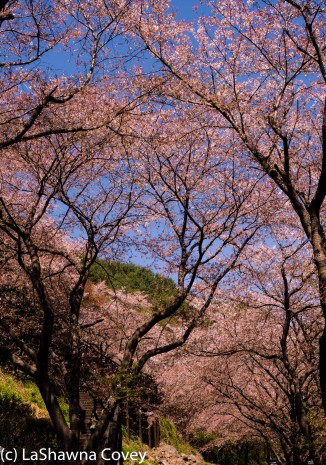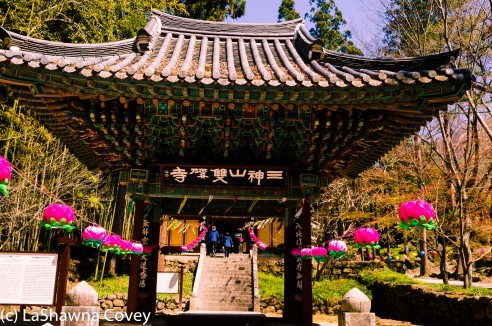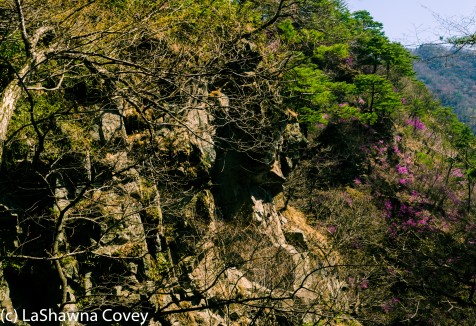
Haeinsa Buddhist Temple Stay

Haeinsa Temple-11

When I first knew I was moving back to Korea, I bought myself the latest South Korea guide book to plan all the different places to see and visit. One of the things that caught my eye was the Temple Stay program. South Korea has a special program that enables individuals and groups to stay in a wide variety of Buddhist temples for a specific time, usually a weekend.

Haeinsa Temple-18

The Temple Stay program offers up the opportunity for experience and relaxation programs. These programs typically involve at least one overnight at the temple, along with some organized temple activities. Based on my guide book’s recommendation, I selected the Haeinsa Temple Stay program.

Haeinsa Temple-2

Haeinsa Temple is one of the “Three Jewel” temples of South Korea, and the temple was founded in C.E. 802 by two monks. It was designated a UNESCO World Heritage site, and is located in Gayasan National Park. The temple is home to the famous Tripitaka Koreana, which is the Buddhist equivalent of the Bible or the Koran. The Tripitaka Koreana is comprised of 81,340 wooden blocks, the oldest of which are over 770 years old, and is housed in four halls in the temple complex.
Haeinsa Temple-9

Haeinsa Temple-17

I elected to visit Haeinsa Temple in the fall of 2012, and it was my first overnight trip this tour in Korea, and certainly my first overnight to a Buddhist temple. I combined the trip with some hiking in the Gayasan National Park. I visited in early October, so the leaves were just starting to turn colors, but it was a couple weeks off from peak foliage. I arrived at Gayasan National Park around lunch time on Saturday and spent a few hours hiking toward the Sangwangbong Peak, until I had to return to Haeinsa Temple to check in for my temple stay program.

Haeinsa Temple-4

Haeinsa Temple-14

The Haeinsa Temple Stay program consists of two days and one night. I checked in to the temple at 1600, and was given a gray temple uniform (you can still wear your clothes underneath to stay warm, because it can get very cool at night). There was a fairly large group of us for the program and we first got some basic instructions on the timeline of activities and proper temple etiquette. Then it was dinner time, and since this was a Buddhist temple, dinner was purely vegetarian, and it was rather tasty. It was an all you can eat buffet, with the caveat that you had to eat everything on your plate and not waste any food.

Haeinsa Temple-1

Haeinsa Temple-15

After dinner, the evening program commenced. The first thing was the playing of the drums and gongs by the monks for 10 minutes. I had never heard anything quite like it before, and it was very resonant and peaceful. After the drum ceremony, we participated in the evening service in the beautiful main temple, and finished off with a tea service before going to bed at 2100.
Haeinsa Temple-10

Haeinsa Temple-16

Yes, bed time is needed to be super early, because we woke up super early at 0300. Dawn service started at 0330, which is very similar to evening service. Then we retired to a separate hall for 108 bows and meditation. The 108 bows are exactly what they sound like- 108 full body bows where you drop to your knees (thankfully on a thick cushion on the floor), bow your head to the ground, hold for a few seconds, and then stand up and do it again. I am reasonably good shape, but I won’t lie and say that I wasn’t feeling it by the end. I was sweating, and my thighs were sore and shaking from the exertion. So I enjoyed the peaceful meditation afterward to relax.
Haeinsa Temple-7

Haeinsa Temple-5

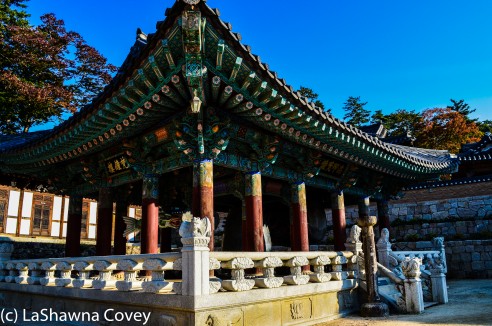
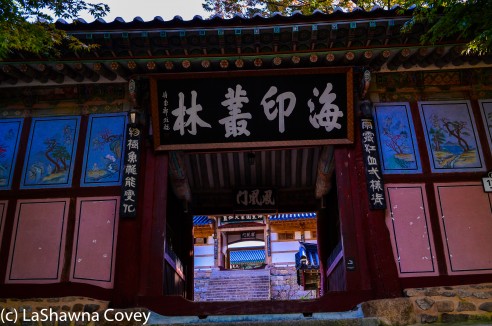
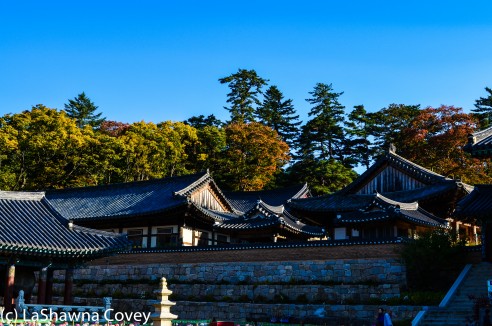
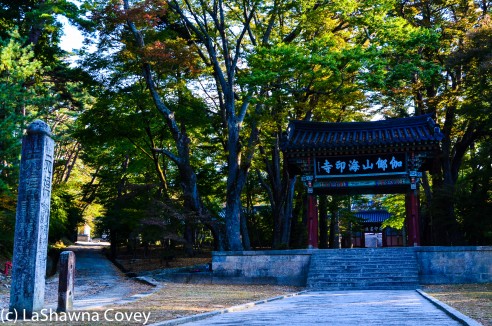
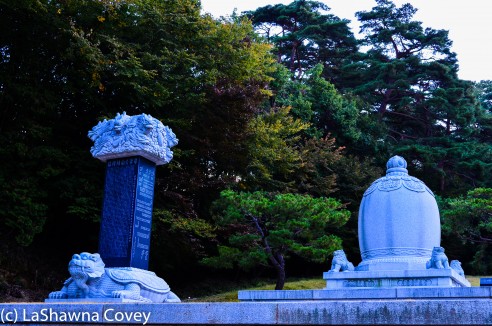
After all that, it was only 0600 and time for breakfast. After breakfast, we got an extensive tour of the temple grounds. The temple complex is one of the larger ones I have visited. There were multiple gates and stone stelae, that were engraved with the history of the temple on it. The buildings were very colorfully decorated like most Buddhist temples, but these colors were particularly bright and intricate. We also were able to see the Tripitaka Koreana, and it was quite amazing to see all the wooden blocks that comprise the collection.

Haeinsa Temple-12

After the tour, it was late morning and the rest of the program consisted of simply cleaning up and then leaving around lunch time. After that I did some more hiking in Gaysan National Park. It was Sunday, so the trails were filled with Korean hikers. The day was sunny and bright and I was surrounded by beautiful trees and a river, and there were enough color to give a hint of autumn.

Haeinsa Temple-6

Traveling to Haeinsa Temple is pretty easy. Take a train (preferably a KTX since is quicker) to Dongdaegu Station. The train station is a stop on the Daegu Subway Line 1. Take the train to Seongdangmot subway stop to Seobu Intercity Bus Termina. Take Exit 3 and the bus station is right next to the exit. There are buses to Haeinsa that depart from Seobu approximately every 20 minutes, and the trip takes about an hour, and is the last stop.

Haeinsa Temple-13

If you like beautiful nature and beautiful Buddhist temples, I highly recommend Haeinsa Temple, even for a day visit and a short hike. If you are really interested in experiencing in a taste of Buddhist temple life, I recommend the Temple Stay program. The program makes it very easy for visitors to experience temple life. Simply visit their website, Templestay.com, find a temple that suits you, and sign up via their website. Different temple programs cost different prices, but the Haeinsa Temple experiential program costs 60,000 won for the 2 day, 1 night program, and that includes everything. I am glad I did it, because it was something new and different. It gave me a window into a different world and a different way of thinking and being.

Haeinsa Temple-3


Icheon Baeksa Sansuyu Festival

Icheon Baeksma Sansuyu Festival-7

Spring is my second favorite time of the year in Korea, after autumn. The wide variety of flowers are blooming all over the country in a wide variety of colors and shapes. Spring typically starts in April, but this year, spring started about three weeks early due to an unseasonably warm winter that lead to an unseasonably early and warm spring.
Icheon Baeksma Sansuyu Festival-2

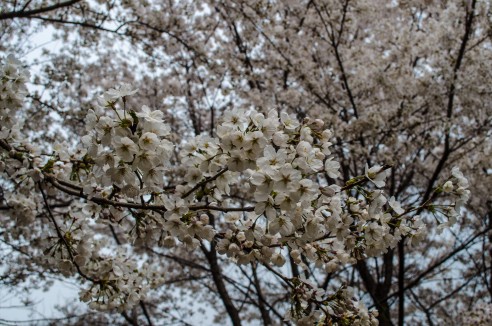
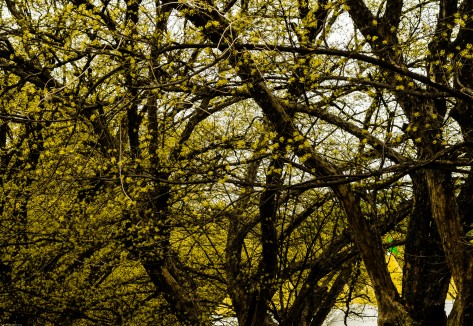
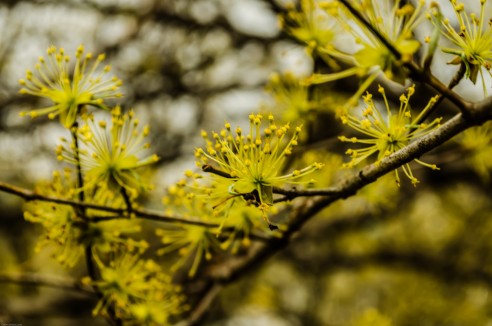
Among the first flowers that tend to bloom are the cherry blossoms and the sansuyu flowers. So in that spirit, I headed down south to the city of Icheon (an approximately one hour bus ride south of Seoul) for the Baeksa Sansuyu Festival. This festival is one of the first of the spring season.

Icheon Baeksma Sansuyu Festival-4

But since spring flower festivals are entirely weather and flower dependent, there is a potential for disappointment. For me, the two biggest disappointments are rain and missing the blooming season. Both of those were present for this festival. The sky was gray and gloomy with increasing sprinkles of rain while I was at the festival. Having never seen sansuyu flowers before, I couldn’t know for sure, but it really seemed that the festival was a week early. Sure the yellow flowers were blooming, but I don’t think they had hit full bloom when I visited.

Icheon Baeksma Sansuyu Festival-3

Icheon Baeksma Sansuyu Festival-5

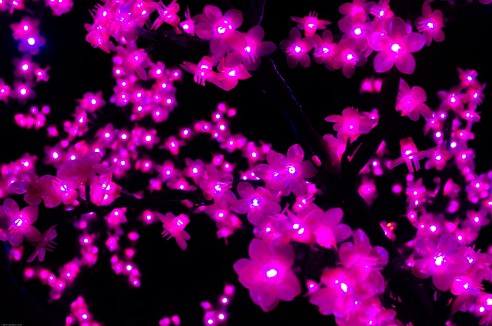
There were also a few cherry trees at the festival site for a nice color contrast.

Icheon Baeksma Sansuyu Festival-1

The festival was the standard setup for a Korean festival. There were cultural performances, a wide variety of food vendors, and a wide variety of local crafts for sale.

Icheon Baeksma Sansuyu Festival-6

After the festival, I walked around Icheon for a bit, and enjoyed the cherry blossoms at the park before heading home to Seoul.

Icheon Baeksma Sansuyu Festival-8

Hwagae Cherry Blossoms and Buril Falls

Hwage Cherry Blossoms and Buril Falls-15

My favorite part of Korean spring is the blooming of the cherry blossoms. I adore the gorgeous pink and white blooms that fill the cities and countryside for such a brief time. While the cherry blossoms are a delicate beauty, they are also a very ephemeral beauty.  Cherry blossom season only lasts about seven to ten days, so it’s nearly impossible to see all the places where cherry blossoms bloom in one spring season.

Hwage Cherry Blossoms and Buril Falls-1

Hwage Cherry Blossoms and Buril Falls-6

Last year, I confined most of my cherry blossom hunting to around Seoul, but this year I pushed farther afield.  I decided to make a trek down to Hwagae. I went the week after their official cherry blossom festival, hoping to avoid the hordes of crowds I read about. Of course the danger of going the week after the festival, is that I missed peak blossoms, but there were still enough to enjoy plenty of color. I also took the advantage to combine a few sightseeing places into one trip. I was able to see the Hwagae cherry blossoms, the Ssanggyesa Temple and Buril Falls in Jirisan National Park in one long day trip.

Hwage Cherry Blossoms and Buril Falls-2

Hwagae is fairly easy to reach by bus from the Seoul Nambu Bus Terminal. There are numerous buses per day, and it takes about three and a half hours (traffic depending) to reach Hwagae.  I wished I had taken the first bus out of Seoul, which would have given me an extra hour and a half in Hwagae, but I was able to see everything I wanted to see (albeit not at the most relaxed pace).

Hwage Cherry Blossoms and Buril Falls-3

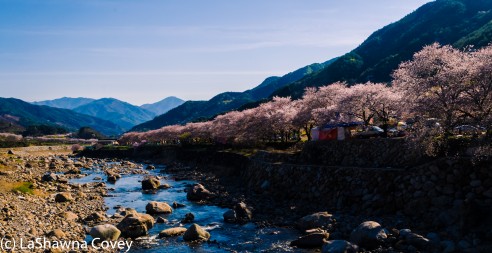
Hwagae is a tremendous opportunity to see a bulk of the cherry blossoms. There is an approximately four kilometer stretch of road from the town of Hwagae to Ssanggyesa Temple, and most of the road is lined with gorgeous cherry blossom trees on both sides. It is a very easy walk on flat road by a river (just pay attention to the traffic, though it was often so backed up that I was moving faster than some of the cars), and it is a great opportunity to get your cherry blossom fix. The opportunity for beautiful nature viewing and nature photography are abundant.

Hwage Cherry Blossoms and Buril Falls-4

Hwage Cherry Blossoms and Buril Falls-5

The end of this road is Ssanggyesa Temple (follow the signs), which is a small Buddhist temple complex originating in the year 723, but was rebuilt in 1632. I didn’t spend an extraordinary time at the temple, because I was pressed for time, but it was pretty nonetheless.

Hwage Cherry Blossoms and Buril Falls-10

Hwage Cherry Blossoms and Buril Falls-14

The last sightseeing part of my day was Buril Falls, which is on the edge of Jirisan National Park. The hike from Ssanggyesa Temple to Buril Falls is only about 2.4 kilometers. The hike is considered an “easy” hike, and I suppose it is by Korean standards. Most of the hike to the falls is uphill, sometimes over the uneven terrain I am so used to, but the most strenuous part of the journey is the first 500  meters from Ssanggyesa Temple and the 100 meters up very steep stairs on the return trip from Buril Falls (your knees will probably feel both the uphill and the downhill of that climb). Then the uphill levels out a bit and becomes easier and it took an hour and twenty minutes to reach the falls, and an hour to return, less if you are a faster walker. The trail ends at Buril Falls, which is considered one of the 10 scenic beauties of Jirisan National Park.

Hwage Cherry Blossoms and Buril Falls-12

Hwage Cherry Blossoms and Buril Falls-11

Retracing my steps was fairly quick, and soon enough, I was back to the temple and cherry blossom road to hike back to Hwagae. It was only a one hour walk back to town, and the sun was approaching sunset, giving the cherry blossom trees a beautiful, soft, pink glow.

Hwage Cherry Blossoms and Buril Falls-9

Hwage Cherry Blossoms and Buril Falls-16

I was hoping to take the direct bus back to Seoul, but that wasn’t happening. There were large groups of people waiting at the bus stop and all the buses back to Seoul were sold out for the night. But all was not lost. I caught a local bus to the town of Gurye (about 20 kilometers away) and then took a taxi to the Gurye-gu KTX station to catch a train back to Seoul. Of course all seats on the train were sold out, as it often happens on the Sunday evening trains back to Seoul. Thankfully for me, you don’t need a reserved seat to ride the train. You just need to be willing to stand for the few hours to get back into Seoul.

Hwage Cherry Blossoms and Buril Falls-8


Hwage Cherry Blossoms and Buril Falls-7

I highly recommend Hwagae as a lovely day trip from Seoul. Even though the crowds will be thick that time of year, it is definitely worth your while to go during cherry blossom season. There are few places you can see so many cherry blossoms in one area, and there are so many other sites to visit at the same time.


The Last of the Winter Garden Night Illuminations- The Herb Island Lighting Festival

Herb Island Lighting Festival-8

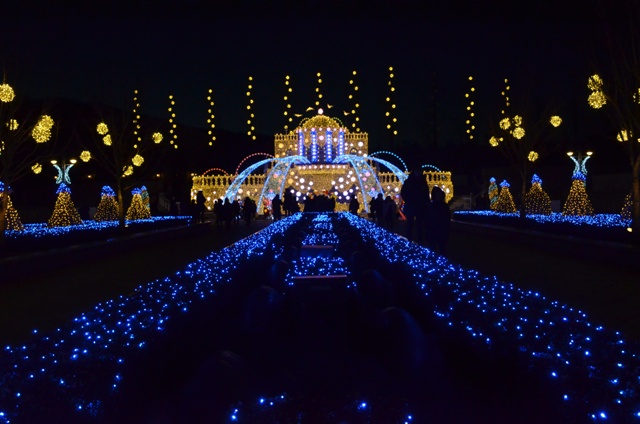
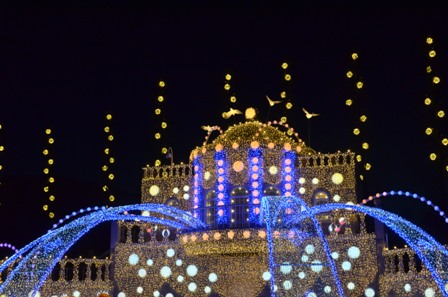
About a month ago towards the end of March 2014, I had my final opportunity to visit a winter garden night illumination. They are among my favorite winter activities in Korea. There is just something magical about being out in the cold, dark winter night surrounded by millions of bright lights. It really does feel like a fairy land in another world.

Herb Island Lighting Festival-1

Herb Island Lighting Festival-3

Herb Island Lighting Festival-2

This particular garden was north of Seoul, even north of Dongduchon, which is getting fairly close to the Demilitarized Zone (at least as the crow flies). I elected to go with a tour group to the Herb Island Lighting Festival. I had looked at the possibility of visiting the garden independently, but the last bus left Herb Island only shortly after dark, and would not give me the opportunity to really enjoy the winter lighting.
Herb Island Lighting Festival-6

Herb Island Lighting Festival-10

So off I went with the tour group. The bus ride itself was only a little over an hour. However the line to get into the parking lot was so long, it added an extra 45 minutes to getting to the garden. We arrived as the sun was setting, but still had to wait for complete darkness set in.

Herb Island Lighting Festival-11

Herb Island Lighting Festival-12

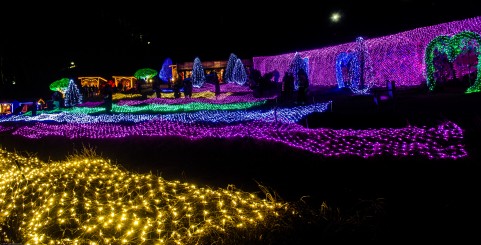
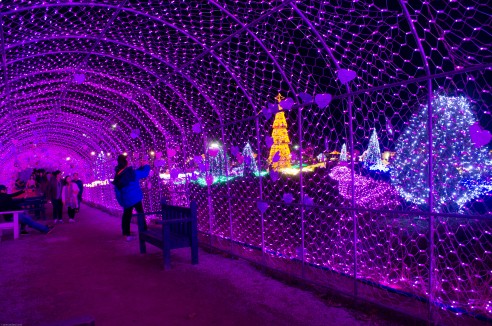
The garden was effectively divided into two sections. The farther one out was more of an open field with rows of lights, along with tunnels of lights. There was also plenty of Christmas decorations, which was an interesting sight in the middle of March. The crowds started growing after it was completely dark and it required some maneuvering to get pictures without too many people in them.

Herb Island Lighting Festival-17

Herb Island Lighting Festival-14

Since I was with a tour group, I had a limited amount of time to enjoy the garden. Granted two hours is a lot of time to take pictures, but it is not always enough time to just sit and take it all in.

Herb Island Lighting Festival-16

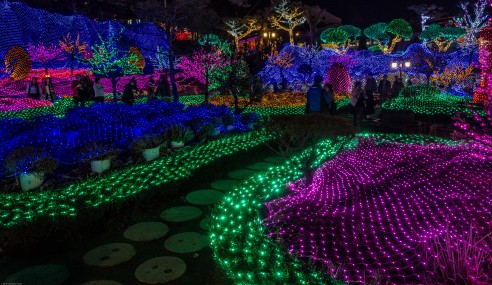
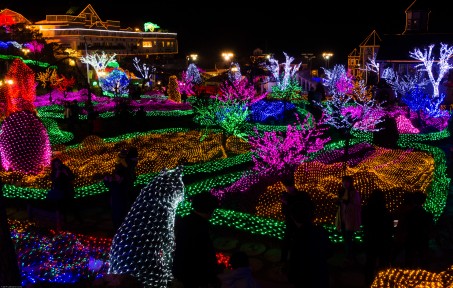
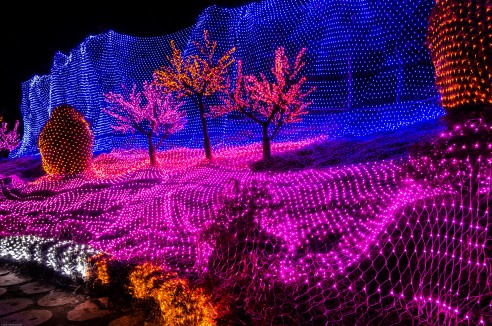
The other part of the garden was more of the sunken garden filled with even more lights. This garden was a bit more elaborate and there were numerous trees with colored cherry blossom lights.

Herb Island Lighting Festival-4

Herb Island Lighting Festival-5

Other parts of the garden were nets in a wide variety of colored lights covering the winter shrubs. I enjoyed the sunken garden part a bit more, because the decorations really did feel like a magical world, and reminded me the most of the Morning Calm Arboretum I visited the previous year.

Herb Island Lighting Festival-7

Herb Island Lighting Festival-9

It may not have been enough time to just sit back and spending hours pretending to be in the world of Avatar, but it was still plenty enjoyable to see the gorgeous, colored light gardens and send out winter in a proper fashion.

Herb Island Lighting Festival-13


A Unique Disney Resort in Tokyo: DisneySea

Toyko winter 2014-108

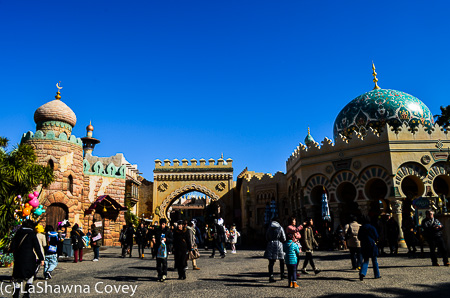
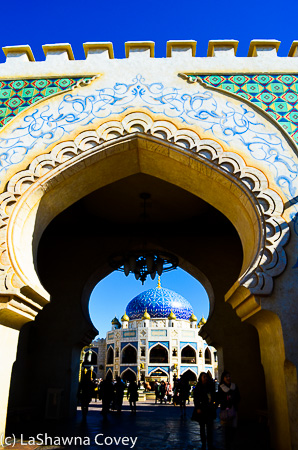
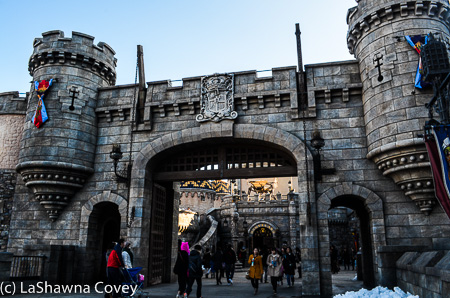
I’ve been interested in visiting DisneySea ever since I saw pictures from the park a few years ago, and I was able to finally make that happen on my second trip to Tokyo. With this trip, I have officially been to all the Disney resorts. Granted, I haven’t visited every park in every resort, but I have been to Disneyland in California, Disneyworld in Florida, Disneyland Paris, Disneyland Hong Kong, and now Disneyland Tokyo Resort. I didn’t go to the Disneyland Tokyo park, but elected to go to DisneySea. This park is not just a mere miniature replica of Disneyland, like the other Disneyland parks. DisneySea is a park unique to Tokyo and it has several different theme areas inspired by ocean legends and other myths. The installations are actually very well done, and if you like theme parks, it is certainly worth your time.

Toyko winter 2014-113


Toyko winter 2014-150

I had originally planned to go to DisneySea on Sunday of my visit, but I made a change to go to Nikko instead after my Saturday trip had to be canceled due to excessive snow. However, when I got to Nikko and realized the bus service was canceled, and it would be a pain in the ass to stumble in the piles of snow and ice to visit the shrines, I made the decision to return to Tokyo and go visit DisneySea. It was like the universe was telling me I should be there rather than fighting the elements, especially since that Sunday the weather in Tokyo was gorgeous, sunny, clear and cold.

Toyko winter 2014-118

Toyko winter 2014-114


Toyko winter 2014-120

I got to DisneySea around 1300 which left me around nine hours to visit the park. In truth that is more than enough time to walk around and enjoy everything, but it made it a bit tight to ride all the rides I wanted to. I took advantage of the Fast Pass system to visit as many rides as I could, but since the times for Fast Passes were staggered, I ended up having to wait until the very end of the evening to visit some of the most popular rides like Indiana Jones and the Crystal Skull and Journey to the Center of the Earth. I really do like the Fast Pass system, since it enables you to not have to wait in line if you don’t want to, and if I had been at DisneySea when it opened rather than midday, it would not have been an issue.

Toyko winter 2014-174


Toyko winter 2014-142


Toyko winter 2014-143

The details of the installations were very beautiful and intricate and didn’t feel cheesy at all. The rides were actually pretty fun too, and give you as much thrill bang for your buck as you would expect from Disney rides. I wished the rides had a line for single riders like Disneyland Hong Kong, but you can’t have everything in life. The wait times for the most popular rides topped out at about 90 minutes, and even when it was an hour to closing time, one of the most popular rides (Journey to the Center of the Earth) was still 60 minutes.

Toyko winter 2014-155


Toyko winter 2014-171

There was also a wide variety of food to eat, and unlike other Disneyland parks, some of the restaurants at DisneySea serve alcohol. The shopping was pretty decent, though strangely light on T shirts for adults. Once you have seen the absolute capitalist mecca that is Disneyworld shops, all the other Disneyland resorts have a very high bar to reach.

Toyko winter 2014-126

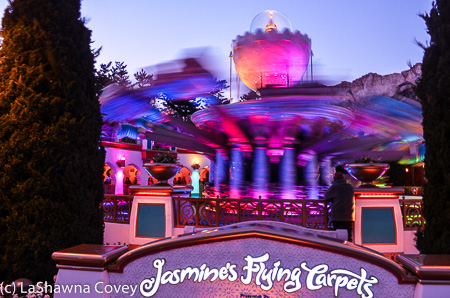
There was a light show and fireworks scheduled, but had to be canceled due to gusty winds. While I do love me some fireworks, the cancellations enabled me to fit in all the rides towards the end. It also gave me more time to enjoy the park at night, because it looked especially beautiful with all the colored lights.

Toyko winter 2014-130

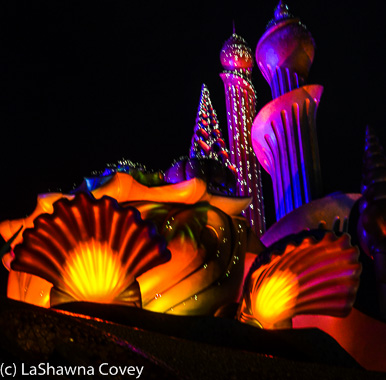
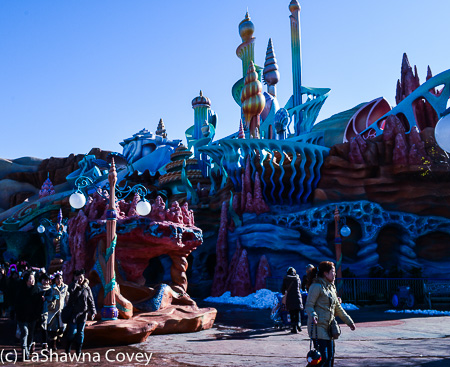
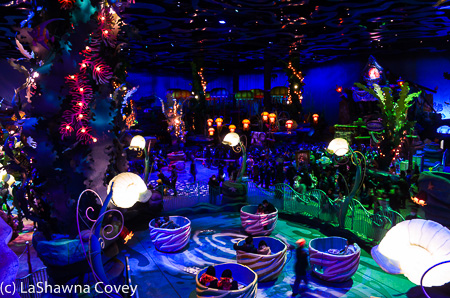
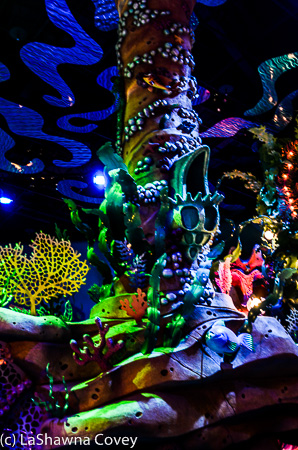
My absolute favorite place, a place I could have just camped out forever in if it wasn’t for the hordes of young children, was Ariel’s Grotto, or as I preferred to call it, Ariel’s Acid Trip. Seriously, I can only imagine what this place would be like if you were high on hallucinogens, because the imagery itself in real life was fantastical enough. Whoever were the art designers for this place should be commended, because I adored the crazy colors and outlandish decorations. I kept going back, because I wanted to take it all in and sear it to my permanent memory. The grotto is definitely geared more toward young children in terms of rides and play areas, but it is a place anyone who loves crazy colors can enjoy for themselves.

Toyko winter 2014-132


Toyko winter 2014-135


Toyko winter 2014-158

DisneySea is part of the larger Disneyland Tokyo resort, and both are linked by the Disneyland resort monorail. It is also extremely easy to get to Disneyland resorts from Tokyo proper. The JR station is Maihama Station located on the JR Keiyo Line, which can be accessed from a variety of popular stations that connect with the Tokyo metro, like Tokyo Station and Hatchobori. It’s a roughly 30 minute train ride to Maihama, and then you transfer to the Disneyland monorail line to get to the park you want. I do have to say that it’s kind of crappy that you actually have to pay for the Disneyland train ride, but I guess I shouldn’t be too surprised.

Toyko winter 2014-138


Toyko winter 2014-139

DisneySea is open year round, though I deliberately chose to visit in the winter time, because I know the crowds are even MORE massive in the summertime. The winter hours were actually quite good, open from 0800 to 2200 on weekends. I seriously recommend this place if you like Disneyland, and if you want to visit a unique park you won’t find in any other Disneyland resort around the world. It’s definitely worth your time.

Toyko winter 2014-137


Toyko winter 2014-136


This batch of photos were in the first batch that I edited with Adobe Lightroom 5. I couldn’t push the limits of what the editing software can do, because I shot these photos in JPEG rather than RAW. But even then, it was still pretty cool to see how I far I could enhance and sharpen the photos. I particularly had fun punching up the colors to almost border on hyper realism (though I didn’t actually change any of the colors- they really do look like that in reality), particularly the photos taken in Ariel’s Grotto. Low light photography can be hit for miss for me (though I am getting better), so I was very pleased with how all of these turned out.

“Night Film” book response

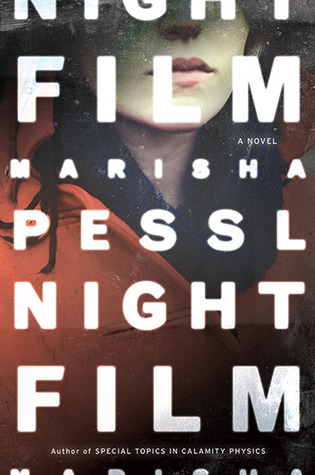
Night Film cover

WARNING- This response contains numerous SPOILERS for the book. 

This book, “Night Film” by Marisha Pessl, was basically two mysteries in one. The first one was the investigation into the activities of Ashley Cordova in the weeks prior to her supposed suicide. The second mystery tied into the first and concerned the history and activities of her father, famed reclusive film maker Stanislas Cordova. The narrator, Scott McGrath is an investigative reporter who attempted to write a story on Stanislas some years prior, but ended up being professionally disgraced. He becomes drawn into the web of Ashley and is aided by a friend of Ashley’s, Hopper and Nora, who was one of the last persons to see Ashley alive. They all have their own reasons to want to know more about what happened to Ashley and this very unlikely crime investigation trio is formed.

The mystery around Ashley deepens, concerning her breakout from a psychiatric facility a couple weeks prior to her suicide in an abandoned building and her activities up to her suicide. The mystery is an entertaining one and grows darker the more the trio discover about Ashley. Scott takes the opportunity to restart his investigation into Stanislas with the belief that something dark happened in Ashley’s childhood tied to Stanislas’s dark personality and films that ultimately lead to her suicide.

Stanislas is a famed, but reclusive and secretive, horror film maker. He hadn’t been seen in public since 1977 and he seemingly confined himself and his family to his large estate in the Adirondacks, called The Peak. He constructed movie sets on his property and filmed all his movies there in secret, and no one who worked with him would really talk about it. For reasons that are never fully explained, Stanislas’s last several films were never released to the wider public, but only through secret red band screenings among his devoted followers. The book intimates that Stanislas’s work is so horrifying that it can never be released to the public, and even inspired copycat murders. Scott believes that Stanislas has engaged in all sorts of violent, nefarious activities, many of which involve children, but he has no proof, and hopes that his investigation into Ashley will lead to further knowledge of Stanislas.

About halfway through the book, the mystery around Ashley suddenly progresses from rational to supernatural and points to very dark, occult activities around Stanislas and Ashley. This is when the book takes a turn for the odd. I enjoy paranormal and supernatural stories, though it is a bit jarring to see those elements included in a story that was a more straight forward, if creepy, murder mystery. Scott, Hooper and Nora decide to break into The Peak to see what they can find, but frankly, not much of consequence is found. Many words are expended on this part of the book, but little payoff. Just when the author wants to have you convinced that the devil really possessed Ashley and claimed her, she has Scott meet Stanislas’s lifelong assistant, Inez Gallo, and she tells him that Ashley was not claimed by the devil at all, but rather she was dying from leukemia and she was desperate to keep that information hidden from anyone not in her family. The book takes pains to present both the rational and supernatural explanations of Ashley to be plausible and not necessarily mutually exclusive. The mystery is never fully resolved, but I feel is left up to the reader to make their own assessment of what really happened to Ashley.

Where the book does fall short in my opinion is the mystery surrounding Stanislas. The author raises so many intriguing questions around Stanislas, and she really ratches up the tension and the fear in her writing. Did Stanislas worship the devil along with his neighbors? Did he kill children in the hopes of exchanging the devil’s curse from Ashley to them? What was going on with his movies? What was going on with him? Ultimately this book raises so many questions, but fails to really answer any of them. We never actually know anything for sure. The author leaves enough doubt about the devil worship that you don’t know what to believe. There are intriguing suggestions that the horror in Stanislas’s last several films was actually real and not fake. All of his movies are supposed to be deeply disturbing to the psyche and leave one shaken and horrified. While there are some descriptions of the movie plots, none of them sound so terrifying that a studio would not release them. There just isn’t much explanation as to WHY his movies are underground. Were they actually snuff films? What sort of hold did Stanislas have over people, because he certainly was painted as deeply sinister.

I felt the ending was particularly flat. There were suggestions that Scott was really in a Stanislas Cordova movie, that he was being manipulated by Stanislas, and he was looking for clues and fakeouts. But if that was really the case, you would expect some serious twist at the end that shocked you and turned everything you believed upside down. I was prepared to find out that Ashley didn’t commit suicide, but rather was murdered (that apparently wasn’t the case). I thought maybe we would find out that Ashley faked her suicide and she ran away to South America with Hopper (nope). I thought we would find out what REALLY happened to Scott, Hopper and Nora when they went to The Peak and why Hopper and Nora wanted to end the investigation right after returning (not a chance). I was deeply hoping to find out the truth about Stanislas (if only). In that respect, I think the author failed in the ending. Scott was letting the case go and getting on with his life. Then after his talk with Inez, he had an inspiration about mermaids that connected The Peak to a small island in southern Chile. Scott ends his journey on an isolated side of this island and he enters a house where a man is waiting for him, presumably Stanislas, and Stanislas is willing to talk to him. What they actually talked about we never know, but Scott basically said he would listen to Stanislas’s truth, and that was that. We never actually knew what his truth was. I suppose the author’s entire point is that one can never fully know the truth about anything or anyone (or at least that is what I think she was trying to say). But if you write hundreds of pages of story and expect readers to commit hours to read your book, I feel you should actually deliver and answer some of the questions you raise.

Overall the writing was tense and frightening (I mean that in a good way). The case was interesting and the potential implications spooky, both the natural and supernatural possibilities. I liked the multimedia approach to this book of incorporating blog posts and articles and it increased the knowledge of the characters. I wanted to know more about Stanislas and what he was really about. I wanted to know about his secret world and his movie making. Unfortunately I don’t think there was enough resolution in the story to make the payoff worth reading the entire book. I don’t think the author fully developed all the story strands and would raise plot points only to leave them hanging. While the plot was interesting, there were also numerous plot holes. Great idea, and good initial execution, but poor ending.
Tokyo in Winter

Toyko winter 2014-26

For President’s Day weekend I went back to Tokyo, because I wanted to see it in the winter time. I figured the weather would be good enough, plus there weren’t many things I wanted to do in the winter time. Or at least I thought at the time I made my initial vacation plans.

Toyko winter 2014-29

Toyko winter 2014-5

Toyko winter 2014-15

It snowed the first day of my weekend. The snow was flurrying when I first landed that morning, and as the day progressed and turned into night, the snowfall thickened. I was glad I had an umbrella with me to shield me from the snow falling upon me, but it was beautiful to watch the snow fall. I spent the late afternoon and early evening in Ueno Park, which is a very large urban park in the middle of Tokyo.

Toyko winter 2014-13

Toyko winter 2014-14

The snowfall was delicate and pure white, and it laid a gentle blanket over the trees and the paths. The streetlights and particularly the lanterns added some spot illumination to make you feel like you were in a winter wonderland, like Narnia.

Toyko winter 2014-24

Toyko winter 2014-33

Toyko winter 2014-22

As it got darker, the otherworldly aspect of the city became even more pronounced. It was like the winter night scenes in The Shining (Stanley Kubrick version), only without a hedge maze or a madman with an ax chasing you.

Toyko winter 2014-27

Toyko winter 2014-17

Of course there is often a downside to winter snowfall, and that was certainly the case the next day. I woke up early, because I intended to go up to Nikko for a day trip. What I found is that the snow had fallen all night, and it was now several inches on the streets. But by this point, the temperature rose enough to turn to rain. Just imagine what you get when combine several inches of snow with driving rain. You get large pools of standing, cold, slushy water. My feet were soaked entirely through, and my train was canceled to due to heavy snowfall.

Toyko winter 2014-52

So even though the snow was melting fairly rapidly that day, there was still enough on the ground to enjoy the East Garden of the Imperial Palace. Parts of the garden were closed for the day due to the snowfall, but there were some winter blossoms on the trees.

Toyko winter 2014-75

Toyko winter 2014-4

The next day, the trains were running to Nikko, but the local buses weren’t. While Tokyo appears to have gotten four inches of the snow the day prior, Nikko got around 12 inches of snow, since it is located higher in the mountains. While the trains could get through, the roads hadn’t been completely plowed, and there was a danger of avalanches. I ended up returning to Tokyo shortly thereafter, because my day’s plan were ruined.

Toyko winter 2014-62

Toyko winter 2014-71

Later that night, I partook in one of Tokyo’s winter illuminations. It wasn’t as colorful or elaborate as the ones I visited in Korea, but it was nice nonetheless. A very long stretch of road behind the Marouni Building was lined with trees illuminated by clear lights. It was pretty, though I love me some garden illuminations. The crisp winter coldness and the cold, clear lights was a perfect accompaniment to the absolutely delicious sakura chocolate latte with sakura whipped cream topping as I walked up and down the street.

Toyko winter 2014-100

Toyko winter 2014-98

What I learned from this trip is that I need to be judicious in selecting winter vacation destinations. It’s one thing to pick something you know will be filled with snow. But you also run the risk that things will be shut down due to the weather.

Toyko winter 2014-68

Toyko winter 2014-61

But I did get my fix of beautiful winter landscapes. I got my fix even more when I was editing the photos. I recently took a digital photography class, and part of the class was a licensed copy of Adobe Lightroom 5. Even though I shot my Tokyo photos in JPEG, as opposed to RAW, it was quite interesting to see what I could do with the software to pretty up the pictures. I was going for photo enhancement that just bordered on appearing to be paintings.

Toyko winter 2014-67

Toyko winter 2014-64

A Day of Beauty at Gangneung

Gangneung Jeongdongjin Beach golden sunrise

One of my favorite things about travel is experiencing natural beauty in a new place, and enjoying art. My day trip to Gangneung provided the opportunity for both. A couple months ago, my mother came to visit South Korea for the first time, and I wanted to show her a wide variety of Korea. One of her requests was to visit a beach, which was an easy request to fulfill since the country of South Korea is surrounded by the ocean on three sides and there are ample, beautiful beaches all around the country. Since the cold weather was setting in (it was late November when we did this trip), it wasn’t the time of  year to go sunbathing or swimming in the ocean. But often times during cold weather, the sky is clear, and that really can produce some beautiful days with rich colors and bracing coolness.

Gangneung Jeongdongjin Beach rich golden sunrise

I elected to combine some different tourist options and make a day of it at Gangneung. Gangneung is located on the East Coast of South Korea. The beaches, particularly Jeongdongjin Beach, are a favorite for those of us who like to watch sunrises, and Gangneung hosts a very popular New Year’s Day Sunrise Festival. I went to a Sunrise Festival last year at Maryan-Ri, but I had no plans to be in Korea for NYE 2013/2014. But I figured it would still be a good place to ring in a new day by taking in the sunrise at Jeongdongjin Beach.

Gangneung Jeongdongjin Beach

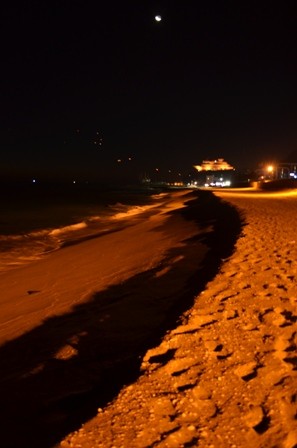
Thankfully Korean Rail makes it super easy to head out to Gangneung for a sunrise. There is a night train that departs from Cheongnyangni Station in Seoul around 2300 every night and arrives at Jeongdongjin Beach around 0330. What was even more interesting is that the train was completely sold out and a huge crowd poured out into the nearby town. And when I say it arrives at the beach, I mean that literally. Jeongdongjin Beach holds the Guinness World Record for being the train station located closest to the ocean anywhere in the world. When my mom and I stepped off the train in the cold, early, pre-dawn morning, we could hear the ocean waves lapping softly on the sand, and we could see the ocean around 50 meters from the train station. It is rather cool to step off in the early darkness and be so close to the sea.

Gangneung Jeongdongjin Beach with moon

We walked around a bit and eventually scored a seat on some of the large beach boulders to have an unobstructed view of  sunrise. It was cold, but we were decently bundled up to stay warm. We could see these lighted lanterns released from farther down the beach and watched them float up and away. Soon, the pre-dawn light started to emerge over the horizon and slowly brighten the sky.

Gangneung Jeongdongjin Beach pre-dawn light

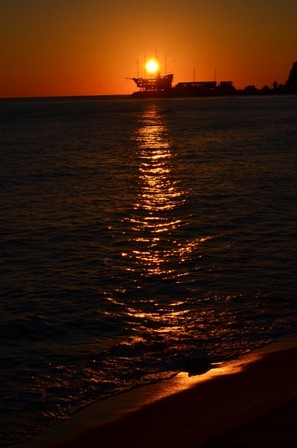
Pre-dawn was actually fairly long, but eventually the light brightened even more and the sun peeked up from the horizon and greeted us for a new day. The sunrise was absolutely gorgeous as the weather was clear and cloudless, with surprisingly minimal wind.

Gangneung Jeongdongjin Beach sunrise peek

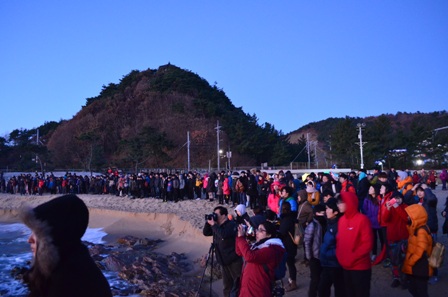
When the sun rose, I looked around and saw the huge crowd that had formed on the beach to watch the sunrise. I was very surprised at the amount of people on what was a normal November Saturday morning. It wasn’t New Years, or a special holiday. It was just a typical weekend, so I would guess that this is a common occurrence on weekends, particularly when the weather is good.

Gangneung Jeongdongjin Beach sunrise crowd

Gangneung Jeongdongjin Beach crowd after sunrise

After watching the sun fully rise, we walked further down the beach to Morae Shigae (Hourglass) Park. This park was first built in late 1999 to ring in the new millennium. The centerpiece of the park is this huge, circular, sand hourglass. There is enough sand in the hourglass to last an entire year, and on New Year’s Day, the hourglass is rotated to start the sand falling anew.

Gangneung Hourglass Park

After a delicious breakfast of street food (steamed mandu and ddeok bokgi), the next stop was Haslla Art World. We took a cab (approximately 10 minutes drive) to the museum and sculpture garden. I have been to a wide variety of galleries around the years, but this gallery had some of the most bizarre (I mean that in a good way) and interesting modern art. The gallery is set up in this modernist building that is also a hotel, and it overlooks the sea.

Gangneung Haslla Art World

Our last stop of the day was at Jumunjin Beach, which is the northernmost beach in Gangneung. This beach was actually a bit of a challenge to find. We elected to save time (but not money) by taking a cab to the beach. However, the cab dropped us off at Sodol Beach, which is around the corner from Jumunjin Beach. After some hunting around, we found the beach.

Gangneung Sodol Beach

There are other beaches in the area, like the closer and more popular Gyeongpo Beach, but the reason I selected Jumunjin Beach was that there was a zip line that stretched across a small stretch of beach and ocean. I love me some zip lining, and figured it would be a nice view and ride. And I’m sure it was, when it was open. I determined that while the towers are still there for zip lining, there is no actual zip lining anymore. I’m not sure if they were just closed for the season (even though the weather was absolutely gorgeous), they were closed due to construction on the beach, or they were out of business entirely.

Gangneung Jumunjin Beach

In any case, Mom and I just walked up and down the soft sand beach and noticed a very interesting sign concerning military operations on the beach.

Gangneung Jumunjin Beach military warning sign

We eventually found our way back to Gangneung city, though it certainly wasn’t quick or easy. I knew there was a bus stop relatively close to Jumunjin Beach, but since we took a taxi to the area, I wasn’t sure where it was located. I was hoping to see a taxi stand, but we ended up walking back toward Gangneung, until eventually we managed to score a cab, because Mom threw herself in front of a taxi to stop it (not quite, but we were getting tired and desperate enough to try it).

Even though we took the train to Gangneung, it was much more convenient to take a bus back. There were buses back to Seoul leaving around every 20 minutes, so soon enough we were plopped into a comfortable bus for a nice nap for the three and a half hour bus ride back to Seoul (Gangnam Express Bus Terminal).

There is a lot to see and do in Gangneung, and you can have a very full day trip doing a wide variety of activities. The biggest draw for the Gangneung area is beauty of the natural variety, particularly beaches and sunrises, but there is also beauty of the human variety (i.e. art).

Gangneung Jeongdongjin Beach warm sunrise

Everland Snow and Romantic Illumination Festival

Everland Romantic Illumination castle fountain wide view

There are a couple things I love about winter. I love the cold weather, the clear days when I can feel the winter chill and see the cool tint of the full winter sun. Even though I don’t get the opportunity all that often, I love snow tubing. When I was a kid I used to ski on occasion, but I don’t do that now, and I never learned to snowboard. However, sledding/snow tubing is a lot of fun, and I like speeding down the mountain in a rubber tube. Korea does have its ski resorts, but I’ve never been THAT motivated to go deep into the mountains to get my sledding fix.

Everland Romantic Illumination castle close view

However at some of the Seoul amusement parks, they set up small sledding parks for fun. It’s nothing like black diamond sled runs or anything like that, but it allows you to get your winter play fix conveniently. I chose to go to Everland, which is the same amusement park I went to for my Halloween jollies back in the fall. Everland was a good choice, because they simultaneously had their Snow Festival and their Romantic Illumination Festival. And since night illuminations are another thing I love about winter, I couldn’t pass it up.

Everland Romantic Illumination garden panorama

I had the opportunity to go to Everland on a Monday, which proved to be a very fortuitous choice. I figured there wouldn’t be THAT many people there, because most people would be at work or school. I was definitely right, because compared to what I’ve seen on the weekend, the park was practically deserted. Most of the rides were open (though not their biggest thrill rides, because it was winter), but I was only there for two reasons: to sled as much as possible, and to enjoy night illuminations after darkness fell.

Everland Romantic Illumination garden wide view

There were three sledding runs available: the Snow Buster for little kids only, the Jungfrau a gentler sled run, and the Eiger, which is for older kids/adults. Yes, there were height requirements to go sledding here, and attendants actually had a measuring stick to ensure little kids were tall enough. The sled runs are very straightforward. You get towed up to the top of the hill in your tube, and then you slide down, turn in your tube, get in line to get another one, and do it again. The only difference between the Jungfrau and the Eiger sled runs, is that the Eiger is a bit steeper and longer, so you get more speed and the thrill is a bit greater.

Everland Jungfrau sled run

Everland Jungfrau sled runs

I did a few runs on the Jungfrau just to warm up. This sled run had more people, because it was easier and little kids could ride it. I have a feeling that the line to get a tube and up the hill on the weekend can get rather long, but since this was a Monday, it only took about 10-15 minutes to wait.

Everland Eiger rope tow

Everland Eiger sled run

Afterward, I moved up the hill to the Eiger sled run, where I could get much more speed. This was where the sparse attendance really paid off. Basically there was no line to get a tube. It took longer to be towed to the top, than to get an inner tube. I was able to be towed up to the top, slide down, and immediately get a new tube to go back up again. I took advantage of all this to just continually do sled runs until I got too hungry.

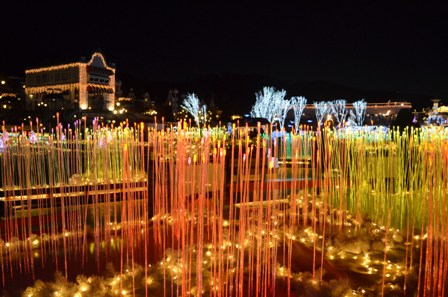
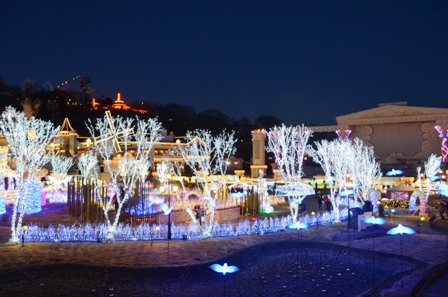
After dinner, the sun was setting, so it was just a matter of time before it got dark enough to really enjoy the night illuminations at their gardens. Since it is the middle of winter, there were no actual flowers in the garden, and all the delicate plants were wrapped in thick straw to protect them from the weather. This was a good opportunity to take some beautiful low light pictures. I particularly enjoyed all the different gardens around Seoul that offer night illuminations during the winter. It may be very cold at night, but it just adds to the beauty of the setting.

Everland Romantic Illumination colorful reed garden

Everland Romantic Illumination fairytale carriage

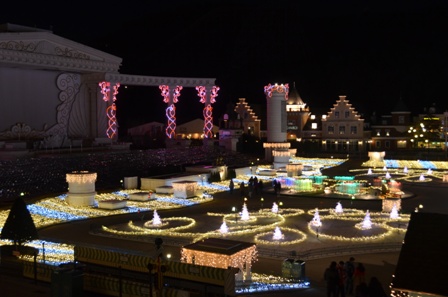
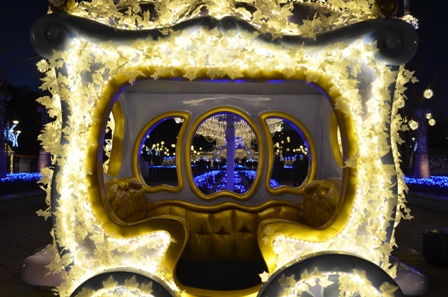
The illuminated gardens offered up a castle fountain, a fairy tale carriage, wide variety of trees, faux marble columns, and the like. Because it was a weekday, the park closed earlier than it does on weekends, but it was more than enough time to see everything and take it all in. And since it was a weekday, I didn’t have to fight hordes of people to take pictures.

Everland Romantic Illumination columns

Everland Romantic Illumination framed columns

I recently started working with the manual settings on my DSLR, because I’m taking a digital photography class to improve my skills. Up until now, I’ve only used the automatic settings on my camera, but this trip was a good opportunity to try the manual settings to experiment with ISO, shutter speed and f/stop.

Everland Romantic Illumination blue fountain

Everland Romantic Illumination blue hedges

I decided to take pictures on my night landscape setting and then experiment with manual settings to see the difference. Since this was a low light setting, it was critically important that manual settings allowed for the camera to capture enough light. This was my first go at it, and it was OKAY. I quickly discovered that using an ISO setting of 800 with my other manual settings wasn’t getting the job done, so I bumped it up to ISO 3200. I knew this wasn’t ideal, because the higher the ISO setting, the more grain in the picture. I ended up adjusting the f/stop down as low as my camera lens would allow (f3.8), which certainly did have a noticeable positive difference.

Everland Romantic Illumination silver tree

Everland Romantic Illumination music decorations

I didn’t realize my biggest mistake until later when I was able to examine the settings on my pictures taken with the night landscape setting and compare them to what I had for my manual setting pictures. I knew that my ISO was higher than desirable, but I had the f/stop correct. However, I was WAAAY off with the selected shutter speed. I had my camera set for 1/125, which is way too fast for a low light setting. My night landscape setting photos had a shutter speed of 1/8, which is much slower to allow more light in.

Everland Romantic Illumination garden

Everland Romantic Illumination colorful arch

So the day was a productive one. I got all my snow tubing jollies out of my system. I got to enjoy the delightful night illuminations that make me feel that I was walking in a winter fantasy land. And it was a good opportunity to learn more about what my camera is capable of, and what I need to do to take beautiful night photos.

Everland Romantic Illumination colorful reeds and columns

Holiday Decoration Fun in Korea and New Zealand

Holidays Seoul Christmas trees lighted

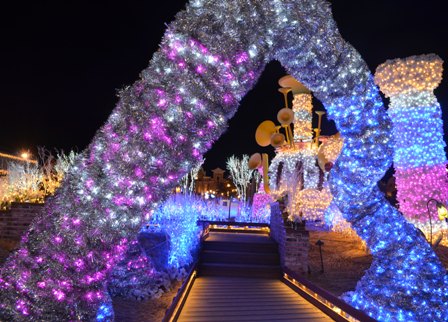
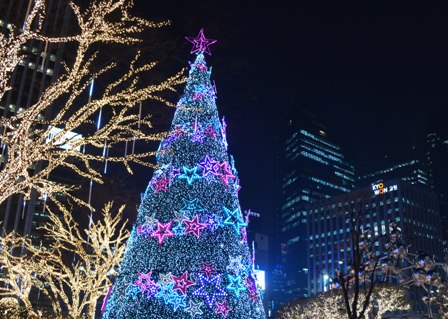
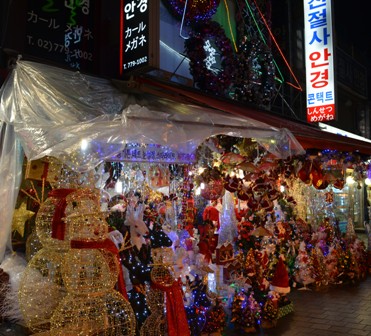
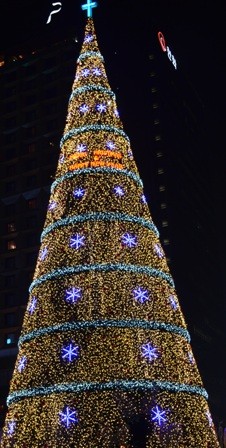
From a decoration standpoint, Christmas is one of my favorite times of the year. I adore the gorgeous lights that adorn the cities. It makes everything so beautiful. I had time to enjoy holiday decorations in Seoul before I went to New Zealand for the actual holidays. One evening was spent touring the downtown area and got quite an eyeful. Many parts of the city, particularly major department stores, had a wide variety of holiday decorations and illuminations, plus there were the Christmas street stores at local markets, like Namdaemun.

Holidays Seoul Christmas market

Holidays Seoul Christmas tree closeup

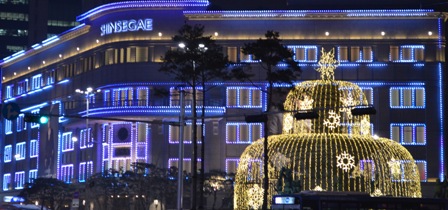
The department stores were bright with exterior illumination and both real and fake trees were lit up.

Holidays Seoul Christmas tree lights

Holidays Seoul Shinsegae lights

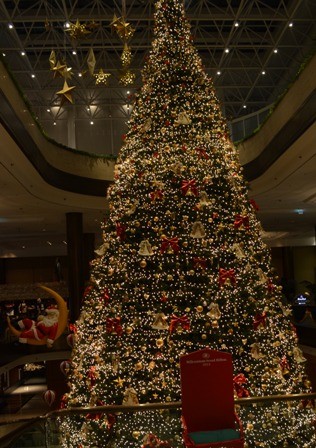
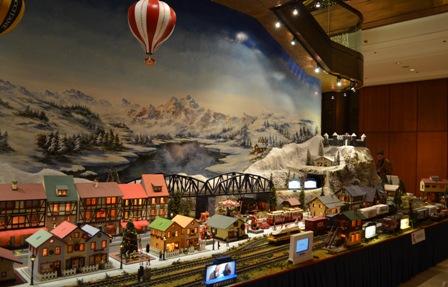
The nearby Hilton Hotel also had plenty of beautiful interior decorations of trees and one of the biggest holiday train sets I’ve seen.

Holidays Seoul Hilton Hotel Christmas tree

Holidays Seoul Hilton Christmas train 2

Holidays Seoul Hilton Christmas train 1

I got to New Zealand a little over a week before Christmas. While I was out on the hiking trail for actual Christmas day, the decorations were still up for everyone to enjoy later in the month.

Holidays Auckland department store decorations

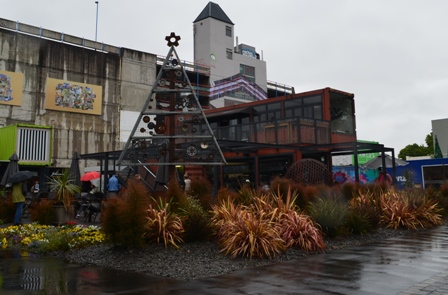
Holidays Christchurch Re Start mall

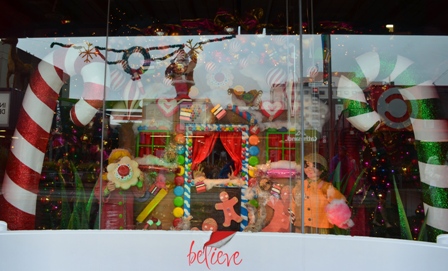
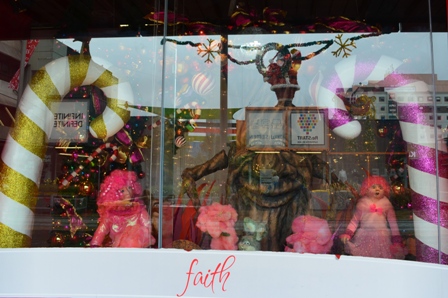
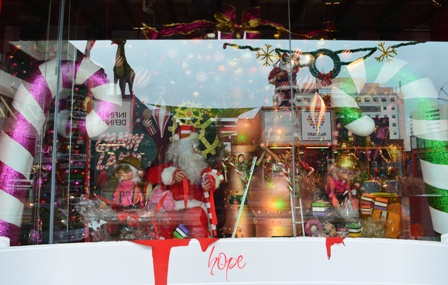
The storefront decorations at the Christchurch department store, Ballantynes, were particularly interesting. It was like a cross between Candyland and Willy Wonka’s Chocolate factory. They were kind of odd in a pleasing way. It was nice to see decorations that were sort of fantasical, with a hint of creepy, instead of gooey sweet decorations.

Holidays Christchurch Ballantynes 4

Holidays Christchurch Ballantynes 3

Holidays Christchurch Ballantynes 2

Holidays Christchurch Ballantynes 1

I spent New Year’s Eve in Christchurch. I had hoped to do it in Queenstown, because I heard their NYE celebrations were insane (though some of that insanity was mitigated by the ban on alcohol in public places), but my vacation schedule didn’t really work out that way. I arrived back in Christchurch from Arthur’s Pass in the early evening and enjoyed my final meal of 2013 at a local Korean restaurant (though the Korean food seemed a bit New Zealandized).

Holidays Christchurch NYE fireworks 3

Holidays Christchurch NYE fireworks 2

Holidays Christchurch NYE fireworks 1

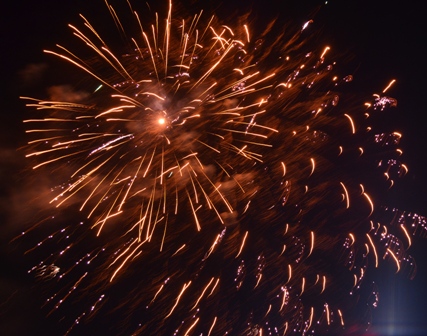
If you want to have a crazy New Years celebration, Christchurch isn’t the best place to do it. The public celebration in Hanley Park was specifically designated alcohol free, and there was a city-wide liquor ban on walking around with booze outside. So I hung out in my hostel room enjoying my bottle of sparkling wine until shortly before midnight. I didn’t really care to sit in a park listening to bands I didn’t know. But I was interested in the fireworks display (fireworks pretty!), so I showed up shortly before midnight. Fireworks went off, people scattered and I went back to my hostel. It was very sedate NYE, and once again, it was a NYE on my own in a foreign country.